 Durable Machinery
Get Price
What is a Dry Batch Concrete Batching Plant?
I have spent many years in the mineral processing equipment industry. I have seen many changes in how people make concrete. The way you produce concrete has a big impact on your project. It affects how fast you work. It affects how much money you spend. A Dry Batch Concrete Batching Plant can be a very good option for some projects. It can help you make good concrete. It can also help you save time and money. This article will help you understand if a dry batch plant is right for your needs. This outlines how these plants operate, details their benefits, and also clarifies how to select the best one.
Table of Contents
- What Exactly is a Dry Batch Concrete Batching Plant, and How Does it Differ from Wet Mix Plants?
- What are the Core Components of a Dry Batch Plant, and How Do They Work Together Efficiently?
- What Core Advantages Can a Dry Batch Plant Bring to Your Project?
- Which Dry Batch Plant Suits Your Project Needs?
- How Does a Dry Batch Plant Ensure Stable and Uniform Concrete Quality?
- What Challenges Might You Encounter When Deploying a Dry Batch Plant, and What are the Countermeasures?
- Investing in a Dry Batch Plant: How Do You Calculate Cost-Effectiveness and Return on Investment?
- Frequently Asked Questions
- Conclusion and Final Advice
- About Durable
What Exactly is a Dry Batch Concrete Batching Plant, and How Does it Differ from Wet Mix Plants?
A Dry Batch Concrete Batching Plant precisely measures and weighs all dry concrete ingredients (aggregates, cement, admixtures). These materials are loaded into a transit mixer, with water added either at the plant, in the truck, or on-site. The actual concrete mixing occurs in the transit mixer’s rotating drum, often during transport to the job site.
This differs from a wet mix plant, which fully mixes all ingredients, including water, into finished concrete using a central mixer before loading. Essentially, a dry batch plant acts as a precise measuring station, relying on the truck mixer for blending. This design offers distinct benefits and drawbacks, impacting project cost and speed, making the choice between systems crucial for concrete production.
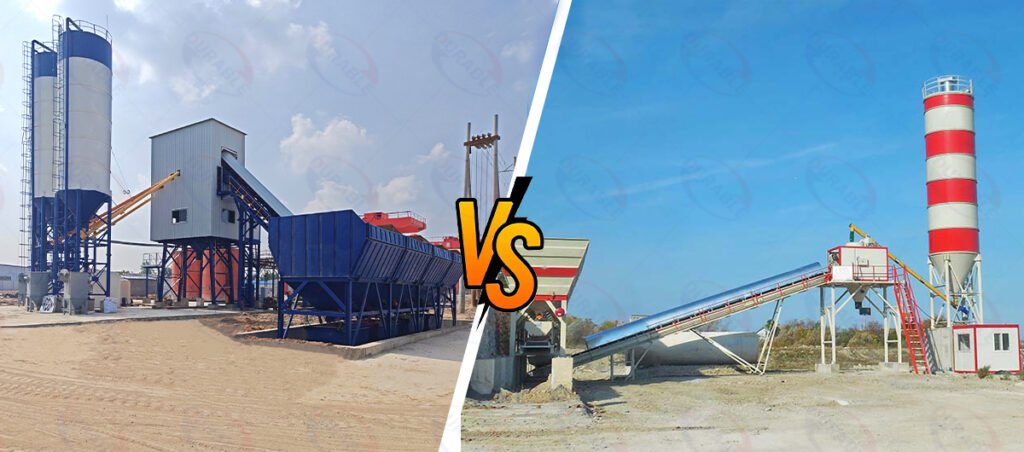
Dry Mix Plant: The Material Proportioning Hub
A Dry Batch Concrete Batching Plant acts as a material proportioning hub, not a mixer. It precisely measures dry ingredients: aggregates, cement (from its cement silo), and admixtures. These are weighed and loaded into a transit mixer. Water, and often liquid admixtures, are typically added to the truck (or on-site). Critical mixing then occurs inside the truck’s rotating drum during transport. This simpler plant design requires less setup, maintenance, and upfront cost compared to wet mix plants.
Wet Mix Plant: The Central Mixing Powerhouse
A wet mix plant is a central mixing powerhouse. All precisely weighed ingredients (aggregates, cement, water, admixtures) are loaded into a central, powerful mixer, which blends them into a uniform batch of fresh concrete. Only then is the finished concrete loaded into the transit mixer. The transit mixer largely serves as an agitator during transport, as primary mixing is completed at the plant. This method offers superior quality control; intensive central mixing yields a very consistent product and excels with complex mixes (e.g., self-compacting, high-strength concrete). However, it carries higher initial cost, more complex parts, and increased maintenance. Yet, it provides superior quality assurance and pre-plant uniformity, crucial for projects with strict demands.
What are the Core Components of a Dry Batch Plant, and How Do They Work Together Efficiently?
A Dry Batch Concrete Batching Plant relies on several key parts for accurate dry ingredient delivery. Aggregate bins hold different types (sand, gravel), weighed precisely by load cell systems. Cement resides in tall cement silos, conveyed to a weighing hopper for exact measurement. Water tanks with metering systems and admixture tanks with pumps add their respective components accurately. A PLC-based control system orchestrates all steps for consistency. Finally, all measured materials combine via a loading chute into the waiting transit mixer. This precise teamwork ensures efficient, accurate concrete batches.

The Heartbeat: Weighing and Metering Systems
Precise weighing and metering systems are the heartbeat of a Dry Batch Plant, crucial for concrete quality and consistency. Load cells measure aggregates from bins. Cement, stored in cement silos, moves via screw conveyor to a dedicated weigh hopper. Water tanks use flow meters for volume, and admixtures are similarly metered. All systems connect to a central control panel with advanced software, managing batching for exact material amounts, ensuring consistent, high-quality concrete.
The Workflow: From Storage to Transit Mixer
The Dry Batch Plant workflow is a synchronized process from storage to transit mixer. Aggregates are stored in multi-compartment bins, then loaded into the weighing system. After weighing, they transfer to a collection hopper or directly to the mixer via an aggregate conveyor. Cement, from protective cement silos, moves via screw conveyor to its weigh hopper, then to the collection point. Water and admixtures are precisely metered from tanks and discharged into the transit mixer. The entire sequence, managed by computer control, ensures efficient concrete production, minimizing bottlenecks and maximizing throughput.
What Core Advantages Can a Dry Batch Plant Bring to Your Project?
Choosing a Dry Batch Concrete Batching Plant offers several clear benefits. These benefits can significantly improve your project’s efficiency. They can also reduce your overall costs. It is important to know these advantages. This helps you decide if this type of plant is the right fit for your construction needs.
Here are the core advantages you can expect:
- Lower Initial Cost: Dry batch plants cost less to buy. They do not have a large central mixer. This saves you money upfront.
- Reduced Maintenance: These plants have fewer complex parts. This means less wear. You spend less on repairs and spare parts.
- Higher Mobility: Many models are modular. You can move them easily. This makes setup and teardown fast. This is ideal for temporary sites.
- Extended Concrete Workability: You add water later. This can be during transport or at the site. This keeps concrete fresh longer. It is good for long hauls or hot weather.
- High Production Capacity: Dry batch plants can process materials very quickly. They ensure a steady supply of materials. This helps you get more work done faster.
- Lower Energy Use: These plants use less power. They do not have a large mixer motor. This saves on your electricity bills.
- Good for Remote Sites: Their easy setup and mobility make them perfect for far-off locations. They bring concrete production directly to the job.
- Flexible Control: You can adjust mix ratios easily. The system allows quick changes to concrete recipes.
- High Automation: The plant uses computers for precise measurement. This ensures high accuracy for every batch.
Which Dry Batch Plant Suits Your Project Needs?
Choosing the right Dry Batch Concrete Batching Plant means matching the plant’s features to your project’s specific needs. This is not a one-size-fits-all decision. You need to look at several key project characteristics. These include your project scale, site location, and the type of concrete you plan to produce. This careful selection ensures you get the most efficient and cost-effective solution for your concrete production. Understanding the different types available is the first step.
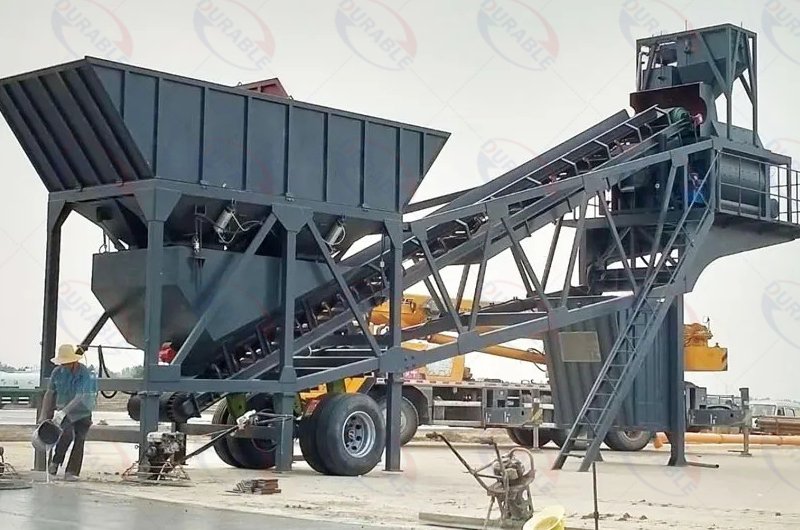
We mainly divide dry batch plants into two broad categories based on their mobility: Mobile Concrete Batching Plants and Stationary Concrete Batching Plants. Each type has specific strengths. They suit different project scenarios. Making the right choice means evaluating which plant’s features best align with your operational demands and budget. You want to maximize efficiency. You also want to minimize unnecessary costs.
Here is a comparison of these main dry batch plant types:

| Selection Factor | Mobile Concrete Batching Plant | Stationary Concrete Batching Plant | Your Project’s Meaning |
|---|---|---|---|
| Project Scale/Volume | Ideal for small to medium-sized projects. Good for fluctuating or moderate concrete demand. | Best for large-scale, continuous projects. Handles very high and consistent concrete demand. | Matches the plant’s output capacity with your project’s total concrete needs and daily volume, avoiding delays or idle time. |
| Site Location/Mobility | Perfect for remote jobsites, temporary projects, or multiple sites. Designed for quick relocation and setup. | Suited for fixed, long-term project locations with ample space. Not easily moved once installed. | Determines if you need the flexibility to move your plant or if a permanent setup is feasible and beneficial. |
| Project Duration | Excellent for short-term contracts or projects with limited operating time. | Optimal for long-term infrastructure projects or permanent ready-mix concrete suppliers. | Aligns the plant’s lifespan and setup effort with the expected length of your construction work. |
| Initial Investment | Generally has a lower capital expenditure (CAPEX). More budget-friendly upfront. | Typically requires a higher initial investment. More complex foundation and installation. | Helps manage your upfront budget and financial planning for equipment acquisition. |
| Production Capacity | Offers medium to high production rates. For example, 25 to 100 cubic meters per hour. | Delivers very high production rates. Can achieve 60 to over 300 cubic meters per hour. | Ensures the plant can meet your peak concrete demand without compromising project timelines. |
| Concrete Types Produced | Very suitable for standard concrete mixes used in general construction. | Also suitable for standard concrete mixes. Can adapt to some specialized mixes with careful control of truck mixing. | Verifies if the plant can produce the specific qualities and types of concrete your project requires. |
| Setup & Dismantling | Features a modular design. Allows for fast installation and removal, reducing labor and time. | Requires extensive civil works and longer installation time. Permanent foundations are needed. | Impacts project startup times and labor costs associated with plant deployment. |
| Transportation | Easy to transport using standard trucks. Often pre-wired and pre-assembled. | Requires dismantling into many components for relocation. Transportation is complex and costly. | Affects logistics planning and expenses if the plant needs to be moved to different sites. |
Choosing between these types requires a clear understanding of your current project. It also requires foresight into future projects. A mobile concrete batching plant provides unmatched flexibility. It allows you to produce concrete wherever needed. A stationary concrete batching plant provides maximum output and stability for continuous, large-scale demand. Consider your priorities: mobility versus maximum capacity, and initial cost versus long-term operational efficiency. This careful evaluation will lead to the best investment.
How Does a Dry Batch Plant Ensure Stable and Uniform Concrete Quality?
Dry batch concrete plants ensure stable, uniform concrete quality by precisely proportioning ingredients, even with final truck mixing.
Precision weighing is fundamental. Advanced load cells for aggregates, dedicated cement hoppers, and accurate flow meters for liquids meticulously measure each component, establishing critical ratios like water-cement. This minimizes inconsistencies.
Sophisticated PLC-based automation stores mix designs, automates batching, monitors real-time weights, and makes real-time adjustments (e.g., for aggregate moisture). This system drastically reduces human error and batch variability, providing data logs and ultimately guaranteeing consistent, high-quality dry mixes for any project.
What Challenges Might You Encounter When Deploying a Dry Batch Plant, and What are the Countermeasures?
Deploying a Dry Batch Concrete Batching Plant can bring great benefits. But you might also face some challenges. Knowing these challenges helps you prepare for them. It helps you find good solutions. This ensures your project runs smoothly.
The main challenge is the reliance on the transit mixer for actual mixing. A dry batch plant provides all the accurately proportioned ingredients. But the final concrete quality depends heavily on how well the transit mixer blends everything. If the truck’s mixer is old or worn, or if the driver does not follow proper mixing procedures, the concrete quality can suffer. You might get inconsistent batches. You might have segregation.
Another challenge can be less control over complex concrete mixes. For very specialized concrete, like self-compacting concrete, intensive high-shear mixing is often required. Transit mixers might not provide this level of mixing. This can lead to issues with uniformity for these special mixes. Wear and tear on transit mixers can also be a challenge. Since the truck mixer does the primary mixing, its internal blades will wear out faster. This means more frequent maintenance and replacement. Potential for inconsistent admixture dispersion is another point. If admixtures are added manually on-site, there’s a risk of uneven distribution.
To counter these issues, you need clear strategies. First, invest in high-quality, well-maintained concrete mixer trucks. Second, train your drivers on proper mixing speeds and durations. Implement strict quality control protocols for every batch. Third, for very specialized concrete, consider alternative mixing methods. Or use specialized admixture delivery systems. Fourth, factor in higher maintenance for your truck fleet. This planning helps overcome potential challenges. It ensures a reliable and consistent concrete production process.
Mitigating Reliance on Transit Mixer Performance
The biggest challenge with a Dry Batch Concrete Batching Plant is its dependence on the transit mixer. The quality of the final concrete mix relies entirely on the truck’s ability to blend ingredients thoroughly. If the transit mixer’s drum is worn, or if the mixing duration and speed are not correct, you risk inconsistent concrete. This can lead to low strength or poor workability. To mitigate this, you must have a well-maintained fleet of concrete mixer trucks. Regular inspections of the drum and internal blades are crucial. Worn blades cannot mix effectively.
You must also provide comprehensive training for your truck drivers. They need to understand the importance of proper mixing procedures. This includes the correct number of revolutions. It includes the right speed. It ensures all materials are fully hydrated and blended. Implementing strict quality control protocols is also vital. You should perform regular slump tests and cylinder breaks. This verifies the concrete quality as it comes out of the truck. Consider using automated systems on the truck itself. These systems can monitor mixing revolutions and times. This further ensures consistency. By actively managing your transit mixer fleet and operators, you can significantly reduce the risks. You can produce high-quality, uniform concrete reliably.
Addressing Complex Mixes and Operational Control
Handling complex concrete mixes with a Dry Batch Concrete Batching Plant requires special attention. Some modern concrete types, like self-compacting concrete (SCC) or fiber-reinforced concrete, need very intense mixing. They need high-shear action for proper material dispersion. Standard transit mixers might struggle to achieve this level of thoroughness. This could lead to inconsistent properties in the final product. To address this, you have a few options. First, you can use specialized transit mixers. These have enhanced mixing capabilities. They can handle more challenging mixes.
Second, you can adjust your mix design slightly. This helps it mix better in a standard truck. Third, consider pre-blending certain components. You might pre-mix fibers or special admixtures in a smaller, dedicated mixer before adding them to the dry batch. Fourth, for extremely complex and critical applications, a wet batch plant might be a better choice. This gives you controlled, intensive mixing at the plant. In terms of operational control, automation is key. A sophisticated control system can monitor all aspects of the dry batching process. It ensures precise material flow. It records all data. This makes it easier to track and troubleshoot issues. This helps you maintain high standards for all your concrete production.
Investing in a Dry Batch Plant: How Do You Calculate Cost-Effectiveness and Return on Investment?
Investing in a Dry Batch Concrete Batching Plant requires careful financial planning. You need to look beyond the initial purchase price. You must calculate the full cost-effectiveness and return on investment (ROI). This ensures you make a smart business decision.
The initial capital expenditure (CAPEX) for a dry batch plant is generally lower than for a wet mix plant. This is a significant advantage. It makes the investment more accessible for many companies. You save money because there is no large central mixer to buy. However, you need to consider operational expenses (OPEX). These include energy consumption, labor costs, and maintenance. Dry batch plants typically have lower energy consumption than wet mix plants. They have fewer large motors running. Maintenance costs are also generally lower. There are fewer complex mechanical parts to wear out. This means less money spent on spare parts and repairs.
You also need to factor in hidden costs. One major hidden cost is the wear and tear on your concrete mixer trucks. Since they do the primary mixing, their drums and blades will wear faster. This means more frequent maintenance and replacement for your truck fleet. Another hidden cost is the potential for re-batching or rejected loads if mixing quality in the truck is not managed well. This can lead to material waste and project delays. You also need to consider logistical costs. This includes transporting raw materials to the plant. It also includes transporting concrete to the site. Calculating ROI involves comparing these costs to the benefits. Benefits include increased production, reduced labor, and potential for expanded service areas. A well-chosen dry batch plant can offer a strong ROI. It provides reliable and cost-effective concrete production.
Analyzing Initial Investment Versus Operational Costs
When considering a Dry Batch Concrete Batching Plant, you must analyze the initial investment (CAPEX) against the operational costs (OPEX). The CAPEX for a dry batch plant is usually lower. This is a big point for many buyers. You avoid the high cost of a powerful central concrete mixer. This makes the entry barrier lower. It allows companies to invest in concrete production facilities sooner.
However, OPEX needs careful review. While the plant itself has lower energy consumption and maintenance, you must include your entire fleet of concrete mixer trucks. Since these trucks perform the actual mixing, they experience higher wear. This means increased fuel consumption for mixing rotations. It means more frequent maintenance for their drums and blades. This can be a substantial ongoing cost. Labor costs also matter. You need skilled operators for the plant. You need reliable drivers for the trucks. Total energy costs for the whole operation (plant plus trucks) should be calculated. You need to compare this against alternative concrete supply methods. This detailed financial analysis gives you a clear picture. It helps you understand the true cost of owning and operating a dry batch plant.
Project-Specific ROI Calculation and Long-Term Value
Calculating the Return on Investment (ROI) for a Dry Batch Concrete Batching Plant must be project-specific. It is not just about general numbers. You need to consider your unique project conditions. For example, if you are working on a very large infrastructure project in a remote area, a dry batch plant offers immense value. It provides immediate, on-site material batching. This saves huge costs on long-distance concrete transport. It also reduces delays from external suppliers. This directly improves project efficiency. It speeds up construction timelines.
The long-term value comes from several factors. One is the plant’s mobility. You can move a mobile concrete batching plant from one project to another. This maximizes its utilization. This extends its earning potential. Another factor is the reduction in material waste. Precise batching minimizes over-ordering or accidental spills. This saves material costs. The ability to control your own concrete supply also adds value. It gives you greater control over project schedules. It helps ensure consistent quality. All these factors contribute to a strong ROI. A dry batch plant provides a reliable, cost-effective solution for many construction needs. It is an investment that pays off over the lifespan of the equipment.
Frequently Asked Questions
1. What is the main difference between a dry batch and a wet batch concrete plant?
The main difference is where the mixing happens. A dry batch plant measures dry ingredients. The actual concrete mixing occurs in the transit mixer. A wet batch plant has a central mixer. It mixes all ingredients into finished concrete before it goes into the truck.
2. Are dry batch plants suitable for all types of concrete?
Dry batch plants are excellent for standard concrete mixes. For highly specialized concrete (like SCC), you need very good transit mixers and strict mixing protocols. Some complex mixes might be better suited for wet batch plants.
3. Can a dry batch plant be moved easily?
Many dry batch plants are modular. These are easy to move. Mobile concrete batching plants are designed for quick setup and relocation. This makes them ideal for temporary or remote projects.
Conclusion and Final Advice
Choosing the right Dry Batch Concrete Batching Plant is a strategic decision, significantly impacting project success, efficiency, and cost. Advantages include lower initial costs, reduced maintenance, and high mobility, making them a smart choice for many construction companies.
However, challenges arise from reliance on transit mixers for blending, requiring careful truck fleet management and proper mixing procedures. With careful planning, a dry batch plant can deliver stable, uniform concrete quality and an excellent return on investment. Evaluate your project needs to choose the plant type that best supports your goals. Durable can guide you.
About Durable
At Durable, we have been engineering and manufacturing concrete mixing equipment and other construction machinery since 2001. We do not just sell machines. We build complete solutions. Our team of 15 engineers has deep experience in concrete production. We work with you to design a mixing solution. This solution is customized for your specific projects. It meets your business needs. From our factory in Zhengzhou, we have delivered reliable systems to over 120 countries.
If you are ready to enhance your concrete quality and project efficiency, contact our team today. We will provide a professional consultation. We will give you a detailed proposal for your next concrete batching plant selection.