 Durable Machinery
Get Price
Poor Sawdust Drying Effect? Key Control Points & Solutions
Many operations struggle with their sawdust dryers. A brand-new machine can produce damp, clumpy material, while an older model runs perfectly. The secret lies not just in the machine, but in mastering the entire drying system. Achieving a good drying effect comes down to balancing three key elements: Heat, Airflow, and Time. Proper balance transforms inconsistent raw material into a high-quality, valuable product. This guide outlines how to control the system for optimal results.
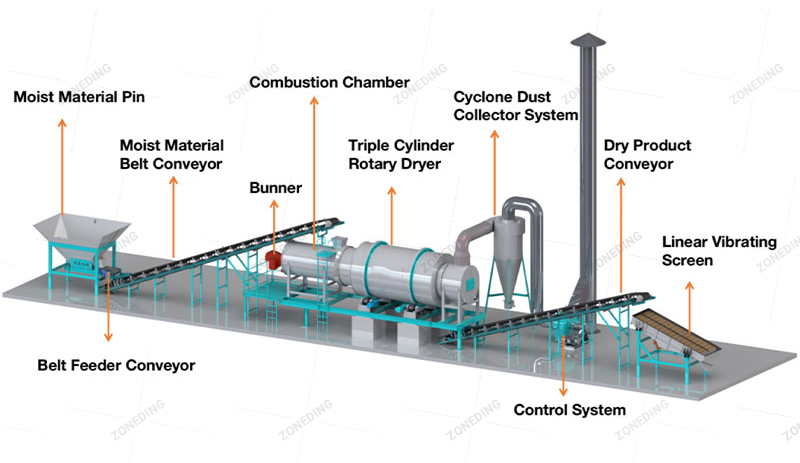
Table of Contents
- Why is a Good Sawdust Drying Effect Vital?
- How Does Initial Moisture Affect the Drying Effect?
- Proper Temperature Setting and Control
- How Does the Feed Rate Impact Final Moisture?
- Adjusting Drum Speed to Optimize Residence Time
- How Does Airflow Size Affect Drying Efficiency?
- The Role of Maintenance for a Sawdust Dryer
- Frequently Asked Questions
- Summary and Recommendations
- About Durable
Why is a Good Sawdust Drying Effect Vital?
Proper sawdust drying is crucial for success. It dictates product quality—overly wet material creates weak biomass pellets, while over-dried sawdust can scorch, reducing its value. Inconsistent drying also compromises safety and efficiency, leading to blockages, fire hazards from combustible dust, and wasted energy. Ultimately, effective drying ensures a quality product, enhances safety, and lowers costs, turning the dryer into a profit generator.
How Does Initial Moisture Affect the Drying Effect?
The most important factor for a good drying effect is the input material. A consistent output cannot be expected from an inconsistent input. When raw sawdust has varying moisture levels, the dryer’s performance will be compromised.
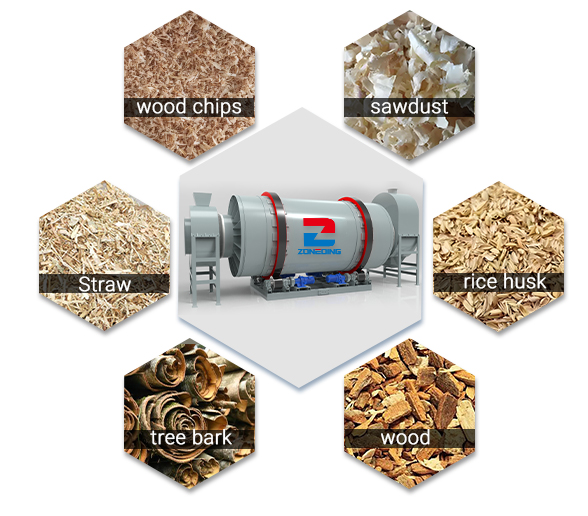
The core problem is that a dryer operates on a single temperature profile. If sawdust at 60% moisture is mixed with sawdust at 30%, the machine cannot dry both perfectly simultaneously. The wetter material will exit damp, while the drier material might scorch or even ignite. This leads to uneven final moisture content, a significant issue for quality control. Similarly, mixing large wood chips with fine sawdust causes problems, as the fine dust dries instantly while the larger chips require more time, creating similar issues of inconsistency and safety risks.
Solution: Controlling the Input Material
- Manage Stockpiles: When possible, blend wet raw materials before they enter the dryer. This process creates a more average, consistent moisture level for the machine to handle.
- Consider Dewatering: For very wet sawdust, using a mechanical press to remove some water first is more cost-effective than using heat for evaporation.
- Ensure Uniform Size: A screen should be used to remove oversized pieces. These larger pieces can be processed through a to create a more uniform particle size.
- Test Regularly: Blind operation should be avoided. A moisture meter should be used to regularly check the moisture content of the raw material. This data is essential for making informed adjustments.
Proper Temperature Setting and Control
Heat management is vital for controlling sawdust moisture. Two temperatures are critical:
Inlet Temperature: As the primary control point, this is the temperature of hot air entering the dryer. If too low, drying is inefficient and the product remains wet. If too high, it can scorch the material and create a fire hazard. A good starting range is 180°C to 250°C (350°F to 480°F), adjusted for the material’s initial moisture.
Outlet Temperature: This is the exhaust gas temperature and your most important feedback indicator, showing how much energy remains after evaporation.
- If the outlet temp is too high (e.g., above 120°C): The material is likely over-dried. Heat is being wasted through the smokestack. The feed rate may be too low or the inlet temperature too high.
- If the outlet temp is too low (e.g., below 80°C): The material is probably still wet. The system is using all its energy to heat the water but not enough to fully carry it away. The feed rate may be too high or the inlet temperature too low.
The goal is to find the optimal outlet temperature that yields the desired final moisture. Once found, the main task is to maintain that temperature stability by adjusting the feed rate.
How Does the Feed Rate Impact Final Moisture?
The feed rate is the amount of sawdust introduced into the dryer per hour. It must be stable and continuous. Feeding large, intermittent batches creates wild temperature swings, preventing the system from stabilizing and resulting in a poor drying effect.
A variable speed feeder, such as a screw conveyor, is essential for stable operation. It allows for metering a steady, consistent flow of material into the dryer. The feed rate is directly linked to the final moisture content and the outlet temperature. The feed rate serves as the primary method for reacting to system changes.
- If the outlet temperature is too high (product is too dry): The feed rate should be increased. This introduces more wet material into the system, which will absorb more heat and lower the outlet temperature.
- If the outlet temperature is too low (product is too wet): The feed rate should be decreased. This gives the material more time to dry, allowing the outlet temperature to rise back to the target level.
Mastering the relationship between outlet temperature and feed rate is the key to consistent sawdust moisture control and improved drying efficiency.
Adjusting Drum Speed to Optimize Residence Time
Residence time, the duration sawdust spends in the drum, is a key parameter controlled by the drum’s rotation speed.
Slowing the Rotation: This increases residence time, giving very wet material more contact with hot air for thorough drying.
Speeding up the Rotation: This decreases residence time, ideal for drier material or to increase throughput. However, this requires sufficient heat and airflow to be effective.
The performance of the internal metal plates (flights) is also critical. They lift and cascade the sawdust to maximize air contact. If flights are worn or clogged, the effectiveness of the set residence time is greatly reduced.
| Drum Speed | Residence Time | Best For… | What to Watch For |
|---|---|---|---|
| Slower | Longer | Very wet sawdust, achieving very low final moisture | Lower throughput, potential for over-drying if feed rate is too low |
| Faster | Shorter | Drier sawdust, increasing production rate | Incomplete drying if material is too wet, requires more heat and airflow |
How Does Airflow Size Affect Drying Efficiency?
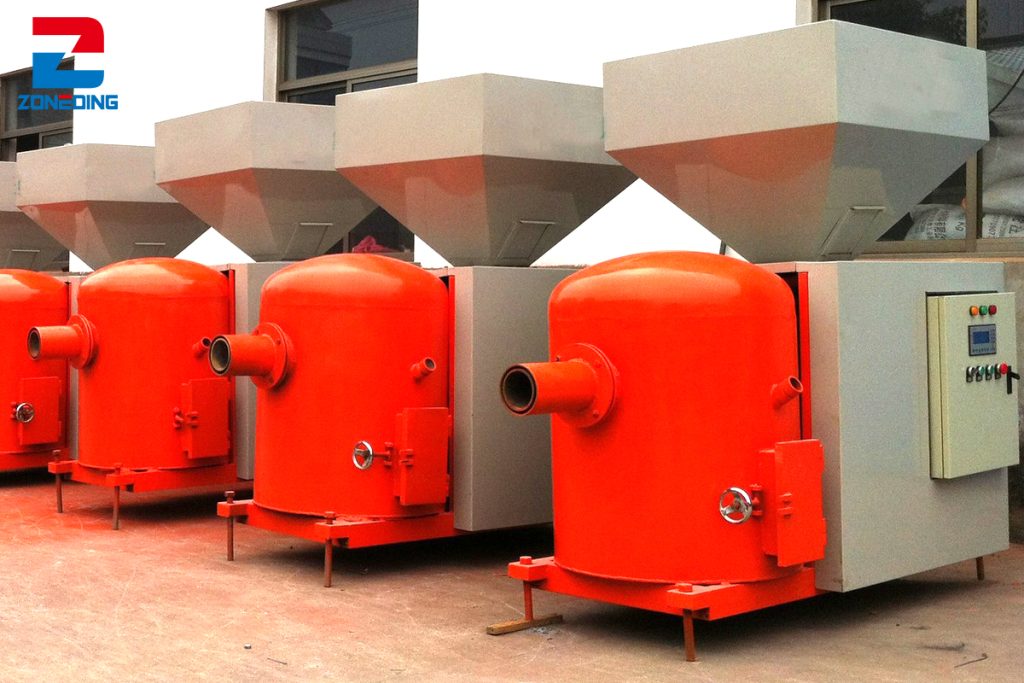
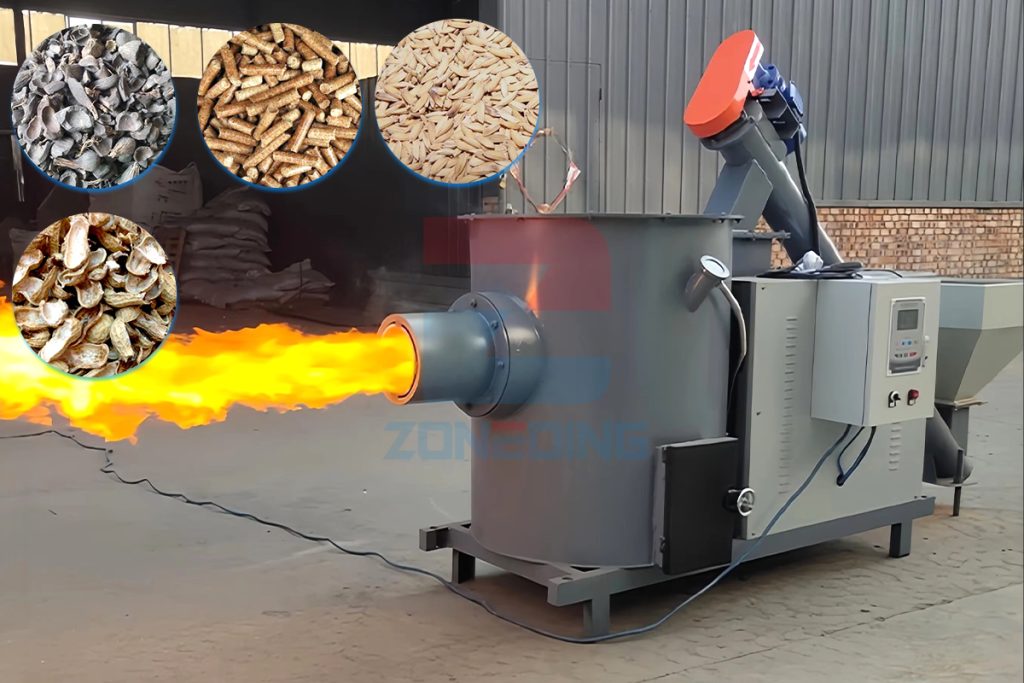
Airflow carries evaporated moisture away from the sawdust and out of the dryer. The Induced Draft (ID) fan pulls hot air from the furnace, often a biomass burner, and through the system. Proper airflow is essential for efficient biomass drying.
If air velocity is too low, moisture is not removed effectively. This creates a steamy, saturated environment inside the drum, which drastically reduces drying efficiency. The sawdust may also fail to move through the drum properly, leading to blockages.
If air velocity is too high, other problems arise. The hot air moves too quickly and does not have sufficient time to transfer its heat to the sawdust, resulting in inefficiency and wasted fuel. High airflow can also pull fine, dry particles out of the dryer prematurely, a phenomenon known as “short-circuiting,” which can create a fire hazard in the dust collection system.
Airflow can be adjusted using the fan’s damper. A balance must be found: enough velocity to move the material and carry away moisture, but not so much that heat and valuable product are wasted.
The Role of Maintenance for a Sawdust Dryer
A poorly maintained sawdust dryer system cannot perform well, regardless of operator skill. Regular maintenance is not optional; it is a necessity for a good drying effect and safe operation.
First, air leaks must be checked for regularly. Cold air leaking into the dryer at the feed chute, discharge point, or in the ductwork will drastically lower the temperature and reduce efficiency. This is one of the most common and overlooked causes of poor performance. Second, the entire system must be kept clean. Sawdust buildup inside the drum, ducting, or cyclone is a serious fire hazard and acts as an insulator, reducing heat transfer and harming efficiency.
Finally, instruments require verification. Temperature sensors and gauges provide critical data about the system. If they are not accurate, adjustments will be based on faulty information. Periodic calibration is necessary. A well-maintained sawdust dryer is a reliable and efficient machine. Neglecting these simple maintenance tasks leads to poor performance, higher costs, and increased safety risks.
Frequently Asked Questions
Question 1: Why is controlling initial moisture so crucial?
Because an inconsistent input leads to an inconsistent output. Mixing wet and dry sawdust makes it impossible for the dryer to work effectively, resulting in poor quality and safety risks.
Question 2: What is the most important temperature to monitor?
The outlet (exhaust) temperature. It is the best indicator of the final moisture content and indicates whether to increase or decrease the feed rate.
Question 3: How to know if the airflow is wrong?
If the product is damp and the dryer feels steamy, airflow might be too low. If fuel consumption is very high and there is a loss of fine dust, the airflow might be too high.
Question 4: Can a slow drum speed make the product too dry?
Yes. If the residence time is too long for the material’s moisture level, or if the feed rate is too low for the set temperature, the product can become over-dried.
Question 5: How often should a sawdust dryer be cleaned?
This depends on the material and usage, but daily inspection is recommended. A full clean-out of the drum, ducts, and cyclone should be part of the regular maintenance schedule, at least weekly or monthly.
Summary and Recommendations
Achieving a great drying effect from a sawdust dryer requires treating it as a complete, interconnected system. Focusing on a single setting is insufficient. The process must start with controlling the input material to ensure maximum consistency in both moisture and size. Subsequently, a mastery of the balance between Heat (inlet/outlet temperature), Airflow (fan speed/damper), and Time (feed rate/drum speed) is essential. By carefully monitoring the outlet temperature and making steady adjustments to the feed rate, stable, efficient, and safe operation can be maintained.
Since 2001, Durable Machine has helped clients optimize their drying processes. A reliable sawdust dryer is understood to be just one part of the puzzle. For operations looking to improve drying efficiency or in need of a robust drying solution, the Durable team of engineers can provide assistance. Contact Durable Machine today for expert advice and dependable equipment.
About Durable
Durable engineers and manufactures mineral processing and drying equipment since 2001. The company builds complete solutions, not just machines. A team of 15 engineers designs custom systems. Quality control is excellent at every production stage. Durable serves global B2B clients, delivering advanced equipment from Zhengzhou. Products are exported to over 120 countries.