 Durable Machinery
Get Price
Choosing a Mixer: Self-Loading vs. Transit for Your Project
Choosing the right equipment for handling concrete is one of the most important decisions you will make for your project. This choice directly impacts your construction cost, your project efficiency, and your final profit. As a construction equipment manufacturer since 2001, we at Durable have helped thousands of contractors navigate this decision. The most common question we get is about the difference between a self-loading mixer and a transit mixer.
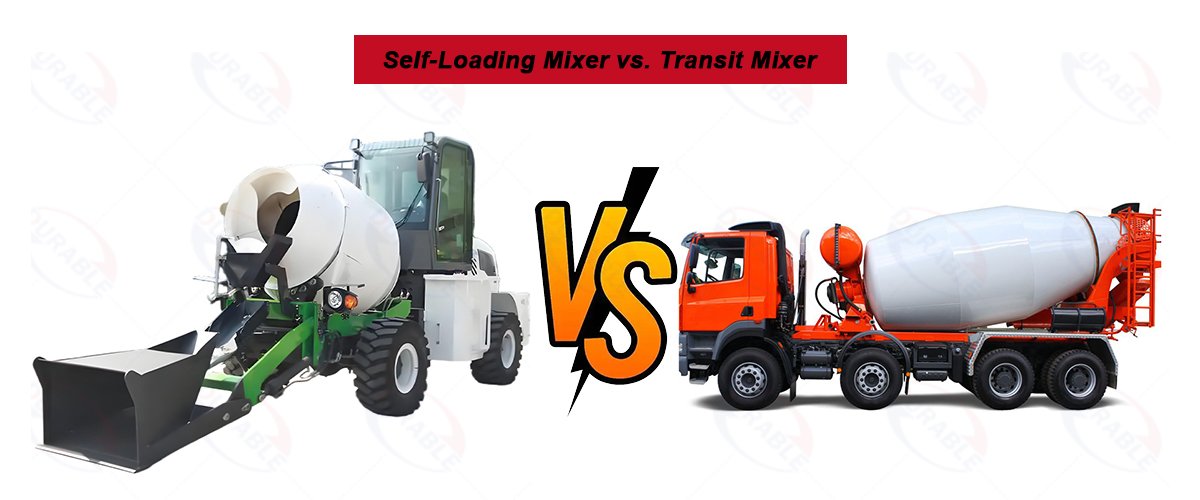
The answer is simple but profound. A transit mixer is a delivery truck for concrete. A self-loading mixer is a mobile concrete factory. One transports a finished product, while the other creates the product on-site. This guide will walk you through the pros and cons of each machine. We will help you make the right mixer selection for your specific needs, ensuring a better equipment investment return.
Table of Contents
What Is the Core Difference in How They Work?
The fundamental difference is that a transit mixer transports pre-made concrete, while a self-loading mixer produces fresh concrete on-site. Understanding this changes how you plan your entire project.
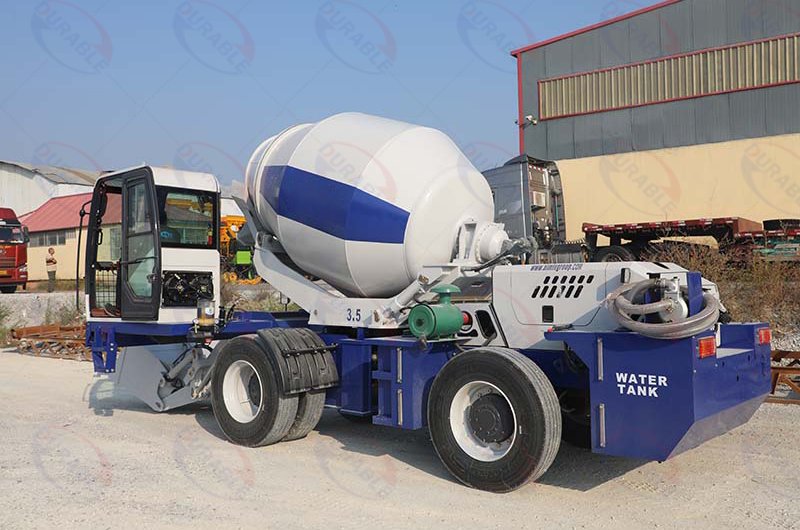
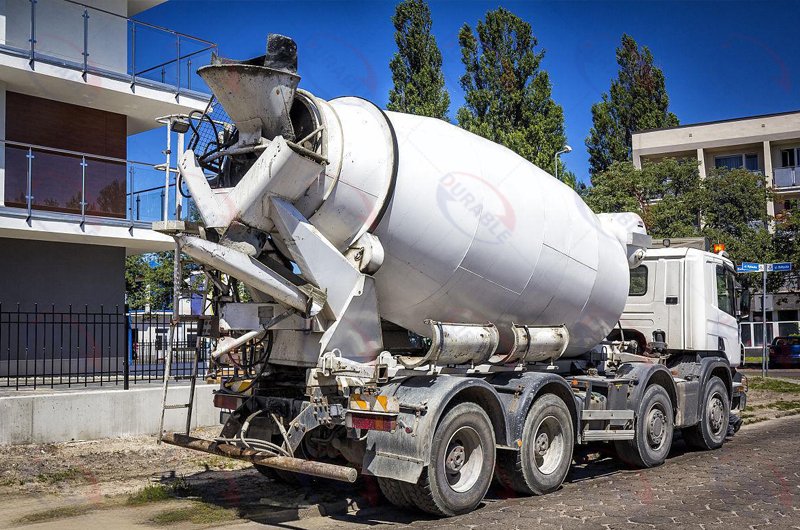
A concrete truck mixer, also known as a transit mixer, is the classic spinning drum truck you see on city streets. It is completely dependent on a separate, stationary concrete batching plant. The truck is loaded with quality-controlled concrete at the plant. It then drives to your job site to discharge the material. Its only job is transportation. In contrast, a self-loading mixer is a completely independent, all-in-one machine. It features a front-mounted shovel to load its own raw materials like sand and gravel. It has an onboard water tank and a precise weighing system. The operator loads the materials, mixes a fresh batch of concrete in the drum, and then drives the machine directly to the pouring location. It is a one-machine solution for on-site concrete mixing.
Which Is Better for Remote Construction Sites?
The self-loading mixer is the undisputed champion for remote area construction. Its design is specifically meant to solve the logistical challenges of working in places without established infrastructure.
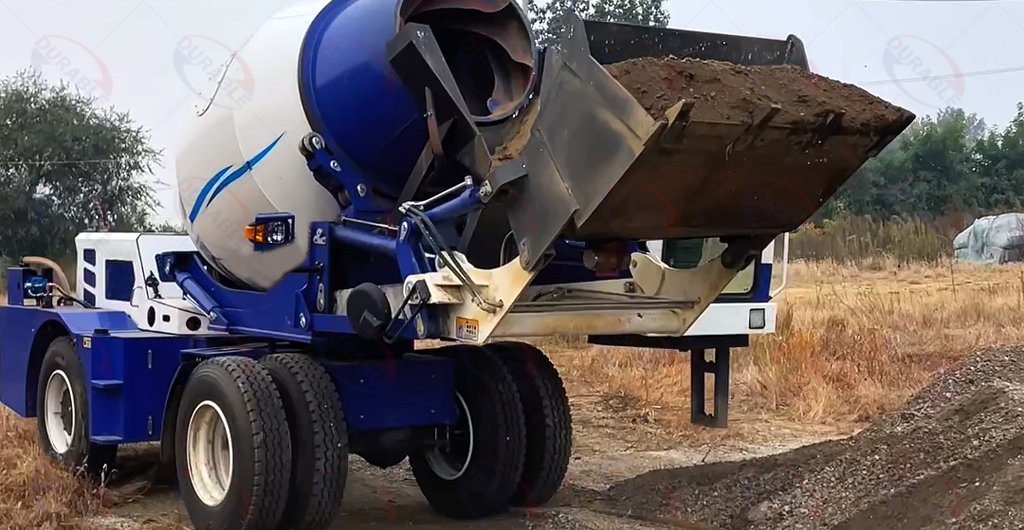
A transit mixer requires good roads and must be within a reasonable driving distance of a batching plant. This makes it impractical for projects in mountainous terrain, rural areas, or developing regions. A self-loading mixer, on the other hand, thrives in these conditions. Our Durable self-loading concrete mixer is a rugged, 4×4 machine that can handle rough, muddy, and steep terrain. It brings the entire concrete production process to your location. As long as you can get raw materials to the site, you can produce high-quality concrete anywhere. This makes it the perfect concrete solution for small projects and large-scale infrastructure work in challenging locations, like mining camps or pipeline construction.
Cost Breakdown: Investment, Labor, and Operations
When analyzing construction cost, you need to look at the total cost of concrete “in the formwork,” not just the equipment price. The cost structures for these two options are completely different.
A transit mixer has a lower initial purchase price. However, its operational cost is tied to the price of ready-mix concrete from a third-party supplier, which includes their profit margin, plant overhead, and delivery fees. You also risk paying for a full truckload even if you only need a small amount, leading to expensive waste.
A self-loading mixer has a higher initial investment. But your operational cost is reduced to the price of raw materials (sand, gravel, cement, water) and the fuel and operator for one machine. You produce exactly the amount of concrete you need, eliminating waste. Over the life of a project, this can lead to massive savings, especially if you are far from a ready-mix plant.
| Cost Factor | Self-Loading Mixer | Transit Mixer | Your Advantage |
|---|---|---|---|
| Initial Investment | Higher | Lower | Transit mixer is cheaper upfront. |
| Operational Cost | Cost of raw materials + 1 operator | Cost of ready-mix concrete + delivery fees | Self-loader is cheaper per cubic meter produced on-site. |
| Material Waste | Very Low. Mix on demand. | High Potential. Unused concrete in a truck is wasted. | The self-loader saves you money by eliminating waste. |
| Labor | One skilled operator does everything. | Requires a truck driver plus a crew to receive. | The self-loader reduces your on-site labor requirements. |
Which Guarantees Better Concrete Quality Control?
This is a critical point that depends on your project’s requirements. The answer involves a trade-off between certified precision and operator skill.
A transit mixer generally offers higher and more consistent concrete quality. The concrete is produced in a stationary, often computer-controlled batching plant. These plants have precise weighing systems, moisture sensors, and are subject to regular calibration and certification. The result is a highly reliable and verifiable mix, which is often a requirement for large government infrastructure and high-rise commercial projects.
A self-loading mixer’s quality is dependent on the operator’s skill and the machine’s onboard systems. While modern self-loading mixers have electronic weighing systems and metered water flow, the ultimate consistency of each batch relies on the operator loading the correct amounts. It is perfect for general construction, foundations, and slabs where a high degree of flexibility is more important than laboratory-grade certification for every batch. For projects that need to meet certain standards, you’ll need to implement a strict on-site quality control process.
How to Choose for Large vs. Small Projects?
The scale and nature of your concrete pours will point you directly to the right machine.
Use a Transit Mixer for:
- Large, Continuous Pours: If you are pouring a massive foundation slab, a high-rise floor, or a bridge deck, you need a continuous, high-volume flow of concrete. A fleet of transit mixers supplied by a high-output stationary concrete batching plant is the only way to achieve the required speed (e.g., 100+ cubic meters per hour).
- Urban and Suburban Projects: When a ready-mix plant is nearby and road access is good, using transit mixers is the most straightforward and efficient solution for most standard projects.
Use a Self-Loading Mixer for:
- Small, Dispersed Projects: If your project involves many small, separate pours (e.g., fence post footings, small repair jobs, curbs, and gutters across a large site), a self-loading mixer is far more efficient. You avoid the minimum order charges and potential waste of a large transit mixer.
- Projects with Unpredictable Schedules: A self-loading mixer gives you the power to produce concrete the moment you need it, freeing you from the scheduling constraints and potential delivery delays of a ready-mix supplier.
Frequently Asked Questions
1. What are the main pros and cons of a self-loading mixer?
Pros: Complete independence, perfect for remote sites, excellent off-road capability, no wasted concrete, and lower long-term production costs. Cons: Higher initial investment, concrete quality is operator-dependent, and lower production speed than a continuous plant.
2. How much concrete can a self-loading mixer produce in an hour?
Depending on the model size (e.g., 1 to 6 cubic meters) and the efficiency of loading raw materials, a single self-loading mixer can typically produce 3 to 5 batches per hour. For example, a 4-cubic-meter model can produce roughly 12 to 20 cubic meters of fresh concrete per hour.
3. Is a transit mixer cheaper than a self-loading mixer?
The initial purchase price of a transit mixer truck is lower. However, if your project is remote or requires many small pours, the total project cost can be much lower with a self-loading mixer due to savings on delivery fees and the elimination of wasted concrete.
Summary: Your Final Decision
The mixer selection between a self-loading mixer and a transit mixer comes down to one question: Where will your concrete be made?
If you have reliable, cost-effective access to a ready-mix plant and need high volumes for large pours, the transit mixer is your workhorse. It is a vital part of a centralized, high-efficiency system.
If your project is remote, has difficult terrain, involves multiple small pours, or if you simply want full control over your schedule and material usage, the self-loading mixer is the superior investment. It is a self-sufficient, flexible solution that brings the factory to you.
About Durable
Since 2001, Durable Machine has been a professional manufacturer of construction and mining machinery. We provide factory-direct equipment to over 120 countries, focusing on creating robust, reliable solutions for the real-world challenges our B2B clients face. We understand that the right equipment is the key to a profitable project.
Ready to gain independence and control over your concrete production? Contact our expert team today to discuss your project and find the perfect self-loading mixer for your needs.