 Durable Machinery
Get Price
What Are Interlocking Brick Machines? Full Guide & Benefits
An interlocking brick machine is a press. It produces building blocks. These blocks fit together. They require minimal mortar. Soil, cement, and water are raw materials. This machine creates strong, affordable structures. It uses resources efficiently. DURABLE’s machines are changing construction, and the company supports businesses, assisting builders and entrepreneurs.This has occurred for over 30 years.
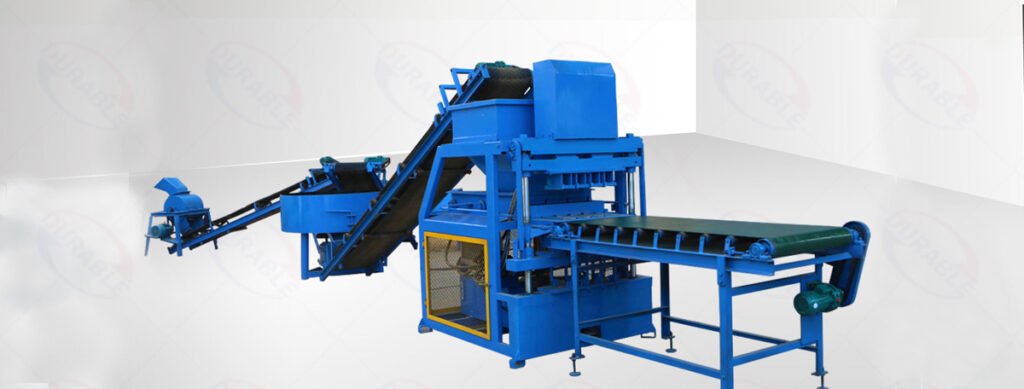
Table of Contents
- Interlocking Brick Making Machine Description
- Core Technologies of a Modern Interlocking Brick Machine
- Interlocking Brick Types Produced
- Raw Materials for Interlocking Bricks
- Interlocking Bricks Transform Construction
- Business Benefits of an Interlocking Brick Machine
- Choosing the Right Interlocking Brick Machine
- Maximizing Machine Uptime and Lifespan
- DURABLE Interlocking Brick Machine Advantages
- Support from DURABLE
- Profitability of an Interlocking Brick Machine Investment
- Initial Steps for Project Commencement
- Common Questions About Interlocking Brick Machines
- Summary and Advice
- Why Choose DURABLE?
Interlocking Brick Making Machine Description
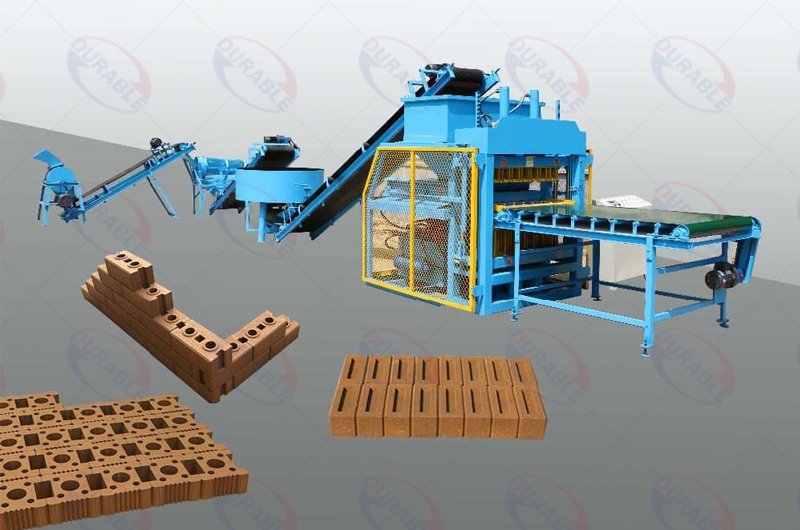
Interlocking brick making machines (IBMMs) are hydraulic or manual presses producing dense, precisely shaped bricks from soil, cement/lime, and water. Their interlocking design reduces or eliminates mortar. Unlike vibrated concrete block machines, IBMMs use pressure for strength. Essential for low-cost construction where materials are expensive, they enable local production, ensure consistent quality for structural integrity, and offer adaptable brick shapes.
Core Technologies of a Modern Interlocking Brick Machine
The interlocking brick machine uses pressure. This pressure is high. It lasts. This differs from vibration used in other machines. This method ensures density and strength. It works for soil-based bricks. DURABLE improves this technology. This has occurred over many years. This is central to machine operation.
The process involves several steps:
- Material Sourcing and Preparation: Soil is the starting material. It requires a balance of sand, silt, and clay. High clay content can cause bricks to crack. High sand content can result in weak bricks. The soil undergoes screening. This removes large stones and organic matter. This step is critical for brick quality. Consistent material preparation directly influences the final product’s strength and finish.
- Stabilizer Mixing: Screened soil mixes with a stabilizer. This is typically 5-10% cement. Lime is sometimes used for clay-rich soils. Water is added to achieve optimal moisture content. The mix should form a cohesive ball. It should not crumble. It should not release water under pressure. Accurate moisture control prevents issues like insufficient compaction or excess water expulsion during pressing.
- Feeding the Mold: The mixed material transfers into the machine’s mold box. This can occur manually or via a conveyor system. Efficient feeding prevents air pockets and ensures uniform brick density.
- Compaction: A hydraulic ram presses the mixture. This force often ranges from 10-30 MPa. This expels air and compacts particles. This forms the brick shape. For smaller machines, a hand lever system generates the necessary force. The consistency of applied pressure directly impacts the brick’s strength and dimensional accuracy.
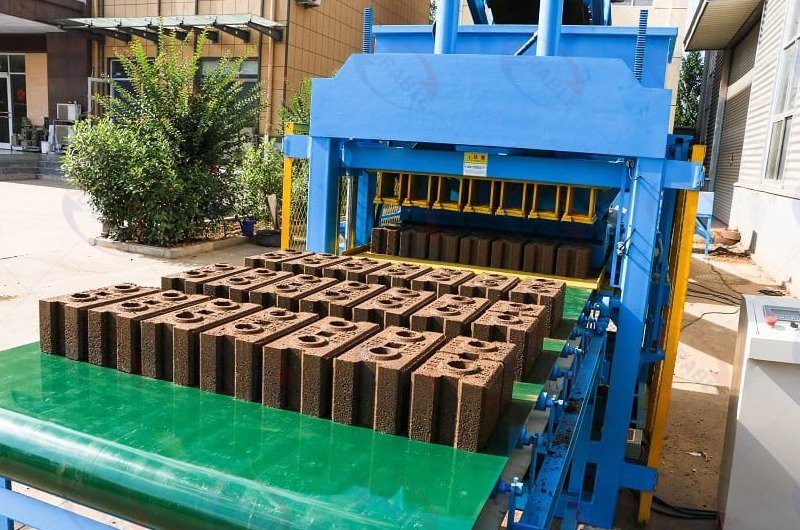
- Demolding: After compaction, the brick ejects from the mold. It lands onto a pallet or a designated ground area. Automated demolding systems improve production rates and reduce labor.
- Curing: New bricks are stacked. They remain moist for 7-14 days. Cement hydrates during this period. It gains strength. Bricks are covered with plastic or wet burlap. Strength development continues for up to 28 days. Proper curing is crucial for brick durability. Insufficient curing leads to brittle and weak bricks unsuitable for construction.
DURABLE focuses on simple, functional components. Machines feature a frame designed to withstand pressure, flexing, and fatigue. DURABLE uses hydraulic power packs. These include a motor, pump, and control valves. They ensure consistent pressure. Mold boxes are precise, made from wear-resistant steel. This maintains brick size. The compression ram applies force. Control systems manage operation. Systems range from simple levers to semi-automatic PLC. Diesel engines power machines for remote sites. Electric motors power machines for fixed locations. These technologies ensure reliable performance.
Interlocking Brick Types Produced
An interlocking brick machine offers versatility. It produces various products. Mold changes facilitate this. This meets construction requirements. It adapts to market demands. DURABLE machines offer mold options. This supports business opportunities.
An interlocking brick machine produces:
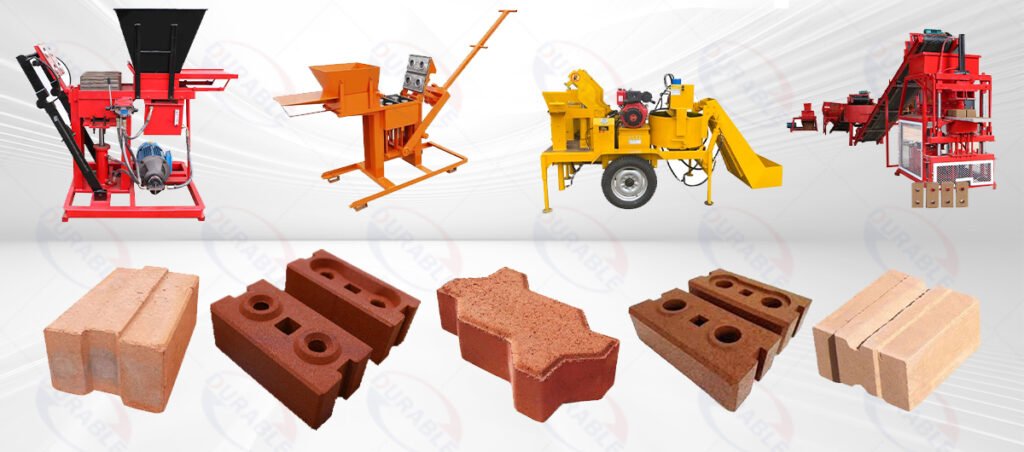
- Standard Interlocking Bricks: These are common. They feature connecting patterns. These patterns eliminate mortar requirements. They function well for wall construction. These bricks simplify wall alignment and construction speed.
- Interlocking Paver Blocks: These are for driveways, sidewalks, and courtyards. They connect to form a surface. Their interlocking design resists shifting and offers a stable surface for pedestrian and light vehicle traffic.
- Solid Blocks: Regular solid blocks are producible. Special molds are used. These blocks function for foundations. They function for areas requiring high strength. These provide structural integrity in applications where traditional mortar-based construction is preferred or specified.
- Specialty Blocks: Some machines produce shapes. These shapes are for specific uses. These include retaining walls or garden edging. Specialty blocks enhance design flexibility and enable construction of non-standard structures.
Mold changes occur quickly. This allows product switching. This is possible within a workday. This versatility optimizes machine utilization. It serves various customer needs. DURABLE designs molds for durability. They are precise. This ensures each produced brick meets quality standards.
Raw Materials for Interlocking Bricks
Raw material selection for interlocking bricks is important. It makes bricks cost-effective. It makes them sustainable. Local soil is the main material. This reduces transportation costs. It uses natural resources. Understanding local soil is a primary step. DURABLE assists clients in soil testing. This ensures an optimal brick mix.
Core raw materials include:
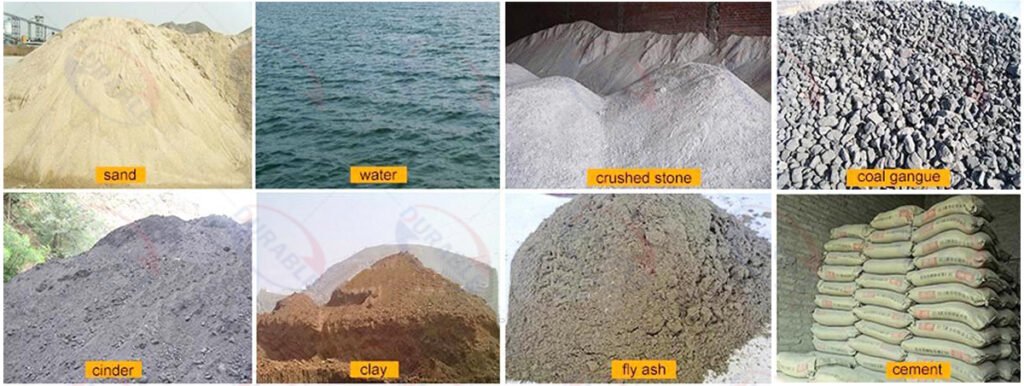
- Soil: This is the primary ingredient. It requires a blend of sand, silt, and clay. Proportions are important. Excess clay can cause bricks to crack. Excess sand can lead to weak bricks. Soil screening removes rocks, roots, and organic matter. This ensures material consistency. Proper soil composition analysis prevents material waste and rework.
- Cement: This acts as a stabilizer. A small amount is added, 5-10% of the soil volume. Cement binds soil particles. It provides brick strength after curing. The cement content must be carefully controlled to balance cost and strength requirements.
- Water: Water is added to achieve specific moisture content. The mix should be damp, not wet. This moisture level enables cement hydration. It aids particle compaction. Incorrect water levels can compromise compaction and curing, leading to substandard bricks.
DURABLE advises customers to test local soil. Samples can be sent to a laboratory. Field tests are also available. This helps determine the soil-cement ratio. This ensures high-quality, strong bricks. DURABLE engineers guide clients. They optimize mixes for local conditions.
Interlocking Bricks Transform Construction
Interlocking bricks change building methods. They offer advantages over traditional techniques. These advantages include faster construction. They are more cost-effective. They are often stronger. This is true where materials are scarce or expensive. These benefits are observed in projects globally.
Reasons for transformation by interlocking bricks:
- Reduced Mortar: This is a major benefit. Bricks fit together. This reduces mortar usage. Some wall courses require no mortar. This saves material costs. It saves labor costs. Mortar savings contribute significantly to overall project budget reductions.
- Faster Construction: Laying interlocking bricks is rapid. The connecting design assists worker alignment. This increases building speed. Projects complete sooner. Accelerated construction timelines allow for faster project completion and reduced overhead costs.
- Less Skilled Labor: The interlocking system is simple. It allows less skilled workers to construct walls. Masonry skills are less critical. This makes construction accessible. It reduces labor costs. This broadens the labor pool available for construction projects.
- Cost-Effectiveness: Local soil use makes bricks inexpensive to produce. Reduced mortar and faster building decrease overall costs. This makes housing and structures more affordable. This benefits both contractors and end-users by lowering entry barriers to construction.
- Sustainability: Local earth is used. Cement content is less than for solid concrete blocks. Bricks are not fired. This makes them eco-friendly. This aligns with modern building standards. Reduced energy consumption during production contributes to a smaller carbon footprint.
- Stronger Walls: The interlocking design distributes loads uniformly. This creates strong, stable walls. Compaction pressure densifies bricks. This increases strength. The inherent stability of the interlocking system provides enhanced seismic resistance in some regions.
These benefits make interlocking bricks suitable for projects. They function well for low-to-medium rise buildings, such as housing projects, schools, and community centers, providing a reliable and efficient solution.
Business Benefits of an Interlocking Brick Machine
Investing in an interlocking brick machine provides business advantages. It is not merely about brick production; it’s about establishing a profitable business, controlling the supply chain, and providing a competitive edge.DURABLE observes clients achieve success. They create opportunities in their communities.
Business benefits include:
- High Profit Margins: Raw materials are inexpensive (local soil). This leads to low production costs. Selling bricks at market rates generates profits. The differential between production cost and market price creates a strong revenue stream.
- Local Material Use: Local soil use minimizes material procurement issues. It reduces transportation expenses. This improves the financial outcome. Sourcing materials locally also supports regional economies.
- Reduced Construction Costs: As a supplier, the material offered lowers construction costs for buyers. This makes the product desirable. This price advantage helps capture market share from traditional material suppliers.
- Market Demand: Demand exists for affordable and sustainable building materials. Interlocking bricks meet this demand. This creates a consistent market for the product. The growing emphasis on green building practices further expands this market.
- Mobility and Flexibility: Many DURABLE hydraulic brick making machine models are mobile. The machine can move to a construction site. It can move to a soil source. This saves logistics costs. It enables on-site production. Mobile production reduces reliance on fixed factory infrastructure.
- Job Creation: Operating a brick factory creates local jobs. This includes machine operators, material preparation personnel, and construction workers. This supports local economies. Local employment generates community engagement and economic stability.
- Brand Building: A supplier can establish a reputation for innovative and sustainable solutions. This builds a brand. This reputation attracts more customers and projects.
- Rapid Return on Investment (ROI): Operating costs are low. Demand is present. This often results in a quick payback for the investment. Efficient operation and market positioning shorten the time to recoup initial capital outlay.
An interlocking brick machine is equipment.It is a stable, sustainable tool for economic growth that also helps establish a business.
Choosing the Right Interlocking Brick Machine
Machine selection depends on budget. It depends on production goals. It depends on local conditions. DURABLE offers various machines. This ensures a suitable fit for a business. Consider specific requirements before selection.
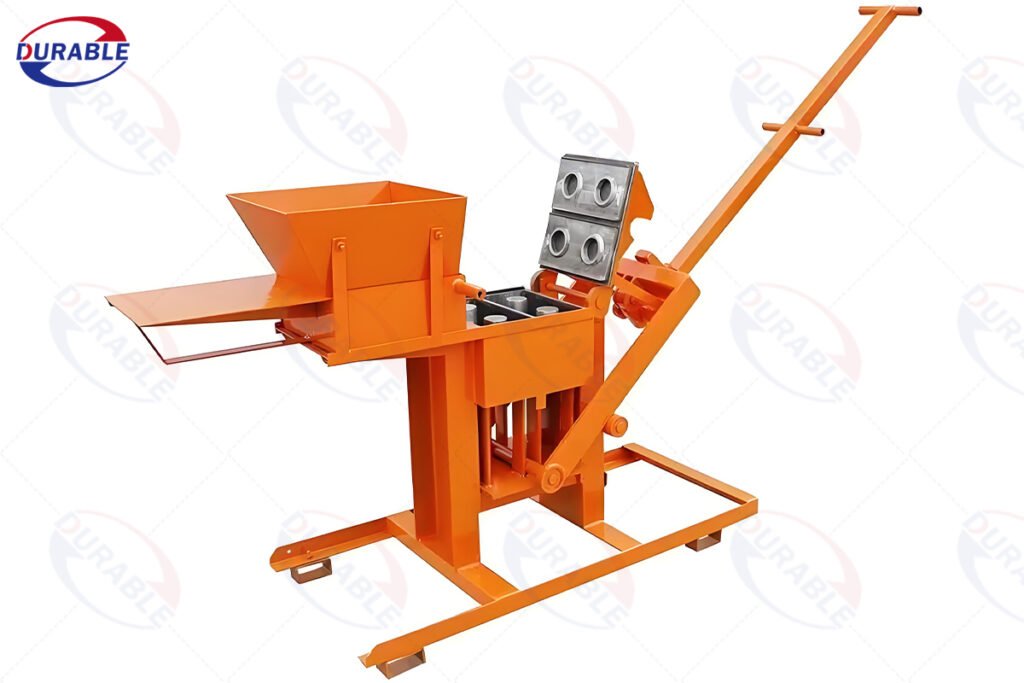
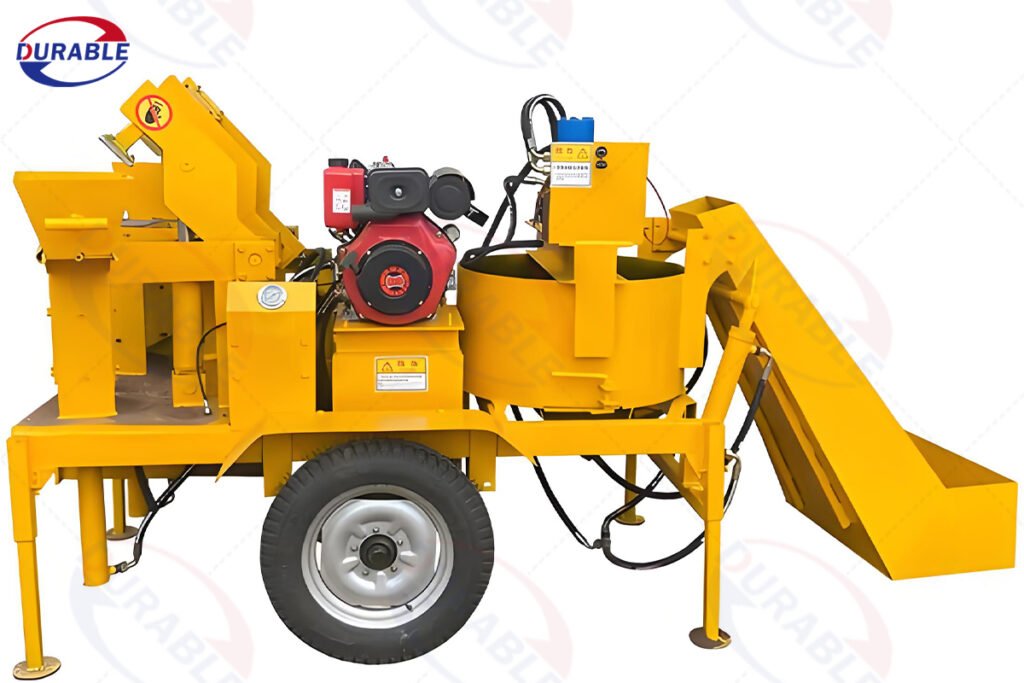
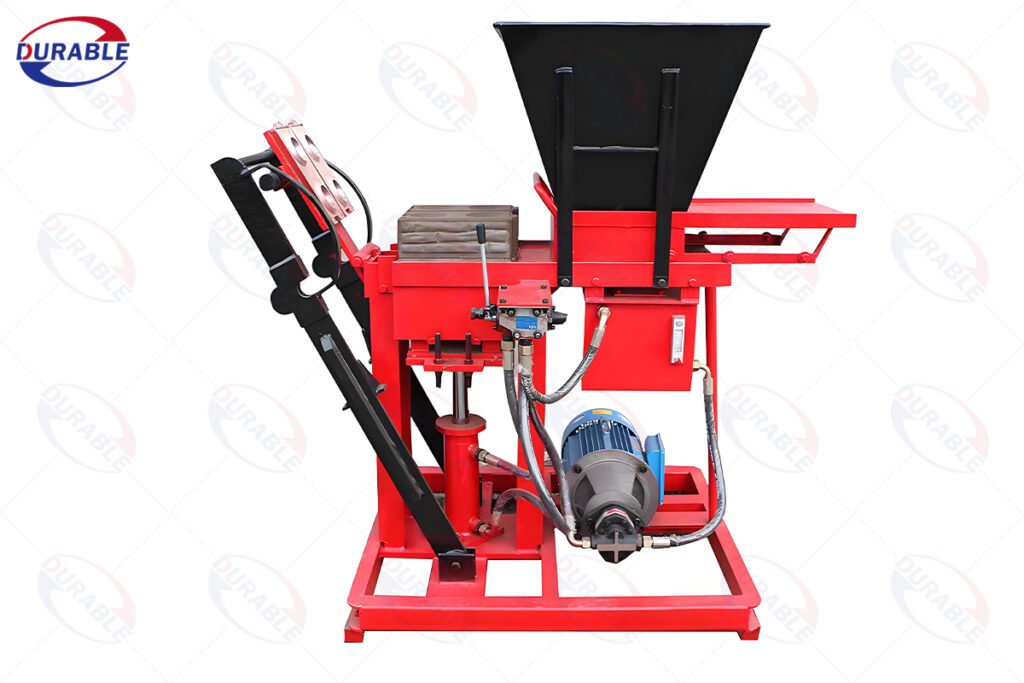
Types of interlocking brick machines:
- Manual/Lever Operated Machines:
- Advantages: Low cost. No external power is required. Operation is simple. Portability is high. These machines are suitable for very small-scale projects or remote locations without access to electricity.
- Disadvantages: Production rate is low (100-300 bricks/day). They require manual effort. Compaction can vary. The physical labor requirement limits sustained high-volume production.
- Best For: Small community projects, individual home builders, remote areas without electricity.
- Hydraulic – Diesel Engine Powered Machines:
- Advantages: They deliver high pressure. Output is consistent. Production rates are good (1,000-3,000 bricks/day). They are mobile (on wheels). They operate independently of grid power. Their autonomy makes them ideal for temporary sites.
- Disadvantages: Initial cost is higher. They consume fuel. They can be noisy. Fuel consumption is an ongoing operational cost.
- Best For: Medium-scale projects, rural construction, areas with unreliable electricity, aid projects.
- Hydraulic – Electric Motor Powered Machines:
- Advantages: They operate quietly. They are clean. Running costs are lower if electricity is cheap. Production rates are higher (2,000-5,000+ bricks/day for multi-block machines). They are often automated. Automation reduces labor dependency.
- Disadvantages: They require a reliable electricity supply. They are generally less mobile. A stable power grid connection is essential for their operation.
- Best For: Large, fixed production sites, urban projects, commercial block production.
DURABLE assists in assessing project situations. It considers budget, local labor costs, and power availability. This guides machine recommendations for project success.
Maximizing Machine Uptime and Lifespan
A machine represents an investment. Maximizing its uptime and lifespan increases profits. Operation and maintenance are crucial. Neglecting these steps leads to breakdowns. It shortens machine life. DURABLE designs machines for durability. It provides knowledge for sustained operation.
Ways to maximize machine uptime and lifespan:
- Proper Curing: This is essential for brick strength. New bricks must remain moist for at least 7-14 days. Rapid drying must be prevented. This allows cement hydration. Bricks can damage machines during stacking or transport if not cured correctly.
- Consistent Raw Material Quality: Use clean, mixed soil consistently. Remove large stones and organic matter. Inconsistent material causes blockages. It stresses the machine. This leads to wear. Material uniformity safeguards machine components.
- Optimal Moisture Content: Check soil mix moisture regularly. Dry mixes produce weak bricks. Wet mixes cause deformation. Correct moisture ensures proper compaction. Adherence to moisture specifications is paramount for product quality.
- Regular Maintenance Schedule: Adhere to the manufacturer’s guide. Check hydraulic oil levels. Lubricate moving parts. Inspect hoses and fittings. Tighten bolts. Proactive maintenance prevents unexpected failures.
- Quality Spare Parts: Use DURABLE spare parts. Inferior parts cause damage. They lead to breakdowns. DURABLE provides reliable parts. Authentic parts maintain machine integrity.
- Operator Training: Ensure operators are trained. They must understand machine functions, operate it correctly, and troubleshoot basic issues. This reduces operational errors. Properly trained staff minimize downtime.
- Routine Checks: Perform daily checks before starting operations. Listen for unusual noises or vibrations. Address issues immediately. This prevents minor problems from becoming major ones. Early detection of anomalies saves significant repair costs.
DURABLE machines use high-quality components. These include Taiwan Kelijia hydraulic stations. German Schneider frequency converters are used. Siemens or Omron electrical components are standard. These parts contribute to operational life. They contribute to reliability.
DURABLE Interlocking Brick Machine Advantages
DURABLE manufactures block machines. Operations began in 1990. This provides over 30 years of experience. DURABLE produces machines. It provides solutions for customers. The understanding of block production makes DURABLE distinct. Focus is on innovation. Focus is on quality.
DURABLE interlocking block machine advantages include:
- Comprehensive Range: DURABLE offers equipment for the entire process. This extends from raw material mixing to brick formation. This means a single supplier solution. This simplifies integration. A full product line minimizes coordination complexity for customers.
- Customization: Solutions are tailored to specific needs. This includes material type, production goals, and brick sizes. Fifteen engineers design equipment and production lines. Customization ensures optimal performance for diverse project requirements.
- Efficiency and Energy Saving: Machines consume low power. They produce output with less energy. This reduces operational costs. Energy-efficient designs contribute to sustainability goals.
- Smart Technology: Equipment includes intelligent features. Siemens PLC control cabinets are used. Sensors are integrated. This improves precision. It improves ease of use. Automation enhances operational safety and consistency.
- Superior Quality: Wear-resistant steel is used. Parts are sourced from established brands. Taiwan Kelijia supplies hydraulics. German Schneider provides frequency converters. Siemens and Omron supply controls. This ensures durability and performance. High-quality components reduce maintenance frequency.
- Advanced Manufacturing: The 8000 square meter factory uses advanced equipment. This includes CNC machines, cutting machines, and welding equipment. This ensures precise manufacturing. Over 500 units are produced annually. Modern manufacturing processes ensure tight tolerances and product reliability.
- Global Expertise: Products are in over 120 countries. Successful cases exist. This provides understanding of market needs. Experience in varied climates and operational environments informs product development.
- Direct Factory Sales: Products are sold directly. This eliminates middlemen. This offers competitive prices. Direct sales streamline communication and reduce customer acquisition costs.
DURABLE values its history. It is known for quality. It is known for engineering excellence. Selecting DURABLE signifies choosing a partner for success.
Support from DURABLE
Choosing DURABLE means partnership. This partnership is full-service. Support is provided. It is complete. It extends from project start to finish. This ensures project success. The support model minimizes risks. It maximizes efficiency.
DURABLE full-service support includes:
- Solution Design: Engineers collaborate on production line design. This covers factory layout and equipment selection. Comprehensive planning optimizes operational flow and space utilization.
- Equipment Manufacturing: Machines are built to standards. DURABLE manufacturing facilities are used. Every component undergoes checks. Quality control throughout manufacturing ensures product integrity.
- Installation and Commissioning: Technicians travel to the site. They supervise installation, ensure system setup, and initiate system operation.On-site commissioning verifies functionality under actual operating conditions.
- Personnel Training: Training is provided for the team. They learn machine operation, safe practices, efficient use, basic maintenance, and troubleshooting. This empowers the workforce. Skilled operators improve productivity and reduce errors.
- After-Sales Service: Support continues long after purchase. Technical assistance is offered. It is lifetime. Reliable spare parts are provided. Assistance is readily available. Long-term support ensures sustained machine performance.
- Global Reach: Machines are in over 120 countries. Logistics are understood. Parts and support are delivered efficiently. Global infrastructure enables prompt service delivery worldwide.
Commitment is to project success. The goal is years of productivity. DURABLE stands behind every machine. This provides operational security.
Profitability of an Interlocking Brick Machine Investment
Factors determine profitability. For an interlocking brick machine, investment return is strong. Value creation for a business is high.
Consider these points:
- Low Operating Costs: Local soil is inexpensive. Cement use is minimal. Labor requirements are lower than traditional masonry. These factors contribute to low production costs. Operational efficiency directly impacts profit margins.
- High Demand for Affordable Housing: Many regions require affordable building materials. Interlocking bricks fulfill this need. This ensures a consistent market for the product. Market alignment drives sales volume.
- Reduced Project Timelines: Faster construction means projects complete sooner. This saves money on labor and overhead. It permits undertaking more projects. Shorter project cycles improve capital turnover.
- Sustainability Advantage: Interlocking bricks are eco-friendly. This is a selling point. It attracts clients. It qualifies for incentives. Environmental benefits appeal to a growing segment of the market.
- Long-Term Asset: A DURABLE machine lasts. With maintenance, it produces bricks for years. This provides steady income. Machine longevity ensures extended revenue generation.
DURABLE helps achieve profitability. Machines are designed for efficiency and longevity. This maximizes success potential. A planned interlocking brick business represents a venture. It is rewarding.
Initial Steps for Project Commencement
An interlocking brick machine’s function is understood. Its benefits are recognized. Its operation is clear. The next step is to explore technology application. It is time to implement knowledge. DURABLE provides guidance.
Initial steps include:
- Contact DURABLE: Reach out to the DURABLE team. The team receives project needs.
- Discuss Project Details: Provide information on location, materials, and production goals.
- Receive a Custom Proposal: Information is analyzed. A detailed proposal is provided. This proposal includes machine recommendations, pricing, and factory layout plans.
DURABLE’s 30+ years of block machine industry experience assists in decision-making. This decision is informed. It guides toward a successful, profitable block manufacturing business.
Common Questions About Interlocking Brick Machines
Question 1: Do interlocking bricks require no mortar?
No. While dry laying is possible for most wall courses, mortar is essential for the first course (for leveling the foundation), lintels, doors, and window frames to ensure stability and weather sealing.
Question 2: What is the most important factor for good interlocking bricks?
The most important factor is local soil quality, followed by the correct soil-cement-water mix. Raw material quality directly impacts machine performance and brick strength, so always test soil and adhere to mix ratios.
Question 3: Is an interlocking brick machine usable for regular concrete blocks?
Generally, no. Interlocking brick machines use high pressure for soil-cement mixes, whereas concrete block machines rely on vibration for concrete mixes. These are distinct technologies; some interlocking machines can produce solid blocks, but not hollow concrete blocks.
Question 4: How long do interlocking bricks cure?
Interlocking bricks require moist curing for at least 7-14 days to allow cement hydration and strength gain. Strength continues to develop for 28 days, similar to concrete. Proper curing is vital for durability.
Summary and Advice
An interlocking brick machine is a construction innovation. It provides an efficient, cost-effective, and sustainable building method that uses local soil and reduces mortar use.This accelerates construction. It lowers costs. These machines offer versatility. They produce various brick and paver types. Quality raw materials and proper curing are essential for success. Machine selection must align with specific needs. This includes manual, diesel, or electric options.
Investment in quality is advised. Knowledge of soil properties is important. Partnership with a supportive company is beneficial. DURABLE has provided this since 1990. Commitment to project success is firm. Machines are durable. Guidance is expert.
Why Choose DURABLE?
DURABLE is an experienced Chinese B2B block machine manufacturer with 30+ years of expertise. We offer a comprehensive, customizable range of concrete and clay brick machines, covering mixing to stacking. Using high-quality materials and advanced equipment, we ensure the right solution. Full-service support (design, manufacturing, installation, training, after-sales) is provided. Exporting to over 120 countries, DURABLE offers competitive factory-direct prices, reliable equipment, and lasting partnerships. Contact us for a custom quote and consultation.