 Durable Machinery
Get Price
Charcoal Making Machines: Complete Production Line Guide 2026
A profitable charcoal plant depends on the right machinery. Many beginners assume only a kiln and a press are necessary. This is a common mistake. A full charcoal production line is required to produce high-quality products. Many plant owners lose money because basic processing steps are skipped. This guide details the exact charcoal making machines required from start to finish.
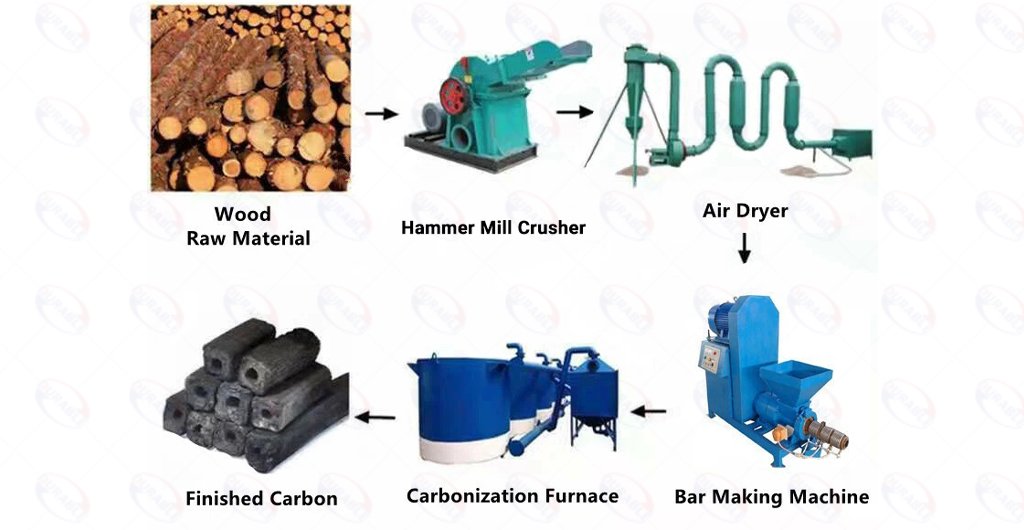
What Equipment is Needed for Raw Material Pre-processing?
A wood crusher and a rotary dryer are essential for this stage. Raw biomass usually comes in various sizes. Large logs or wet branches cannot go directly into a furnace. A heavy-duty crusher is recommended to make the material uniform. Then, a dryer must remove moisture. If raw material moisture exceeds 20%, the furnace will struggle. It will spend most of its energy boiling water instead of making charcoal. This wastes fuel and leaves a “brown core” in the final product.
Many operators try to skip the drying phase to save on biomass carbonization equipment costs. However, this often leads to double the fuel spending and lower yields. Investing in a rotary dryer or a large drying yard is a strategic move. Reducing moisture from 40% to 15% can double the total output. This is the first critical step to ensuring a high-profit plant.
The Role of the Wood Crusher
The crusher breaks down large pieces of wood or agricultural waste into small chips or powder. This increases the surface area of the material. Consequently, the carbonization process becomes faster and more even. The crusher choice must match the material type. Hardwoods require more power than soft biomass. Proper sizing prevents jams and reduces wear on the furnace.
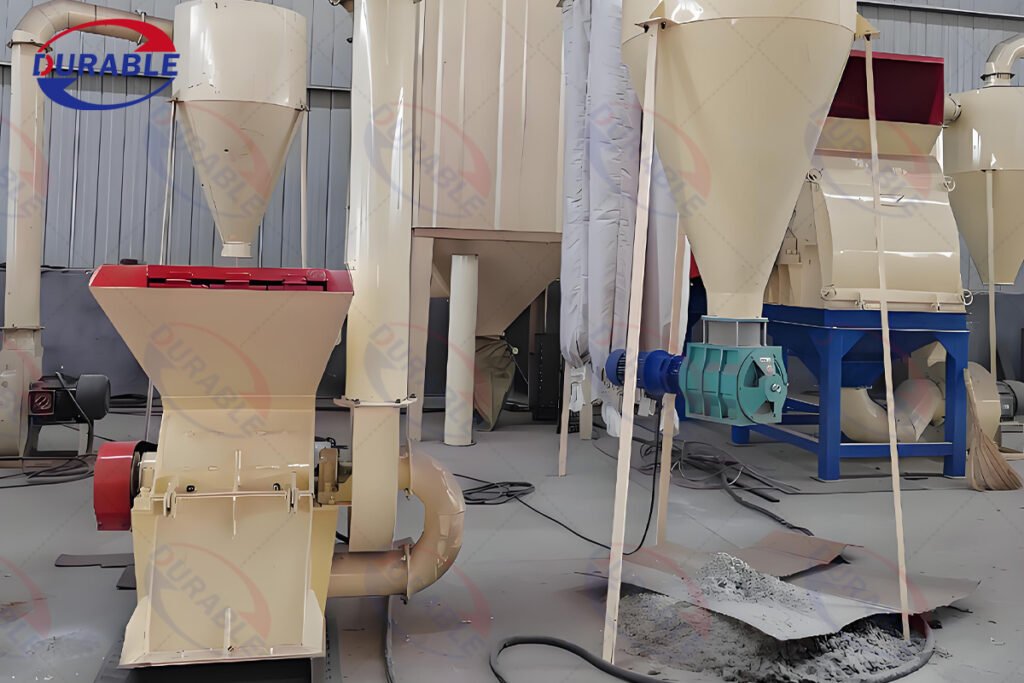
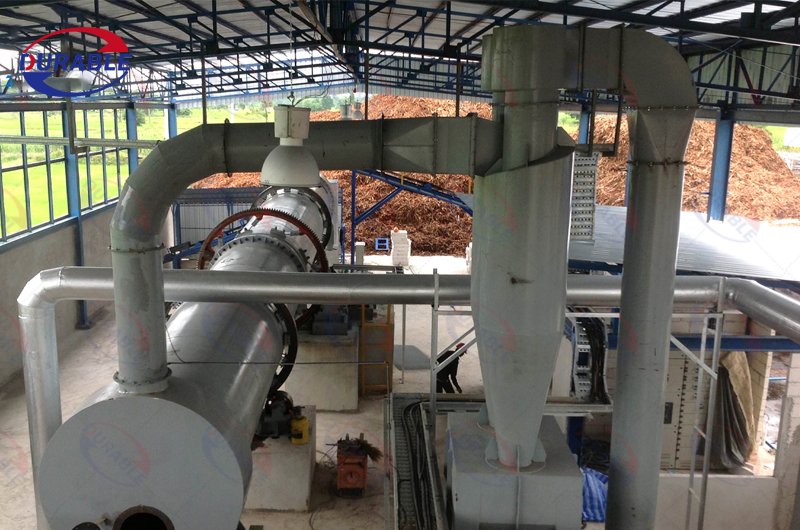
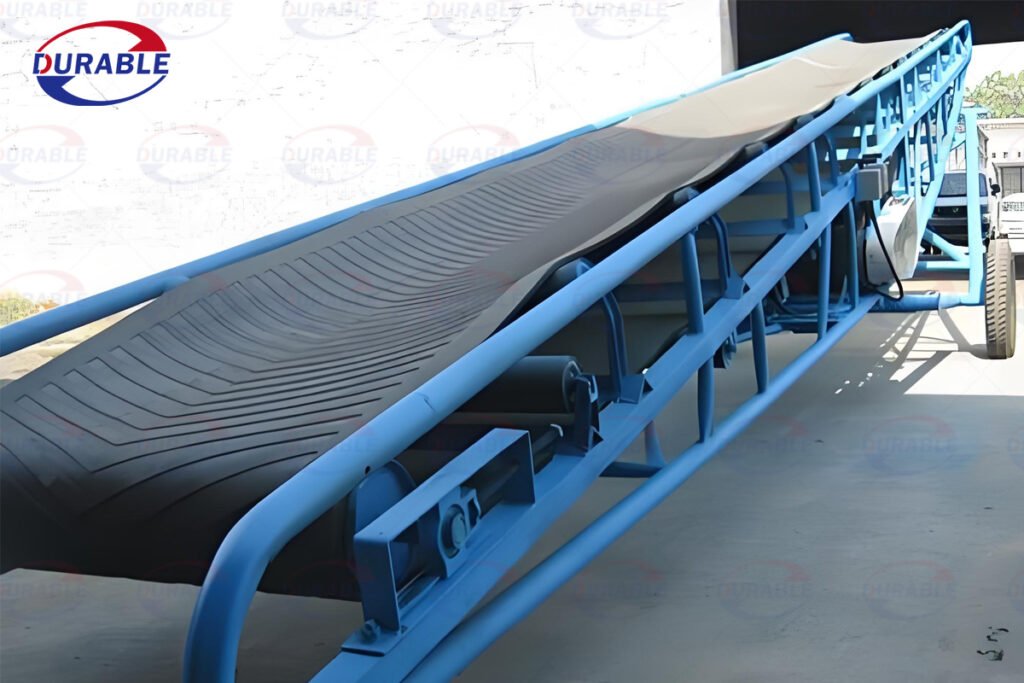
| Equipment | Main Function | Key Spec | Benefit for the Plant |
|---|---|---|---|
| Hammer Crusher | Break logs into chips | High RPM | Faster processing |
| Rotary Dryer | Remove water | Heat control | Higher carbon yield |
| Conveyor Belt | Move materials | Speed control | Less manual labor |
User Tips for Pre-processing:
- For wet wood: Use a rotary dryer to reach 15% moisture before carbonizing.
- For large logs: Use a heavy-duty hammer crusher to get uniform 2-5cm chips.
- For biomass waste: Use a screen to remove stones and metal before crushing.
How Does the Carbonization Phase Work?
The choice lies between a continuous carbonization plant and a batch kiln. A batch kiln works like a large pot. It is filled, heated, and then left to process. This option is cheaper to purchase but requires more labor. A continuous plant operates like a conveyor belt. Material enters one end and charcoal exits the other. This system is much faster and ensures consistent quality. Continuous systems are generally preferred for B2B businesses. They allow for sales to large industrial buyers who demand stability.
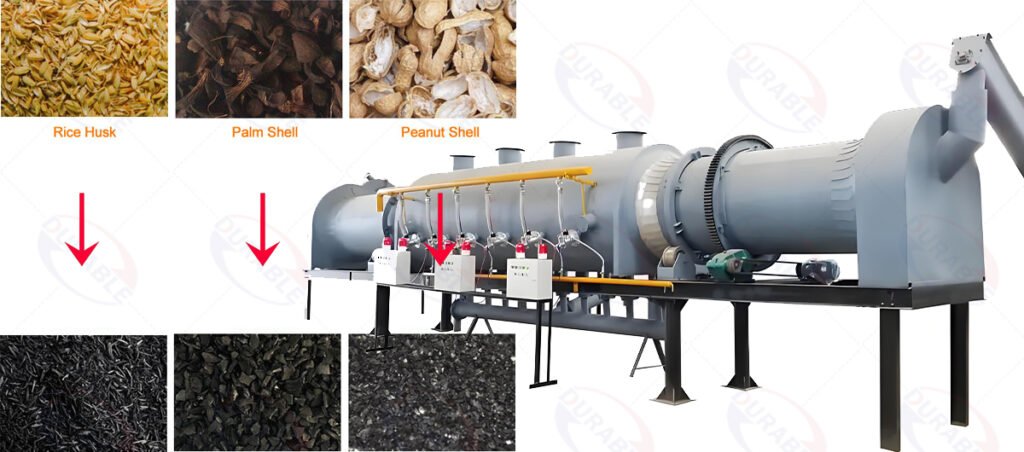
A major problem with cheap kilns is “black smoke.” This is a mixture of tars and gases. Local environmental authorities often shut down plants that vent this into the air. A closed-loop gas recirculation system is the solution. This system pipes the syngas back into the burner. It burns the smoke and uses it as fuel. This makes the plant eco-friendly. It also reduces external fuel costs to almost zero once the process starts.
Why Continuous Systems Win for Large Scale
Continuous systems significantly reduce manual work. There is no need to load and unload the kiln by hand every few days. The heat remains steady. This means the charcoal has the same carbon content throughout the batch. Such plants can produce thousands of tons per year without stopping. This capability is essential for scaling a business and meeting large contracts.
| Feature | Batch Kiln | Continuous Plant | Business Impact |
|---|---|---|---|
| Labor Cost | High | Low | More profit per ton |
| Quality | Varies | Stable | Easier to find B2B buyers |
| Emission | High Smoke | Low/Zero | No legal trouble |
User Tips for Carbonization:
- For small startups: Start with a batch kiln to test the local market.
- For growth: Use a continuous plant to lower labor costs by 70%.
- For environment: Always install a syngas recovery system to stop black smoke.
Why is Temperature Control Key for High Carbon Content?
Precise temperature control prevents charcoal from turning into ash. Carbonization happens when biomass is heated without oxygen. If the temperature is too low, the wood does not fully break down. This results in a product with low carbon and high volatile matter. If the temperature is too high or oxygen leaks in, the charcoal burns. This is an “air leak” disaster. A small gap of 2mm in the furnace shell can let in oxygen. At 500°C, this oxygen will burn the product into gray ash.
Furnaces made of high-temperature seamless steel are recommended. The walls should be 20% thicker than the standard. Graphite sealants should be used on all joints. This creates a vacuum-tight seal. Perfect heat control results in high-carbon charcoal. This product is more valuable. It burns longer and hotter. Industrial buyers usually pay a premium for this quality.
The Danger of Air Leaks in Kilns
Air leaks are silent killers of profit. When oxygen enters a hot kiln, it causes combustion instead of pyrolysis. This causes the yield to drop from 30% to 20% quickly. This cannot be fixed with more fuel. It must be fixed with better materials. Seals should be checked every week to maintain the vacuum.
User Tips for Heat Management:
- For high purity: Keep the temperature steady between 400°C and 600°C.
- For durability: Use Cr-Mo alloy steel for the furnace shell.
- For seals: Apply high-temperature graphite paste to every joint.
How Do Charcoal Briquette Machines Add Value?
A charcoal briquette machine turns low-value powder into high-value sticks. After carbonization, a lot of charcoal fines or powder often remain. Powder cannot be sold for a high price. A charcoal briquette machine presses this powder into dense shapes. This makes the charcoal easier to transport. It also ensures a steadier burn. BBQ restaurants and home users prefer this format. This process is known as “value upgrading” because the price per ton of briquettes is much higher than raw charcoal.
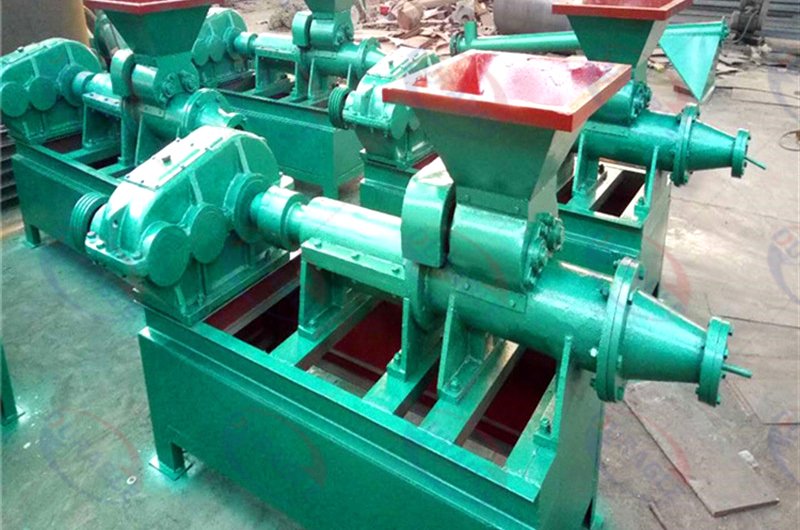
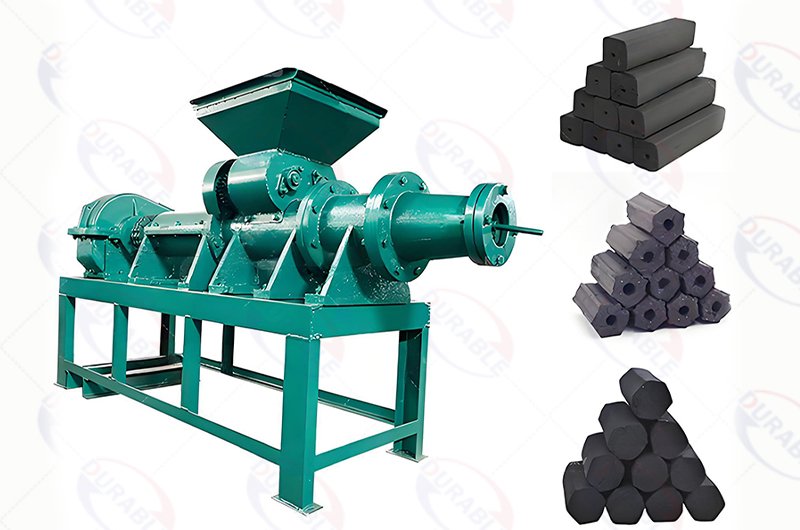
The “popcorn effect” is a common complaint. This is when briquettes crack or explode during drying. This happens due to excessive pressure or poor binder mixing. Heating the screw press with a heating jacket is the best solution. This melts the natural lignin in the wood. Lignin acts as a natural glue. This reduces the need for starch or chemical binders. It makes the briquette stronger and cleaner.
Managing Screw Wear and Hard-Facing
The screw press is the heart of the machine. However, charcoal powder is very abrasive. It acts like sandpaper on the metal. Standard carbon steel screws wear out in a few months. Cr-Mo alloy steel is the professional choice. Furthermore, the screw needs “hard-facing” welding. This involves adding tungsten carbide coatings to the edges. A hard-faced screw lasts 5 to 10 times longer. This reduces downtime from weekly to quarterly.
| Component | Standard Steel | Cr-Mo Alloy + Hard-Facing | Why it Matters |
|---|---|---|---|
| Lifespan | 3 Months | 18-24 Months | Less machine downtime |
| Friction | High | Low | Lower energy use |
| Surface | Rough | Smooth | Better briquette finish |
User Tips for Briquetting:
- For BBQ charcoal: Use a screw press to create hexagonal shapes.
- To stop cracking: Heat the screw press to activate natural lignin.
- To save money: Buy a hard-faced screw to avoid monthly replacements.
What Equipment is Needed for Finishing and Packaging?
A cooling conveyor and an automated packaging line are necessary. Opening a hot kiln too early is a huge risk. If hot charcoal hits the air, it can ignite spontaneously. Industry records show entire warehouses catching fire because of this. A controlled cooling zone is required. A water-jacketed conveyor is the best choice. It brings the temperature down to below 50°C in a sealed environment. Only then can the charcoal move to the packaging area.
For packaging, automated weighing and bagging machines should replace manual bagging for large orders. This ensures every bag has the exact same weight. It also reduces the amount of charcoal that breaks during packing. Reinforced PP bags are suggested to lower the breakage rate during shipping. For supermarket sales, a shrink-wrap machine provides a professional look.
The “Vinegar” Opportunity: Waste to Profit
The liquid that leaks from the carbonizer is often thrown away. This is a missed opportunity. That liquid is Pyroligneous Acid, or Wood Vinegar. It is highly valuable in organic farming as a natural pesticide and growth stimulant. Installing a condenser system on the gas line allows for the collection of this vinegar. For some plants, selling wood vinegar covers the entire electricity bill. This makes charcoal production essentially “free.”
User Tips for Finishing:
- For safety: Never expose charcoal to air until it is below 50°C.
- For profit: Install a condenser to collect wood vinegar from the smoke.
- For shipping: Use an automated bagger to avoid weight errors and product waste.
How Should Equipment be Chosen for Different Plant Sizes?
Equipment choice depends on the target market and budget. For a startup, a “Flexible Line” is recommended. This includes a batch kiln and a small briquette press. This allows for market testing without excessive spending. However, a crusher must still be included. Without one, efficiency will be too low. A starting capacity of 5-10 tons per day is suggested.
For medium to large plants, a “Continuous Line” is necessary. This includes a rotary dryer, a continuous carbonization furnace, and high-capacity briquette machines. At this scale, labor is the biggest cost. Automating the process is the only way to keep margins high. A capacity of 50+ tons per day is recommended. This allows for contracts with large B2B industrial distributors.
| Scale | Key Equipment | Focus | Target Market |
|---|---|---|---|
| Startup | Batch Kiln + Manual Press | Low CAPEX | Local vendors |
| Medium | Continuous Kiln + Auto Press | Efficiency | Regional distributors |
| Large | Full Auto Line + Vinegar Plant | Max ROI | Global B2B / Industry |
User Tips for Scaling:
- Startup phase: Use a batch kiln to save on initial costs (Low CAPEX).
- Growth phase: Upgrade to a continuous plant to lower daily costs (Low OPEX).
- Expert level: Add a wood vinegar condenser to create a second income stream.
What are the Hidden Costs of a Charcoal Production Line?
True investment involves looking beyond the machine price. Many buyers only consider CAPEX (the purchase cost) and forget OPEX (the running cost). Electricity and labor are the biggest hidden costs. Cheap, manual machines often lead to higher worker costs over time. A machine that costs 30% more but saves 50% in labor is the more economical option.
Wear and tear is another hidden cost. Charcoal production is a harsh process. Parts like the screw press and furnace lining will wear out. Without a budget for spare parts, the plant may stop for weeks while waiting for shipments. Purchasing a “startup spare parts kit” with the first order is recommended. This should include extra seals, heating elements, and a spare hard-faced screw.
CAPEX vs. OPEX: The Profit Trap
Low CAPEX often leads to high OPEX. For example, a cheap kiln might save $5,000 today. But if it leaks air and loses 10% of the yield, the loss is $20,000 in a year. This is the “Profit Trap.” Investing in high-efficiency machines is advised. They have higher upfront costs but pay for themselves through higher yields and lower energy bills.
User Tips for Budgeting:
- Spare Parts: Budget 3-5% of the machine cost per year for maintenance.
- Energy: Calculate electricity cost per ton of charcoal, not per hour.
- Labor: Compare the cost of 5 workers versus one automated machine over 3 years.
How to Lower Energy Use and Increase Heating Value?
Costs can be lowered by utilizing the heat from the carbonization process. Carbonization creates significant heat and gas. Letting this gas escape is a waste of money. A smart plant uses a heat exchanger. This takes the hot gas from the furnace and uses it to heat the rotary dryer. Consequently, the dryer does not need its own large fuel burner. This reduces the total energy bill significantly.
To increase the heating value of charcoal, focus must be on the carbon content. This requires avoiding all oxygen during the process. A vacuum-monitored system is suggested. If the pressure drops, a leak is present. Fixing leaks immediately ensures charcoal purity. High-purity charcoal has a higher calorific value and burns longer, which attracts more customers.
Optimizing the Briquette Density
Briquette density determines the burn time. Low density causes the charcoal to burn too fast. Excessively high density can make it hard to light. Adjusting the screw pitch of the briquette machine is the solution. A tighter pitch creates a denser product, which is preferred by industrial users. For home BBQ, a slightly looser density is better.
User Tips for Energy:
- Heat Recovery: Connect the furnace exhaust to the dryer to save fuel.
- Purity Check: Use a simple carbon analyzer to ensure product meets B2B standards.
- Density Tuning: Adjust screw pressure to match the heating needs of the customer.
Which Materials Extend the Life of Your Carbonization Furnace?
High-temperature seamless steel is the professional choice for a furnace. Cheap furnaces use rolled steel, which has internal stresses. At 600°C, rolled steel can warp or bend. Once warping occurs, the seal breaks, oxygen leaks in, and the charcoal burns. Seamless steel with a wall thickness 20% thicker than the standard is essential to ensure the furnace stays round and sealed for years.
The lining is also critical. Some furnaces use refractory bricks, while others use high-temp alloy coatings. For continuous plants, a combination of alloy steel and graphite seals is recommended. Graphite handles extreme heat without melting and fills tiny gaps in the joints. This keeps the internal environment oxygen-free and ensures a 10-year machine lifespan.
The Importance of Alloy Steel in Screws
The screw press faces extreme friction. Standard steel vanishes in weeks. Cr-Mo (Chromium-Molybdenum) alloy steel handles heat and pressure much better. Adding a hard-facing layer is like putting a diamond shell on the metal. It resists the abrasive nature of charcoal powder and avoids weekly shutdowns for repairs.
| Material | Use Case | Benefit | Lifespan |
|---|---|---|---|
| Seamless Steel | Furnace Shell | No warping | 10+ Years |
| Graphite | Joints/Seals | Airtight | 2-3 Years |
| Cr-Mo Alloy | Screw Press | Wear resistance | 1-2 Years |
User Tips for Material Choice:
- Shell: Demand seamless steel to prevent warping and air leaks.
- Joints: Use high-temperature graphite sealant for a vacuum-tight seal.
- Screws: Only buy Cr-Mo alloy with hard-facing welding for long-term use.
How to Evaluate Suppliers for the Best ROI?
Evaluation should be based on technical support rather than the price tag alone. A cheap machine from an unreliable supplier is a liability. If a part breaks, waiting three weeks for a replacement is unacceptable. Inquiring about the “after-sales response time” is recommended. A good supplier should provide troubleshooting via video call within 24 hours and maintain a clear list of wear parts for quick ordering.
The supplier’s experience with specific raw materials is also important. Making charcoal from coconut shells differs from using sawdust. Requesting a “material test report” is a professional step. A quality supplier will ask for a biomass sample, run it through the machines, and provide the exact yield and energy cost. If a supplier claims a machine “works for everything” without testing, caution is advised.
ROI Calculation: The Real Formula
ROI is not simply [Sales – Machine Cost]. The real ROI is [Sales – (Machine Cost + Labor + Fuel + Maintenance)]. A machine that is $2,000 cheaper but costs $500 more per month in fuel results in a net loss within four months. A detailed OPEX sheet showing the cost per ton is the only way to determine if the investment will pay off.
User Tips for Choosing Suppliers:
- Material Test: Send a 10kg sample of biomass to the supplier before buying.
- Support: Ask for a guaranteed response time for technical support.
- ROI: Request an OPEX sheet to see the real cost per ton of charcoal.
2026 Trends in Charcoal Production
The industry is shifting toward “Zero-Emission” and “Full-Value” plants. In 2026, simply making charcoal is not enough. Governments now require strict emission controls. The trend is toward fully closed-loop systems that capture all gas and turn it into energy or chemicals. This transforms the plant into an “energy center” rather than just a factory.
The rise of “Biochar” for soil improvement is another trend. Biochar is produced using similar biomass carbonization equipment but with different temperature settings. It is sold to organic farms to trap carbon in the soil. This opens a new, high-paying market. More clients are adding separate lines for Biochar to diversify income streams.
Latest Progress at a Glance:
- Gas Recirculation: New burners can run on 100% syngas, eliminating external fuel.
- AI Monitoring: Sensors now alert owners to air leaks in real-time via mobile apps.
- Biochar Integration: Plants can now switch between BBQ charcoal and Biochar.
Market Insights
The demand for high-density briquettes is growing in Europe and North America. There is a preference for cleaner-burning charcoal for home use. This increases the demand for high-precision charcoal briquette machines. Producing a smoke-free, high-carbon briquette allows entry into the premium export market, where the highest margins are found in 2026.
Frequently Asked Questions
Q1: Can any wood be used for charcoal making?
Yes, but yield and quality vary. Hardwoods produce denser charcoal. Softwoods and biomass (like coconut shells) carbonize faster but may require more binder in the briquette press. Material testing is always recommended.
Q2: How long does it take for a charcoal plant to pay for itself?
Usually, 12 to 24 months. This depends on scale and market. Continuous plants have higher initial costs but a faster ROI due to lower labor and fuel costs.
Q3: Is it hard to operate a continuous carbonization plant?
It is easier than a batch kiln once set up. It requires less manual loading. However, a trained operator must monitor temperature and pressure to prevent air leaks.
Q4: What is the most common reason for plant failure?
Poor pre-processing. Putting wet wood into the kiln wastes fuel and ruins charcoal quality. A dryer is essential for success.
Summary and Recommendations
A successful charcoal plant requires a complete system. Start with a crusher and a rotary dryer to remove moisture. Use a continuous carbonization furnace with seamless steel and graphite seals to ensure high carbon content and zero smoke. Use a hard-faced screw briquette machine to turn powder into high-value sticks. Finally, implement a cooling zone and a packaging line to protect the product.
Recommended plan for new operators:
- Test biomass samples to find the right machine specs.
- Prioritize a closed-loop gas system to avoid environmental fines.
- Invest in Cr-Mo alloy parts to reduce maintenance downtime.
- Set up a wood vinegar condenser to create extra profit.
About Durable
Durable Machine is a professional manufacturer of mineral processing and biomass energy equipment since 2001. The company specializes in B2B solutions for mining and energy plants. A comprehensive range of equipment is provided, from crushers to full charcoal production lines. Machines are exported to over 120 countries. Focus is placed on customization and high-efficiency designs to ensure the best ROI. The factory utilizes advanced CNC machines and a team of 15 expert engineers to guarantee quality.
Ready to start a plant?
Contact Durable today for a free material test or a customized equipment list. Expert assistance is available to calculate the real ROI and design the perfect line for any budget.