 Durable Machinery
Get Price
Clay Brick Manufacturing in 2026: Profit, Costs, and ROI
Clay brick manufacturing can still be profitable in 2026, but success depends on more than construction demand. Profitable factories usually combine affordable clay, controlled fuel costs, efficient production, stable product quality, and a nearby market that can absorb regular output.
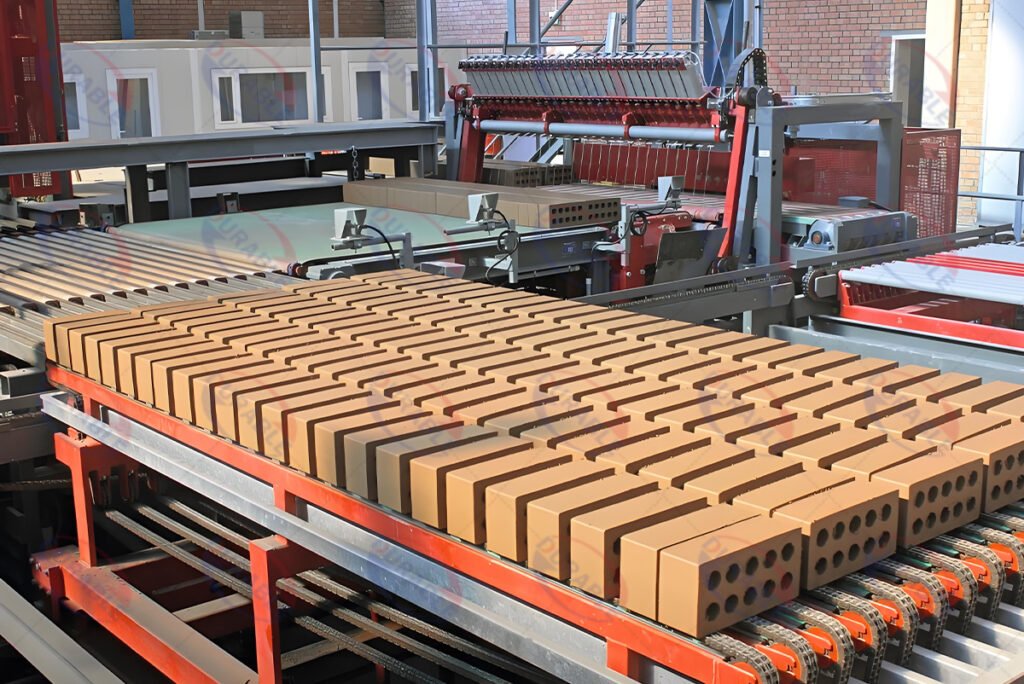
However, the industry is becoming less forgiving. Old kilns, high rejection rates, excessive labor, long transport distances, and weak environmental planning can quickly remove the margin from a promising brick project.
Meanwhile, concrete blocks, compressed earth blocks, fly ash bricks, lightweight wall materials, and prefabricated systems are giving builders more choices.
Therefore, the real question is not simply whether clay bricks are profitable. You need to know whether clay brick manufacturing is profitable under your local conditions.
This guide explains the 2026 profit outlook, major cost factors, common investment risks, equipment choices, automation value, and ROI conditions for a clay brick factory.
What Is the Profit Outlook for Clay Brick Manufacturing in 2026?
Clay brick manufacturing remains commercially attractive in markets where housing construction, urban expansion, reconstruction, and infrastructure development continue to create demand for durable wall materials.
However, demand alone does not guarantee profit.
Clay bricks are heavy, relatively low-value products. As a result, the business is strongly influenced by local economics. A factory located close to clay deposits and active construction projects may perform well, while another factory with similar equipment may struggle because of high fuel costs or long delivery distances.
The strongest clay brick projects usually have several advantages:
- Legal access to suitable clay
- A stable local construction market
- Affordable fuel or efficient firing technology
- Reasonable transport distance
- Consistent brick dimensions and strength
- Controlled breakage and rejection rates
- Enough product variety to avoid pure price competition
Profitability is therefore highly regional.
A country may have rapid construction growth, but a specific city can still be oversupplied with ordinary solid bricks. By contrast, a smaller market may offer good margins if local supply is unreliable or builders are waiting weeks for deliveries.
Before investing, study actual selling conditions in your target area rather than relying only on national construction statistics.
What Really Determines Clay Brick Factory Profit?
The basic profit logic is simple:
Saleable brick output × average selling price − total operating cost
The difficult part is understanding the word “saleable.”
A machine may form thousands of green bricks per shift, but not every formed brick becomes a paid product. Bricks can crack during drying, deform during handling, fire unevenly, break during unloading, or fail customer quality requirements.
Therefore, factory profit depends on usable output rather than theoretical machine capacity.
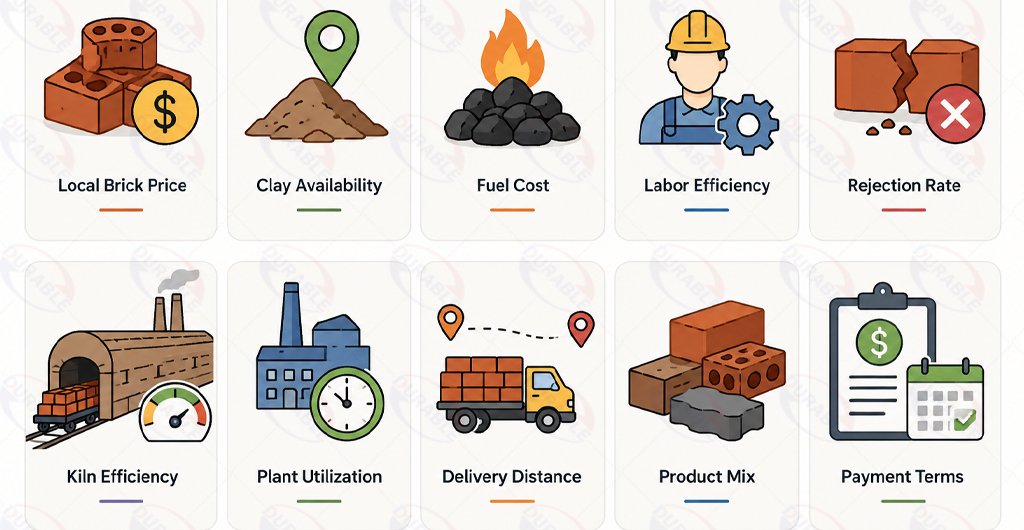
| Profit Factor | Why It Matters |
|---|---|
| Local Brick Price | Controls revenue per saleable brick |
| Clay Availability | Influences extraction and transport cost |
| Fuel Cost | Can become one of the largest firing expenses |
| Labor Efficiency | Determines cost per brick |
| Rejection Rate | Reduces saleable production |
| Kiln Efficiency | Affects fuel use and firing consistency |
| Plant Utilization | Low operating time increases unit cost |
| Delivery Distance | Bricks are expensive to transport |
| Product Mix | Specialized bricks may earn better margins |
| Payment Terms | Slow collection can damage cash flow |
The cheapest factory is not always the most profitable factory.
For example, a low-cost manual plant may look attractive during startup. Yet if it needs too many workers, produces inconsistent dimensions, and loses many bricks during drying and firing, its real cost per saleable brick may become higher than expected.
By contrast, a well-matched Clay Brick Making Machine can improve forming consistency and reduce dependence on manual shaping. Still, the forming machine is only one part of the business.
Clay preparation, drying, firing, handling, sales, and transportation must also work efficiently.
How Much Does It Cost to Produce Clay Bricks?
There is no reliable global cost per brick because clay, wages, fuel, electricity, land, taxes, and transport vary greatly between markets.
A better method is to break production cost into stages.
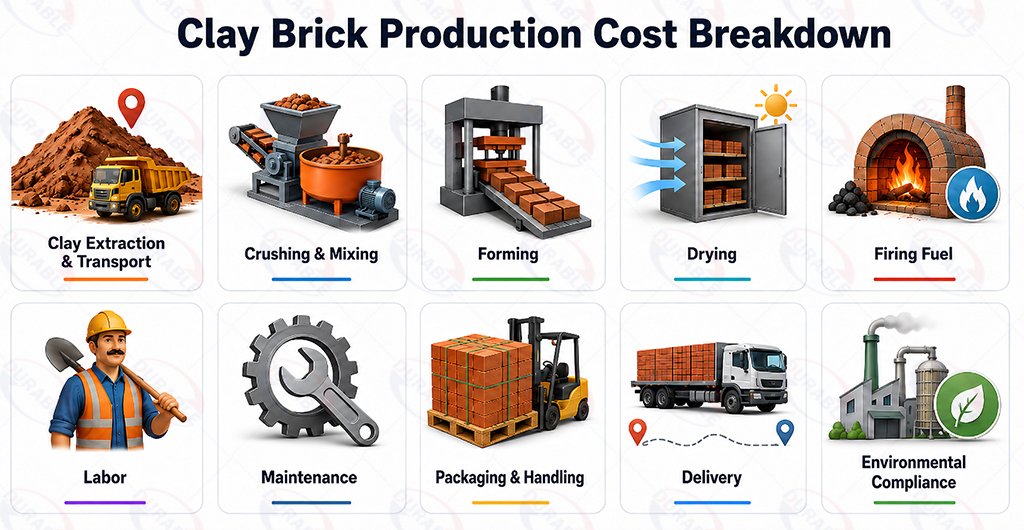
| Cost Category | Typical Financial Impact |
|---|---|
| Clay Extraction and Transport | Lower when the clay source is nearby |
| Crushing and Mixing | Depends on clay condition and impurities |
| Forming | Influenced by labor and automation level |
| Drying | Can be costly in wet or seasonal climates |
| Firing Fuel | Often one of the largest variable costs |
| Labor | Strongly affected by automation level |
| Maintenance | Frequently underestimated |
| Packaging and Handling | Depends on customer requirements |
| Delivery | Can decide whether distant orders remain profitable |
| Environmental Compliance | Increasingly important in many markets |
Clay Preparation
Natural clay is rarely ready for forming immediately. It may need crushing, screening, mixing, moisture adjustment, and aging.
Clay containing stones, roots, or inconsistent moisture can increase equipment wear and reduce brick quality. Saving too much on preparation often creates higher losses later.
Forming
The forming stage affects shape, density, surface quality, and dimensional consistency.
Hydraulic pressing can suit some clay or soil brick products. Extrusion may be better for other fired clay systems. The correct method depends on the clay, brick design, and firing process.
Drying
Drying is one of the most underestimated stages.
If green bricks lose moisture too quickly, they may crack. When drying is uneven, bricks may deform. In addition, bricks entering the kiln too wet can increase fuel use and firing losses.
Firing
Fuel price, kiln design, loading practice, temperature control, and production schedule all influence firing cost.
An inefficient kiln can consume the margin from an otherwise successful factory. For this reason, investors should study fuel availability before choosing production capacity.
Which Clay Brick Plants Are Most Likely to Be Profitable?
The most profitable factory is not automatically the largest one. It is the factory whose capacity, equipment, raw materials, and sales market are properly aligned.
| Project Condition | Profit Potential |
|---|---|
| Local clay and nearby housing demand | High |
| Stable fuel supply and efficient kiln | High |
| Automated forming with confirmed orders | High |
| Cheap clay but distant customers | Medium |
| Multiple brick sizes and designs | Medium to high |
| Old kiln and expensive fuel | Low |
| Seasonal demand and oversized capacity | Low |
| Strong competition in ordinary solid bricks | Low to medium |
Factories Close to the Market
Transport can quietly control profitability.
A nearby factory may charge a similar brick price to a distant competitor but keep more revenue because delivery costs are lower. Location should therefore be studied before equipment is selected.
Factories With Controlled Fuel Costs
Clay may be inexpensive, but fired bricks require heat.
A project with unreliable or expensive fuel can become difficult even when construction demand is strong.
Factories With Stable Saleable Output
A factory that produces fewer bricks with a low rejection rate can be more profitable than a larger factory losing significant output during drying and firing.
Factories Offering More Than One Basic Brick
Ordinary solid bricks often face intense price competition.
Depending on local building practices, factories may improve margins by producing hollow bricks, facing bricks, paving bricks, interlocking products, or customized dimensions.
A versatile Brick Making Machine may support a broader product strategy, although the correct machine must match whether the products are fired clay, compressed soil, or cement-based.
Manual vs. Automatic Clay Brick Production Lines
The production method you choose directly affects labor cost, rejection rate, consistency, and long-term ROI.
A manual setup usually requires lower initial investment. It may be suitable for market testing, small output, or early-stage projects with limited budget.
However, manual production often depends heavily on worker skill. Brick dimensions may vary more, handling damage may increase, and labor cost per saleable brick can rise as output grows.
A Manual Brick Making Machine may still be practical when the goal is simple production and flexible startup control.
As demand increases, automation becomes more valuable.
An Automatic Brick Making Machine can reduce repetitive manual handling, improve forming consistency, and help the production line maintain more stable output.
The main difference is not only speed. Automation also helps reduce quality variation.
| Production Type | Main Strength | Main Limitation |
|---|---|---|
| Manual Production | Lower startup cost and simple operation | Higher labor dependence |
| Semi-Automatic Line | Better balance between cost and efficiency | Still needs more manual handling |
| Automatic Line | Better consistency and lower labor per brick | Higher initial investment |
| Full Production Line | Suitable for larger commercial projects | Requires stronger planning and management |
For commercial factories, automation should be evaluated by total cost per saleable brick, not only by machine price.
In many cases, a higher initial investment can be justified if the system reduces rejects, lowers labor pressure, and improves product consistency.
How Equipment Choice Affects ROI
Equipment selection should begin after the market and raw materials have been studied.
A clay brick investor should not choose a machine only from catalog capacity. The real output depends on clay quality, drying conditions, kiln efficiency, labor organization, power supply, and sales demand.
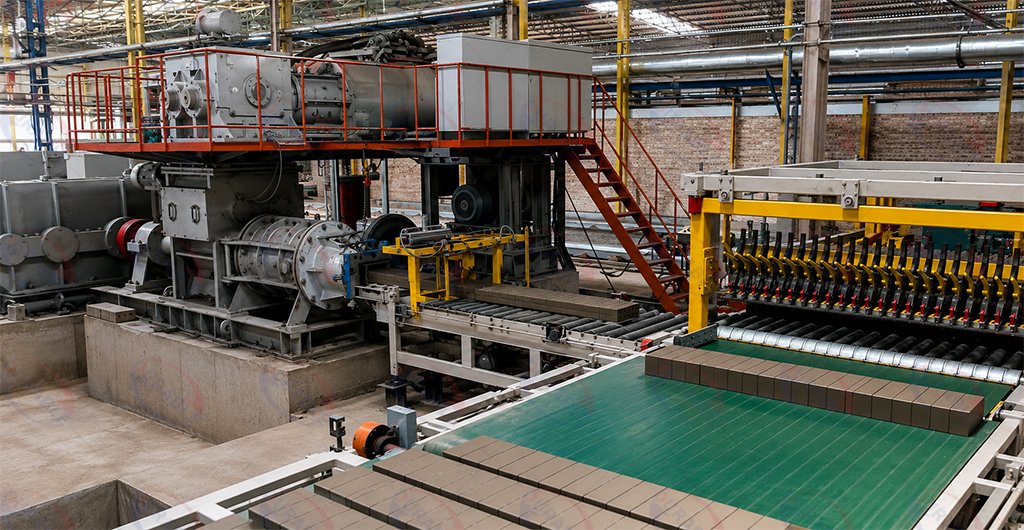
Before selecting equipment, confirm:
- Clay composition and plasticity
- Moisture level
- Required brick dimensions
- Solid, hollow, facing, or interlocking design
- Whether bricks will be fired or cured
- Required daily saleable output
- Available fuel
- Drying conditions
- Labor cost and skill level
- Available land
- Power supply
- Environmental requirements
- Investment budget
| Business Stage | Suggested Direction |
|---|---|
| Market testing | Small or semi-automatic production |
| Local commercial supplier | Stable forming with controlled drying |
| Growing regional factory | Higher automation and material handling |
| Large established market | Integrated production with efficient kiln |
| Premium brick producer | Flexible molds and stronger quality control |
For small and medium projects, hydraulic forming may reduce labor and improve dimensional consistency.
Businesses targeting interlocking soil or clay-based products can also evaluate an Interlocking Brick Machine. This approach may reduce mortar use in suitable markets, although customer acceptance and local building standards must be confirmed.
The quotation request should include clay photos, clay test information, target brick samples, required daily output, local voltage, available fuel, and factory space.
Where Do Clay Brick Manufacturers Lose Money?
Most brick businesses do not fail because nobody needs bricks.
They fail because hidden production losses and poor commercial decisions gradually remove the margin.
Using Theoretical Capacity as the Sales Forecast
Machine output is not the same as saleable brick output.
Planned production should allow for maintenance, drying losses, kiln losses, seasonal interruptions, and unsold inventory.
Building Too Far From Customers
Transporting heavy bricks over long distances can make apparently profitable orders unattractive.
Market radius should be calculated before land is purchased.
Ignoring Clay Testing
Clay that appears suitable may shrink, crack, warp, or fire poorly.
Laboratory testing and small production trials help prevent an expensive mismatch between raw material and process.
Underestimating Drying
Many investors focus on the forming machine and kiln but treat drying as an open-air waiting stage.
In practice, inconsistent drying can become one of the largest sources of rejects.
Using an Inefficient Kiln
An old or poorly operated kiln can consume excessive fuel and create uneven bricks.
Lower equipment investment may lead to higher long-term production costs.
Producing Only One Low-Margin Product
A factory that sells only ordinary bricks may have little protection against price competition.
Product flexibility can help a business serve different construction segments.
Ignoring Environmental and Land-Use Approvals
Clay extraction, smoke, dust, fuel storage, and kiln emissions may require approval.
A production line that cannot operate legally has no meaningful return on investment.
Clay Bricks vs. Alternative Building Materials
Clay bricks remain valued for durability, familiarity, fire resistance, and visual appearance.
However, they no longer compete only with other clay brick factories.
They also compete with concrete blocks, compressed earth blocks, AAC blocks, fly ash bricks, and prefabricated wall systems.
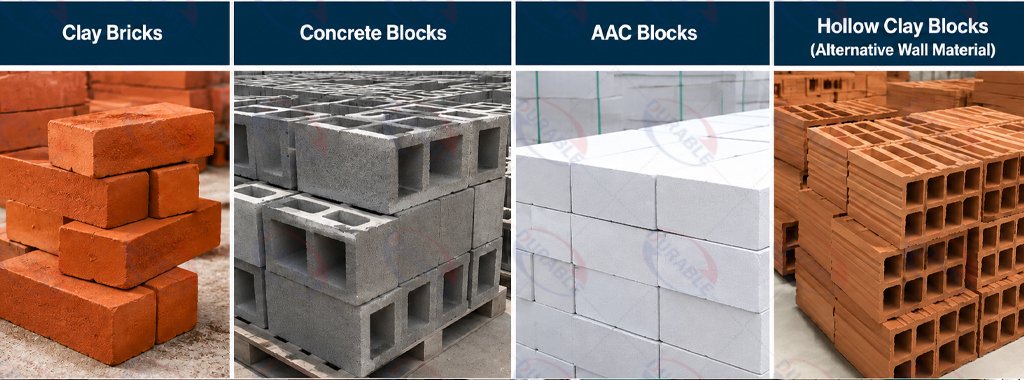
| Material | Main Strength | Main Limitation |
|---|---|---|
| Fired Clay Brick | Durable and widely accepted | Requires drying and firing |
| Concrete Block | Fast production and flexible molding | Depends on cement cost |
| Compressed Earth Block | Lower firing requirement | Needs suitable soil and market acceptance |
| AAC Block | Lightweight and thermally efficient | Higher plant complexity |
| Fly Ash Brick | Uses industrial by-products | Depends on stable material supply |
| Precast Wall System | Fast installation | Requires developed construction market |
The right product depends on local construction habits.
In some markets, builders prefer fired clay bricks and resist alternatives. In others, concrete blocks have gained market share because they can be produced quickly without a firing kiln.
Where customers are moving toward unfired soil products, a Compressed Earth Block Machine or Soil Brick Making Machine may represent another opportunity.
Where cement, sand, and aggregates are widely available, a Concrete Block Machine may be more suitable than a fired clay plant.
The best business is the one that matches local materials and construction demand, not necessarily the one using the most traditional product.
Maintenance Points That Protect Daily Profit
A brick production line relies on continuous material flow.
Because raw clay often contains abrasive particles, machinery can experience heavy wear. If maintenance is ignored, sudden downtime can reduce daily profit quickly.
Important maintenance points include:
- Inspect extruder augers, liners, molds, and wear plates regularly.
- Check cutting wires and forming parts to prevent uneven brick edges.
- Clean clay buildup around conveyors, feeders, and forming areas.
- Lubricate moving parts according to the maintenance schedule.
- Remove stones, roots, and hard debris before clay enters the forming stage.
- Monitor drying quality to reduce cracks and deformation.
- Check kiln temperature control to avoid over-firing or under-firing.
- Train operators to notice abnormal vibration, noise, or forming pressure.
Maintenance should not be treated as a repair task only.
A good maintenance plan protects brick quality, reduces downtime, extends machine life, and improves cost per saleable brick.
How to Choose a Reliable Clay Brick Machine Supplier
Setting up a clay brick factory involves equipment, raw material testing, line layout, drying, firing, installation, and operator training.
Therefore, a supplier should not only sell a forming machine.
A reliable supplier should help evaluate whether the proposed equipment matches the clay and market.
| Supplier Factor | What You Should Check | Why It Matters |
|---|---|---|
| Raw Material Understanding | Can the supplier evaluate clay plasticity and moisture? | Helps avoid wrong equipment selection |
| Equipment Matching | Does the machine fit the brick size and clay type? | Improves forming consistency |
| Line Design Ability | Can they plan feeding, forming, conveying, and handling? | Reduces production bottlenecks |
| Kiln and Drying Support | Can they explain drying and firing requirements? | Helps control fuel cost and rejection rate |
| Wear Part Support | Are augers, molds, cutters, and liners available? | Reduces downtime |
| Export Experience | Can they support packing, shipping, and documentation? | Reduces international purchase risk |
| Installation Guidance | Do they provide setup and operator training support? | Helps shorten startup time |
A good supplier should ask about your raw material, product type, capacity target, fuel source, factory space, and local market before recommending equipment.
For B2B buyers, engineering support often matters more than a small price difference.
Buyer Project Self-Check List
Before requesting a commercial proposal, prepare your basic project information.
This helps engineers recommend the right equipment instead of guessing your needs.
- Have you tested your local clay?
- What is the clay moisture and plasticity?
- Are there stones, roots, sand, or other impurities?
- What brick size and design do you want to produce?
- Will the bricks be solid, hollow, perforated, paving, or interlocking?
- Does your product require firing or curing?
- What daily or hourly saleable output do you need?
- What fuel is available locally?
- What is your electricity supply?
- How much land is available for production, drying, and storage?
- How far are your main customers from the factory?
- What is your expected investment range?
- Which country will the equipment be shipped to?
- Do you need standalone machinery or a complete production line?
The more complete your project details are, the more accurate the equipment recommendation will be.
Frequently Asked Questions
Is clay brick manufacturing profitable in 2026?
Yes, it can still be profitable where local construction demand, clay supply, fuel cost, factory efficiency, and transport distance are favorable. Profit should be evaluated using local project data.
What are the biggest costs in clay brick production?
The main costs usually include clay extraction and transport, fuel, labor, drying, maintenance, packaging, delivery, and rejection losses. The exact cost structure depends on the local market.
How can a clay brick factory improve profit?
A factory can improve profit by reducing rejects, controlling fuel use, improving equipment utilization, shortening delivery distance, automating repetitive work, and producing higher-value brick types.
Is a concrete block machine more profitable than a clay brick machine?
It depends on local materials and demand. If clay and fuel are affordable, clay bricks may work well. If cement, sand, and aggregates are easier to source, concrete blocks may be more practical.
What information is needed before choosing a clay brick machine?
You should provide clay type, moisture, brick size, brick design, required output, firing method, local voltage, fuel source, factory space, labor conditions, and budget range.
Final Thoughts
Clay brick manufacturing can still be profitable in 2026, but the business must be evaluated carefully.
Demand alone is not enough.
A profitable factory needs suitable clay, controlled fuel cost, reasonable delivery distance, stable saleable output, efficient equipment, and a realistic market plan.
Manual or low-cost production may work for small projects, but growing factories often need better forming consistency, lower rejection rates, and stronger labor efficiency.
At the same time, automation should not be selected blindly. The right equipment depends on clay quality, brick type, fuel conditions, factory layout, and confirmed market demand.
Before investing, compare at least three scenarios:
- Expected sales and production
- Lower-than-expected sales
- Higher fuel, labor, and transport costs
A project that is profitable only under the most optimistic scenario is not yet ready.
The best clay brick factory is not necessarily the largest or most automated one. It is the factory whose production system matches local raw materials, local demand, and long-term operating cost.
About DURABLE
DURABLE supplies brick and block making equipment for clay bricks, compressed earth blocks, interlocking bricks, concrete blocks, pavers, and related building-material projects.
Our team evaluates raw materials, brick designs, production capacity, automation level, factory conditions, and investment goals before recommending a suitable machine configuration.
Whether you are testing a small clay brick business or planning a larger production facility, DURABLE can help you compare equipment options and build a more practical project plan.
To review more machine categories, you can browse DURABLE’s Products page. For a customized recommendation, please send your clay type, target brick size, required output, local voltage, fuel source, factory space, and project country.
DURABLE will help you choose a clay brick machine or production line based on your real production conditions.