 Durable Machinery
Get Price
Common Problems in Alfalfa Drying and How to Fix Them?
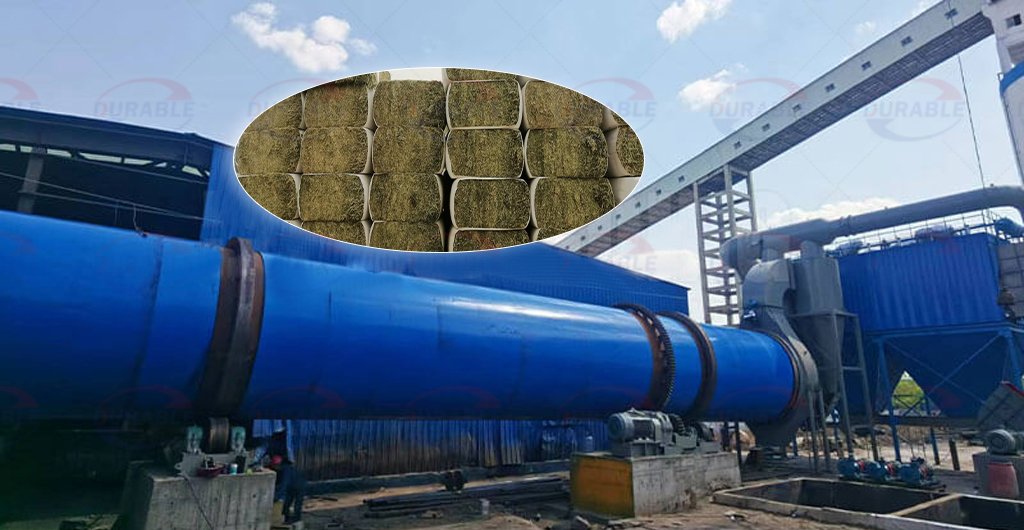
Alfalfa drying is much harder than many investors expect. Many factories focus only on drying speed. But real alfalfa drying is about protecting protein, color, leaf integrity, and storage stability. Poor drying can quickly reduce feed value and create long-term storage problems. This is why modern alfalfa dryer machine systems now focus more on moisture control and airflow design instead of simply increasing temperature.
Why Is Alfalfa Drying More Difficult Than Most Buyers Think?
Alfalfa drying is very different from drying sand, sawdust, or mineral materials. Alfalfa contains protein, fragile leaves, and lightweight fibers. The goal is not only moisture removal. The real goal is preserving feed value while reducing operating costs.
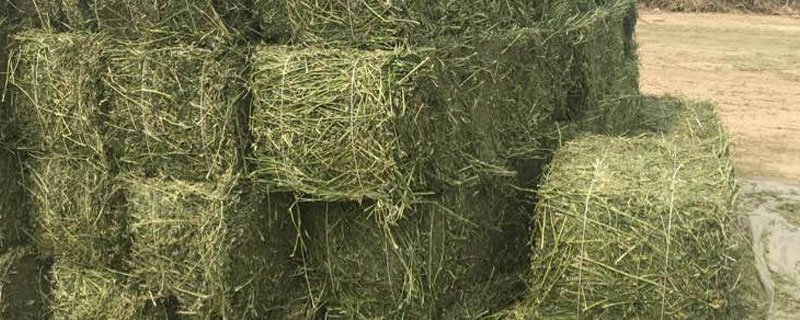
Many first-time investors believe faster drying always means higher profits. In reality, aggressive drying often damages color and nutrition. This directly affects feed pricing in export markets. Many buyers judge alfalfa quality by color before checking laboratory reports.
Fresh alfalfa also has uneven moisture distribution. The stems hold much more water than the leaves. This creates major drying challenges inside an industrial alfalfa dryer system.
Why Protein Protection Matters More Than Drying Speed
In many feed factories, protein loss creates bigger financial damage than fuel costs. Some factories focus too heavily on output capacity. They increase drum speed and drying temperature to process more tons per hour. But this usually creates:
- Leaf breakage
- Dust generation
- Color changes
- Lower digestibility
- Reduced pellet quality
Experienced operators usually run slower and more stable drying systems. This improves final feed value and storage performance.
| Drying Factor | Bad Practice | Better Practice | Actual Benefit |
|---|---|---|---|
| Temperature | Extremely high heat | Controlled multi-stage heat | Better protein retention |
| Drum speed | High RPM | Moderate RPM | Less leaf loss |
| Airflow | Single airflow zone | Balanced airflow | Uniform moisture |
| Moisture control | Manual checking | Online sensors | Better storage safety |
Practical Tips for Alfalfa Plants
- For fresh-cut alfalfa: Use lower inlet temperature to reduce color damage.
- For pellet plants: Install dust collection before pelletizing.
- For export feed: Focus on green color consistency instead of maximum output.
Factory Example: One livestock feed plant reduced leaf loss by nearly 18% after lowering drum speed and redesigning lifting plates inside the rotary dryer.
For better moisture handling systems, many plants also use a customized triple pass rotary drum dryer design to improve heat efficiency.
Why Does Alfalfa Turn Black After Drying?
Black alfalfa is usually caused by poor airflow and local overheating. Many operators believe temperature alone causes this problem. But airflow imbalance inside the drum is often the real reason.
In many low-cost systems, the internal lifting plates are copied from mineral dryers. These designs do not work well for lightweight forage materials. Wet alfalfa can stay too long inside one section of the drum. This creates carbonization zones.
Why Airflow Design Changes Everything
A proper alfalfa rotary dryer must create even material curtains. The hot air should contact the material evenly across the drum.
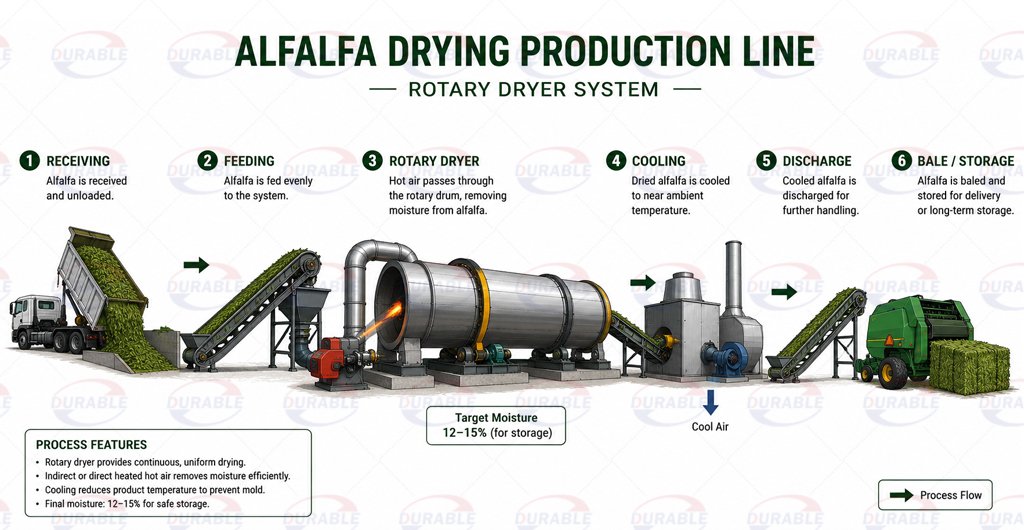
Professional systems usually include:
- Customized lifting flights
- Negative pressure systems
- Multi-zone heating
- Larger airflow volume
- Anti-sticking drum structure
This helps avoid overheating and material buildup.
Useful Industry Advice
- Avoid direct flame contact: It creates local burning areas.
- Control feed rate carefully: Overfeeding increases accumulation.
- Use negative pressure systems: This improves airflow stability.
Many forage plants combine their systems with a biomass burner to create more stable heat control and reduce fuel costs.
How Can You Reduce Leaf Loss During Alfalfa Drying?
Leaf loss is one of the biggest hidden losses in alfalfa processing. The leaves contain most of the protein. Some factories lose 15% to 25% of leaves during drying and transport without realizing it.
Dry leaves become extremely fragile. Excessive drum speed and long drying times increase breakage rapidly.
Why Drum Speed Is So Important
Many factories increase RPM to improve production output. But higher speed increases:
- Impact force
- Material collision
- Dust production
- Fiber separation
Experienced operators usually reduce drum speed during final drying stages.
Better Ways to Protect Leaves
- Use lower drum rotation speed
- Reduce unnecessary material drops
- Install smoother discharge systems
- Use controlled airflow instead of extreme heat
| Problem | Main Cause | Better Solution | Result |
|---|---|---|---|
| Leaf breakage | High drum speed | Lower RPM | Higher protein |
| Dust loss | Poor airflow | Balanced air volume | Cleaner production |
| Dry leaf cracking | Overheating | Stable temperature | Better pellet quality |
Useful Maintenance Advice
- Check lifting plates regularly: Worn plates increase material impact.
- Monitor exhaust dust: Rising dust often means increasing leaf damage.
- Inspect discharge systems: Rough conveyors create secondary losses.
Some operators also install a conveyor belt system with softer transfer angles to reduce material impact after drying.
Why Is Uneven Moisture One of the Most Dangerous Problems?
Average moisture readings can be very misleading. A factory may show 12% average moisture while still containing 18% wet pockets. That is enough to create mold during storage.
This is one of the biggest hidden problems in forage drying equipment operations.
Why Mold Usually Starts Inside the Dryer
Storage problems often begin before packaging starts. Poor airflow creates uneven moisture zones inside the drum. Internal fermentation continues during storage.
This can cause:
- Heat buildup
- Mold growth
- Smell changes
- Pellet cracking
- Export rejection
What Professional Plants Do Differently
Modern systems often use:
- Online moisture sensors
- Multi-point moisture sampling
- Secondary airflow balancing
- Cooling systems before storage
These methods improve moisture consistency significantly.
Practical Suggestions
- Never test only one sample: Moisture varies across discharge areas.
- Monitor cooling temperature: Hot material traps internal moisture.
- Avoid direct warehouse storage: Cool the material first.
Industry Observation: Most mold complaints come from uneven moisture instead of overall moisture percentage.
For plants processing multiple materials, many operators choose a flexible mineral dryer structure with adjustable airflow systems.
Why Do Small Alfalfa Dryers Sometimes Use More Fuel?
Smaller systems are not always cheaper to operate. Many small dryers have weak airflow designs and low heat utilization efficiency.
Poorly designed systems waste heat through exhaust gases. This increases fuel consumption dramatically.
Hidden Fuel Consumption Problems
Bad airflow design often creates:
- Higher fan electricity costs
- Poor heat transfer
- Longer drying time
- Material accumulation
- Exhaust heat loss
A badly designed small dryer may consume 30% to 50% more fuel per ton than a properly engineered medium-size system.
How Large Plants Reduce Energy Costs
Experienced plants usually focus on:
- Stable airflow balance
- Heat recycling
- Moisture stabilization
- Proper drum insulation
- Automated feeding systems
| System Type | Fuel Efficiency | Airflow Stability | Operating Cost |
|---|---|---|---|
| Cheap small dryer | Low | Poor | High |
| Customized rotary dryer | High | Stable | Lower long-term |
| Automated system | Very high | Excellent | Best efficiency |
Smart Buying Tips
- Request full fuel consumption data
- Ask about rainy season performance
- Check actual moisture reduction capacity
- Review exhaust temperature reports
Some operators also integrate wood chips dryer heat recovery systems into biomass fuel operations.
What Drying Temperature Protects Alfalfa Quality Best?
Faster drying is not always better. Excessive temperature damages:
- Protein quality
- Digestibility
- Smell
- Green color
- Pellet density
Feed buyers often judge product quality by color first. Even small color changes can reduce export pricing.
Why Temperature Control Must Be Gradual
Professional plants usually avoid single-stage hot air injection. They use multi-stage temperature zones instead.
This creates:
- More stable drying
- Better color retention
- Lower fire risk
- Reduced leaf breakage
Best Operating Practices
- Use moderate inlet temperatures
- Control discharge moisture carefully
- Avoid aggressive final-stage drying
- Stabilize airflow pressure
Many modern systems now combine automated controls with specialized alfalfa dryer designs for better product consistency.
What Should Buyers Consider Before Purchasing an Alfalfa Dryer?
Machine price should never be the only decision factor. Long-term operating costs are usually much larger than initial investment.
Buyers should carefully review:
- Raw material moisture range
- Real production capacity
- Fuel consumption
- Fire protection systems
- Dust collection systems
- Automation level
- Spare part availability
Why Capacity Claims Can Be Misleading
Some suppliers calculate output using ideal materials and low initial moisture conditions.
But real factory conditions include:
- Rainy season moisture
- Variable feed rate
- Fiber sticking
- Ambient humidity
A “10 TPH” dryer may only produce 5-6 TPH under difficult conditions.
Important Questions Smart Buyers Ask
- What is the actual fuel consumption?
- How stable is the final moisture?
- Can the system handle fresh-cut alfalfa?
- What fire prevention systems are included?
- Is the airflow customized for forage material?
2026 Trends in Alfalfa Drying Systems
The market is moving toward smarter and safer drying systems. Modern plants now focus on automation, moisture control, and fuel efficiency instead of simply increasing drum size.
Latest Industry Developments
- Online moisture monitoring
- Automated airflow balancing
- Explosion prevention systems
- Biomass fuel integration
- Low-emission burner systems
Many feed factories also prefer negative pressure systems because they improve dust control and reduce fire risks.
Market Direction
The demand for high-quality forage exports is increasing in:
- Middle East
- Southeast Asia
- Africa
- South America
This is increasing demand for stable and energy-efficient industrial forage dryer machine systems.
Frequently Asked Questions
What is the best moisture content for storing alfalfa?
Most factories target around 10% to 14% moisture before storage. Uniform moisture is more important than average moisture percentage.
Why does alfalfa become dusty after drying?
Excessive drum speed and overheating usually create dust. Poor lifting plate design also increases material breakage.
Can rotary dryers handle fresh alfalfa?
Yes, but the dryer must be customized for lightweight forage material. Standard mineral dryers often perform poorly.
What fuel can alfalfa dryers use?
Many systems use biomass fuel, natural gas, diesel, coal, or wood chips depending on local energy costs.
Why is mold still appearing after drying?
Uneven internal moisture is usually the main reason. Wet pockets continue fermenting during storage.
Conclusion and Recommendations
Alfalfa drying is not simply a moisture removal process. The real goal is preserving protein, leaf integrity, color, digestibility, and storage stability.
Factories that focus only on speed often create bigger long-term losses through mold, fuel waste, dust, and lower feed quality.
If you plan to invest in an alfalfa dryer machine, focus on:
- Stable airflow
- Moisture consistency
- Fuel efficiency
- Fire prevention
- Customized forage design
A well-designed system usually creates much higher long-term profits.
About Durable Machine
At Durable Machine, we manufacture customized drying equipment for biomass, forage, mineral, and agricultural processing industries. We help B2B clients build complete drying solutions with stable airflow design, fuel-saving systems, and professional engineering support.
Our products are exported to many countries worldwide. We provide:
- Rotary dryers
- Biomass burners
- Drying systems
- Material handling equipment
- Complete industrial processing lines
If you are planning a new alfalfa drying project, our engineering team can help you choose the right solution based on your material moisture, fuel type, and production capacity.
Contact us today to get a customized alfalfa drying solution for your plant.