 Durable Machinery
Get Price
Diesel Drum Mixer vs Electric Concrete Mixer: Which Is Better?
Choosing the right concrete mixer is one of the most important decisions for contractors, block factory owners, and construction companies. While both diesel drum mixers and electric concrete mixers perform the same basic task, they are designed for different operating environments.
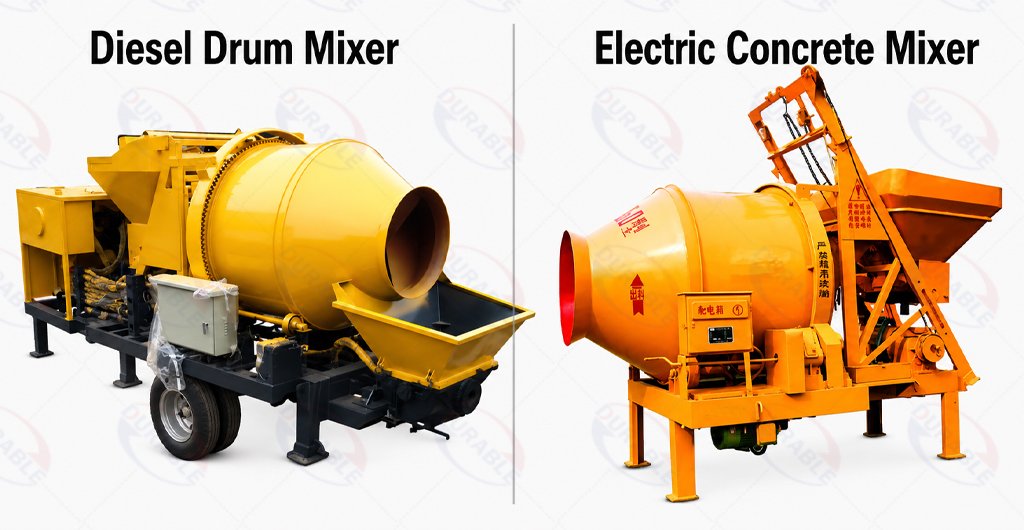
Many buyers automatically focus on purchase price. However, long-term operating costs, project location, electricity availability, and maintenance requirements often have a much greater impact on profitability.
In 2026, both diesel and electric mixers remain widely used. The better choice depends on your project conditions, production goals, and local infrastructure.
Key Industry Facts for 2026
Construction businesses are under increasing pressure to improve efficiency and reduce operating costs.
At the same time:
- Fuel prices remain volatile.
- Electricity infrastructure continues improving.
- Labor costs are increasing.
- Construction demand remains strong.
As a result, contractors are paying more attention to equipment operating costs than ever before.
Before purchasing a mixer, many buyers now compare:
- Fuel consumption
- Electricity costs
- Maintenance requirements
- Production efficiency
- Expected ROI
What Is a Diesel Drum Mixer?
A diesel drum mixer uses a diesel engine to rotate the mixing drum and blend concrete materials.
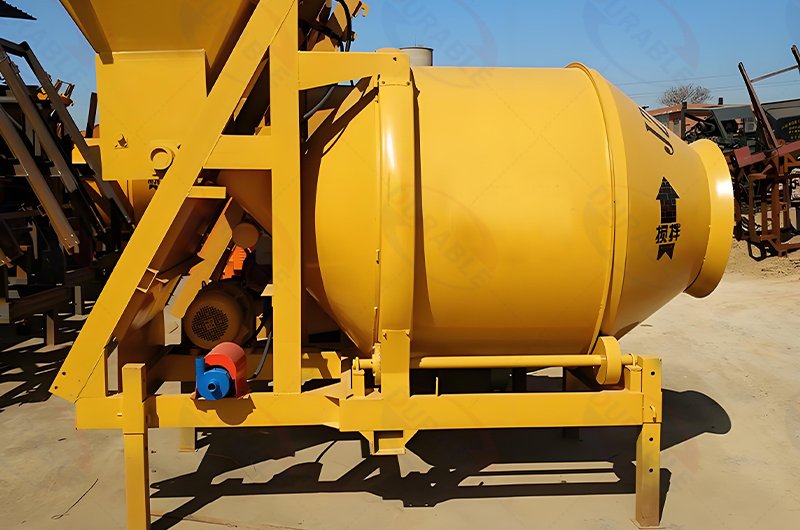
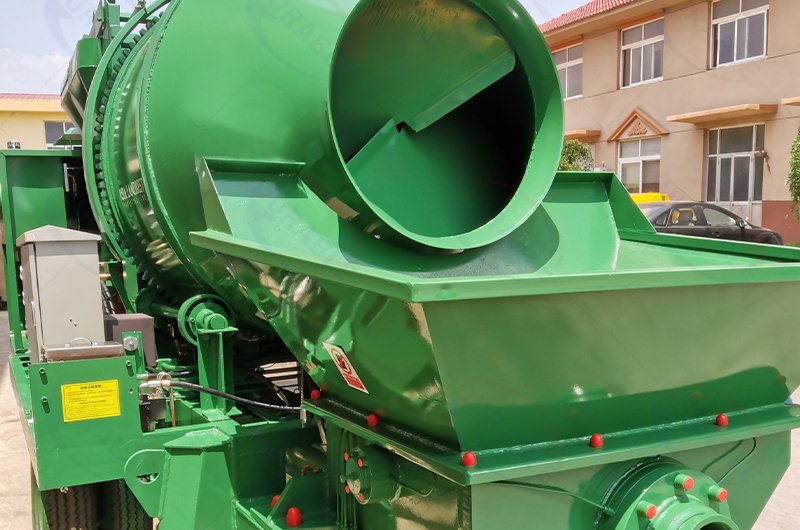
The machine typically mixes:
- Cement
- Sand
- Gravel
- Water
- Fly ash
Because it operates independently of electrical power, it is widely used on construction sites where electricity is unavailable.
Common Applications
- Rural housing projects
- Road construction
- Government infrastructure projects
- Small batching operations
- Block production
Many manufacturers use a diesel drum mixer alongside a block making machine because it offers reliable operation in areas with unstable power.
What Is an Electric Concrete Mixer?
An electric concrete mixer uses an electric motor instead of a diesel engine.
The mixing process remains similar, but the power source changes completely.
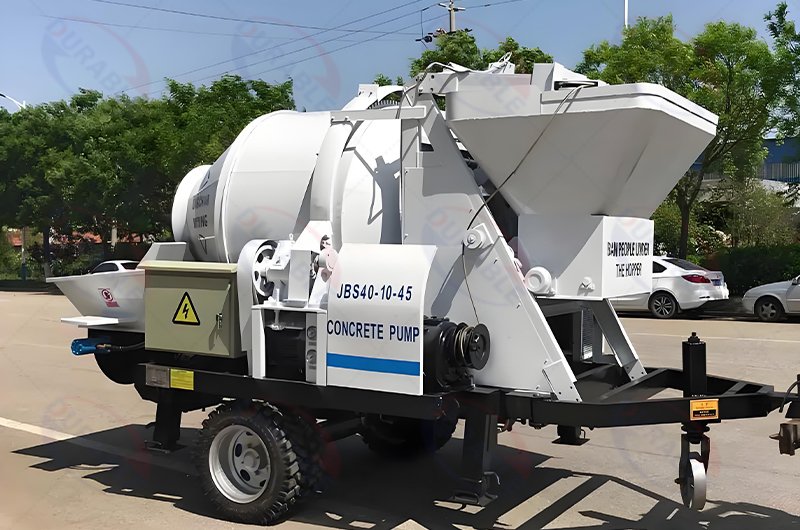
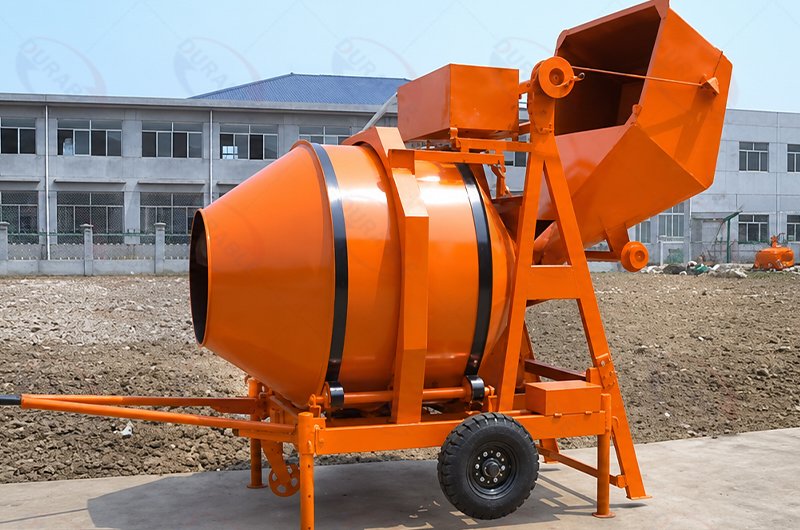
Electric mixers are typically used in:
- Urban construction projects
- Fixed production facilities
- Industrial facilities
- Concrete batching plants
Because operating costs are usually lower, many producers install electric mixers as part of a Stationary Concrete Batching Plant for continuous concrete production.
Key Advantages
- Lower operating costs
- Less noise
- Reduced emissions
- Lower maintenance requirements
Diesel Drum Mixer vs Electric Concrete Mixer: Feature Comparison
Side-by-Side Comparison
| Factor | Diesel Drum Mixer | Electric Concrete Mixer |
|---|---|---|
| Mobility | Excellent | Limited |
| Electricity Required | No | Yes |
| Fuel Cost | Higher | Lower |
| Operating Cost | Higher | Lower |
| Remote Site Performance | Excellent | Poor |
| Maintenance | Medium | Lower |
| Initial Investment | Similar | Similar |
| Noise Level | Higher | Lower |
| Environmental Impact | Higher | Lower |
| Continuous Production | Good | Excellent |
Key Takeaway
Electric mixers generally win on operating cost.
Diesel mixers usually win on flexibility.
Therefore, the best choice depends on where and how the mixer will be used.
Which Mixer Costs Less to Operate?
Operating cost is one of the biggest concerns for buyers.
Diesel Mixer Operating Costs
Common expenses include:
- Diesel fuel
- Engine oil
- Filters
- Spare parts
- Engine maintenance
As fuel prices increase, operating costs can rise significantly.
Electric Mixer Operating Costs
Electric mixers typically require:
- Electricity
- Basic maintenance
- Motor inspections
Because electric motors have fewer moving parts, maintenance is often simpler.
Industry Observation
Over several years, electric mixers often cost less to operate than diesel models when electricity is reliable and affordable.
Which Mixer Is Better for Remote Construction Sites?
For remote projects, diesel mixers have a clear advantage.
Why Diesel Mixers Perform Better
Remote construction sites often face:
- No electrical infrastructure
- Frequent power outages
- Long distances from power sources
Because of this, diesel mixers remain the preferred solution for:
- Rural housing projects
- Highway construction
- Agricultural developments
- Infrastructure expansion
Expert Recommendation
If your project is located far from reliable power infrastructure, a diesel drum mixer is usually the safer investment.
Which Mixer Is Better for Block Production?
The answer depends on production scale.
Small and Medium Operations
Diesel mixers are often suitable because they:
- Require minimal infrastructure
- Provide installation flexibility
- Operate independently
Large Production Facilities
Electric mixers usually perform better because they:
- Support continuous production
- Reduce operating costs
- Integrate with batching systems
Many producers eventually combine electric mixers with a Mobile Concrete Batching Plant or a Stationary Concrete Batching Plant to improve production efficiency and consistency.
As production demand continues to grow, some companies invest in a complete Concrete Batching Plant Solution to achieve higher output and better quality control.
Best Mixer by Project Type
| Project Type | Recommended Mixer |
|---|---|
| Rural Housing | Diesel Drum Mixer |
| Road Construction | Diesel Drum Mixer |
| Mobile Construction Teams | Diesel Drum Mixer |
| Remote Infrastructure Projects | Diesel Drum Mixer |
| Urban Construction Site | Electric Concrete Mixer |
| Fixed Production Facility | Electric Concrete Mixer |
| Concrete Batching Plant | Electric Concrete Mixer |
| Industrial Concrete Production | Electric Concrete Mixer |
For growing contractors, a concrete mixer is often the first step before investing in a complete Concrete Batching Plant Solution.
Choosing equipment that can integrate with future batching systems helps reduce expansion costs later.
Which Mixer Delivers Better ROI?
Both mixer types can provide excellent returns when used in the right environment.
Diesel Mixer ROI
Diesel mixers often provide stronger ROI when:
- Projects move frequently
- Power infrastructure is limited
- Mobility is important
Electric Mixer ROI
Electric mixers often provide stronger ROI when:
- Production is continuous
- Electricity costs are low
- Operations are fixed in one location
As concrete demand increases, many businesses upgrade from standalone mixers to a Mobile Concrete Batching Plant that offers higher productivity and improved automation.
Real Industry Example
A contractor in East Africa recovered the cost of a diesel drum mixer within 12 months because the machine supported multiple projects in different locations.
Meanwhile, a concrete producer operating from a permanent facility reduced operating costs by more than 20% after switching to electric mixing equipment.
Industry Lesson
Both investments succeeded because each company selected equipment that matched its working conditions.
Common Buying Mistakes
Many buyers focus on the wrong factors.
Buying Based Only on Price
The cheapest machine often creates higher long-term costs.
Ignoring Power Conditions
Electric mixers struggle when electricity is unstable.
Choosing Oversized Equipment
Larger machines increase both investment and operating expenses.
Overlooking Maintenance
Maintenance planning should always be included in the purchasing process.
Ignoring Future Growth
The selected mixer should support future expansion, not just current production needs.
Decision Guide: Which Mixer Should You Choose?
Choose a Diesel Drum Mixer If:
- Electricity is unreliable
- Projects move frequently
- Construction sites are remote
- Flexibility is important
Choose an Electric Concrete Mixer If:
- Electricity is stable
- Production is continuous
- Operating cost reduction is a priority
- The facility is permanent
Best Choice for Most Contractors
For contractors working across multiple locations, diesel mixers usually offer greater flexibility.
Best Choice for Most Factories
For fixed-location production facilities, electric mixers often provide lower long-term operating costs.
Real Project Example
A contractor in East Africa purchased a diesel drum mixer because power outages were common at project sites.
Although fuel costs were higher, the machine operated consistently without interruptions.
As a result, the contractor recovered the investment within approximately 12 months.
Meanwhile, a block manufacturer operating in an industrial zone switched to electric mixing equipment and reduced operating costs by more than 20% over several years.
Industry Lesson
Both investments were successful because each business selected equipment that matched its operating environment.
Industry Expert Conclusion
Neither diesel drum mixers nor electric concrete mixers are universally better.
The right choice depends on:
- Project location
- Power availability
- Production volume
- Operating budget
- Growth plans
For most remote construction projects, diesel mixers remain the preferred option.
For permanent production facilities with reliable electricity, electric mixers often provide stronger long-term profitability.
Frequently Asked Questions
Is a diesel drum mixer better than an electric mixer?
Not always. Diesel mixers perform better in remote areas, while electric mixers often reduce operating costs in fixed production facilities.
Which mixer is cheaper to operate?
Electric mixers usually have lower operating costs because electricity is often cheaper than diesel fuel.
Which mixer requires less maintenance?
Electric mixers generally require less maintenance because they have fewer moving parts.
Which mixer is better for a block factory?
Small factories often use diesel mixers, while larger automated factories usually benefit from electric mixing systems.
Which mixer delivers faster ROI?
ROI depends on project conditions. Diesel mixers often perform better on remote sites, while electric mixers usually provide stronger long-term savings in permanent facilities.
Related Concrete Production Solutions
If you are planning a complete concrete production project, you may also be interested in:
About Durable
Durable provides complete concrete mixing and block production solutions for customers worldwide.
Our product range includes:
- Diesel drum mixers
- Electric concrete mixers
- Block making machines
- Hydraulic brick machines
- Concrete block machines
- Interlocking brick machines
- Paver block machines
We help customers choose equipment based on project requirements, production goals, local conditions, and investment budgets.
Whether you are supplying a construction project, building a block factory, or expanding your contracting business, our engineering team can help design the right solution for long-term profitability.
Contact Durable today for customized concrete mixing solutions.