 Durable Machinery
Get Price
Twin Shaft Mixer vs Drum Mixer: Which Is Better?
Choosing the right concrete mixer can significantly affect concrete quality, production efficiency, and operating costs. Two of the most common options are the twin shaft mixer and the drum mixer.
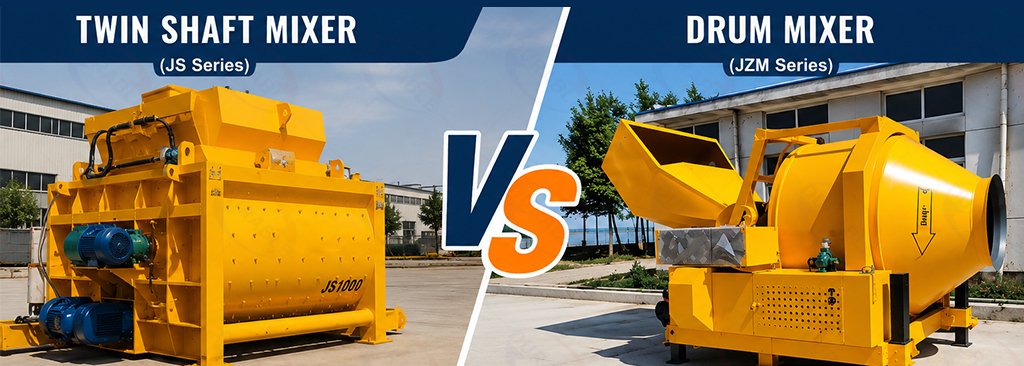
Both machines are widely used in the construction industry. However, they are designed for different production requirements and investment levels.
In 2026, contractors, concrete producers, and batching plant operators are increasingly focusing on production efficiency, concrete consistency, and long-term ROI rather than purchase price alone.
So, which mixer is better?
The answer depends on your production volume, concrete quality requirements, project type, and budget.
Why Mixer Selection Matters More Than Ever
Concrete quality requirements continue to rise worldwide.
Today, contractors are expected to deliver:
- Higher concrete strength
- Better consistency
- Faster project completion
- Lower production costs
At the same time, labor costs and material prices continue increasing.
As a result, selecting the right mixer can directly impact:
- Concrete quality
- Project profitability
- Equipment lifespan
- Customer satisfaction
What Is a Twin Shaft Mixer?
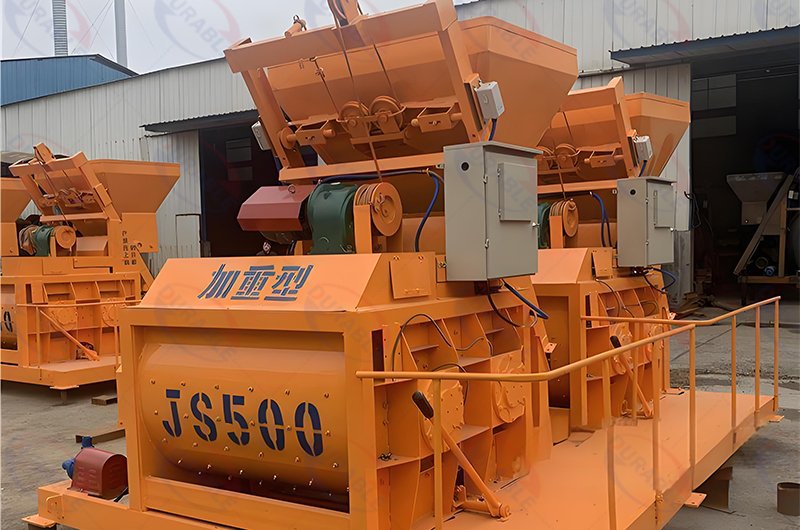
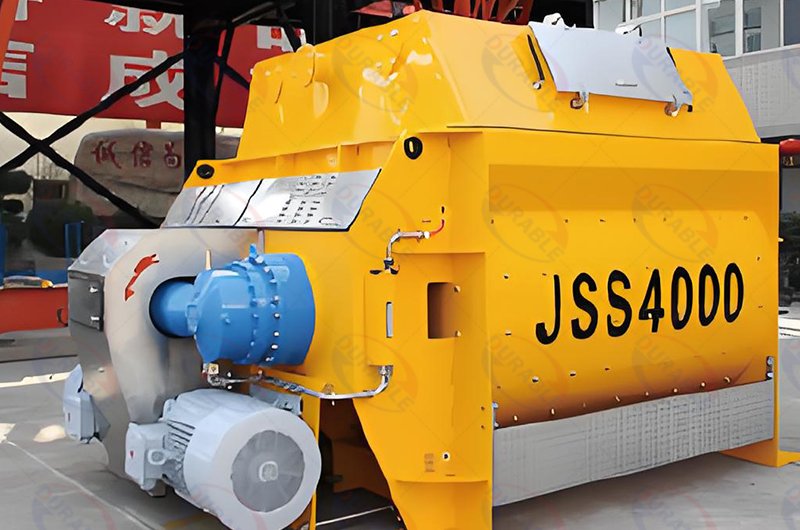
A twin shaft mixer uses two synchronized horizontal shafts equipped with mixing blades.
The shafts rotate in opposite directions, creating intense mixing action throughout the entire mixing chamber.
This design allows materials to mix rapidly and uniformly.
Common Applications
- Commercial concrete production
- Ready-mix concrete plants
- Precast concrete factories
- Infrastructure projects
- Large construction companies
Many modern Concrete Batching Plants use twin shaft mixers because they deliver consistent concrete quality at high production volumes.
Key Advantages
- Excellent mixing quality
- Fast mixing cycles
- High production capacity
- Suitable for high-strength concrete
- Consistent concrete output
What Is a Drum Mixer?
A drum mixer uses a rotating drum to mix concrete materials.
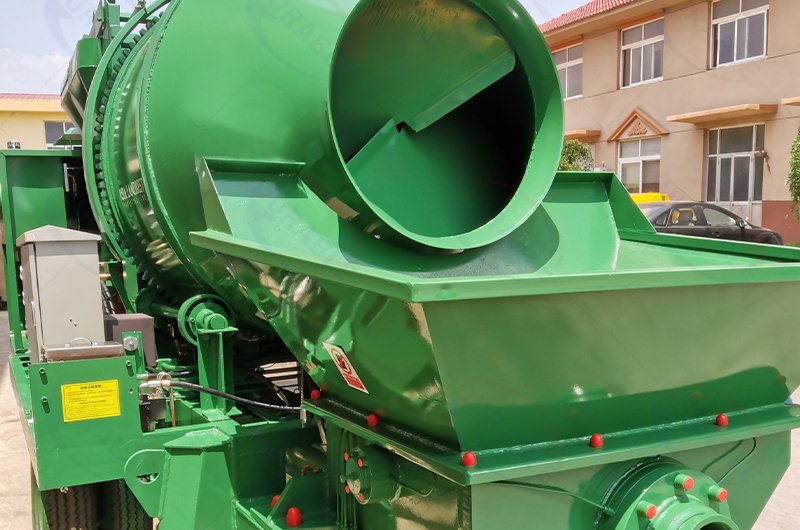
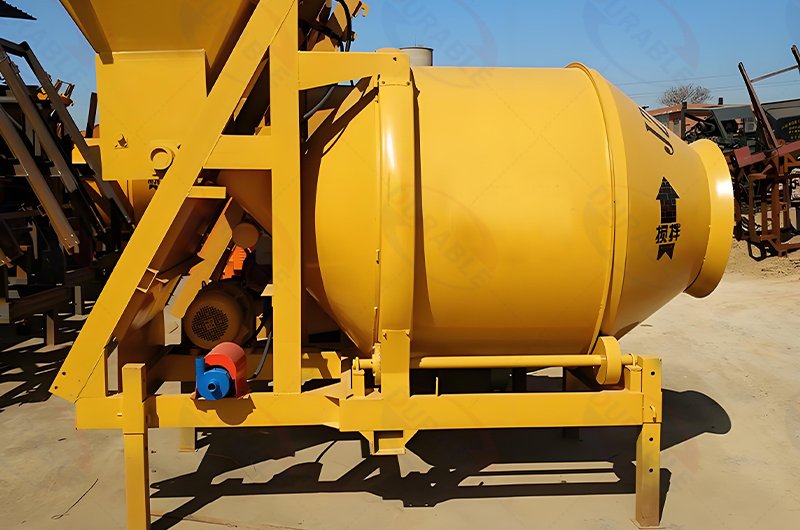
As the drum rotates, materials are lifted and dropped repeatedly until they become blended.
The design is simple, reliable, and widely used around the world.
Common Applications
- Small construction projects
- Rural housing
- Mobile contractors
- Foundation work
- Remote job sites
Drum mixers are often used independently or with smaller concrete production systems where production demand is moderate.
Key Advantages
- Lower purchase cost
- Simple operation
- Easy transportation
- Lower maintenance complexity
- Suitable for remote projects
Twin Shaft Mixer vs Drum Mixer
Side-by-Side Comparison
| Factor | Twin Shaft Mixer | Drum Mixer |
|---|---|---|
| Mixing Quality | Excellent | Good |
| Production Capacity | High | Medium |
| Mixing Speed | Faster | Slower |
| Initial Cost | Higher | Lower |
| Maintenance Complexity | Medium | Low |
| Concrete Consistency | Excellent | Good |
| High-Strength Concrete | Excellent | Limited |
| Mobility | Limited | Excellent |
| Automation Compatibility | Excellent | Limited |
| ROI for Large Production | Excellent | Moderate |
Key Takeaway
Twin shaft mixers focus on performance and concrete quality.
Drum mixers focus on simplicity, affordability, and mobility.
Which Mixer Produces Better Concrete?
Concrete quality is often the biggest difference between these two mixer types.
Twin Shaft Mixer Performance
Twin shaft mixers create strong mixing action that distributes materials evenly.
Benefits include:
- Uniform aggregate distribution
- Better cement coating
- Reduced segregation
- More consistent strength
As a result, twin shaft mixers are preferred for:
- Commercial concrete
- Precast concrete
- High-strength concrete
Drum Mixer Performance
Drum mixers provide adequate mixing for many construction applications.
However, mixing action is generally less intensive.
For standard construction projects, concrete quality is usually sufficient.
Expert Recommendation
If concrete consistency is critical, twin shaft mixers are typically the better option.
Which Mixer Offers Higher Productivity?
Production capacity directly affects project profitability.
Twin Shaft Mixer Output
Most twin shaft mixers offer:
- Shorter mixing cycles
- Faster discharge
- Higher hourly production
Many batching plants equipped with twin shaft mixers achieve significantly greater output than comparable drum mixer systems.
Drum Mixer Output
Drum mixers generally require:
- Longer mixing times
- More batch cycles
- Additional labor
For small projects, this may not be a problem.
However, productivity differences become significant as production volume increases.
Which Mixer Costs Less?
Drum Mixer Investment
Drum mixers are generally less expensive.
Benefits include:
- Lower purchase price
- Lower installation cost
- Reduced infrastructure requirements
For startups and contractors with limited budgets, drum mixers often provide a lower barrier to entry.
Twin Shaft Mixer Investment
Twin shaft mixers require a larger initial investment.
However, they often deliver:
- Higher output
- Better concrete quality
- Faster production
Because of this, many large producers achieve lower production costs per cubic meter over time.
Which Mixer Has Lower Maintenance Costs?
Maintenance requirements differ significantly.
Drum Mixer Maintenance
Drum mixers are known for:
- Simple design
- Easy repairs
- Lower maintenance costs
This makes them attractive in regions where technical support may be limited.
Twin Shaft Mixer Maintenance
Twin shaft mixers contain:
- More wear parts
- Additional mixing blades
- More complex drive systems
As a result, maintenance requirements are generally higher.
Industry Reality
Although maintenance costs may be higher, increased production efficiency often offsets those expenses.
Which Mixer Is Better for a Concrete Batching Plant?
For most batching plants, twin shaft mixers are the preferred choice.
Why Twin Shaft Mixers Dominate
They provide:
- Higher output
- Better concrete consistency
- Improved automation compatibility
- Faster production cycles
Most modern Stationary Concrete Batching Plants use twin shaft mixers as their core mixing equipment.
When Drum Mixers Make Sense
Drum mixers are still useful for:
- Small batching operations
- Temporary projects
- Mobile construction teams
In some cases, contractors combine drum mixers with a Mobile Concrete Batching Plant when portability is important.
Best Mixer by Project Type
| Project Type | Recommended Mixer |
|---|---|
| Rural Housing | Drum Mixer |
| Small Contractor | Drum Mixer |
| Mobile Construction Team | Drum Mixer |
| Remote Infrastructure Project | Drum Mixer |
| Commercial Concrete Plant | Twin Shaft Mixer |
| Ready-Mix Concrete Production | Twin Shaft Mixer |
| Precast Concrete Factory | Twin Shaft Mixer |
| Large Infrastructure Project | Twin Shaft Mixer |
Which Mixer Delivers Better ROI?
ROI depends largely on production volume.
Drum Mixer ROI
Drum mixers often provide better ROI when:
- Initial budgets are limited
- Production volumes are low
- Projects are temporary
Twin Shaft Mixer ROI
Twin shaft mixers often provide better ROI when:
- Production is continuous
- Output requirements are high
- Concrete quality standards are strict
As production volume grows, many companies upgrade from standalone mixers to a complete Concrete Batching Plant Solution to improve efficiency and profitability.
Industry Lesson
The best ROI usually comes from selecting equipment that matches actual production requirements.
Common Buying Mistakes
Focusing Only on Purchase Price
The cheapest machine is not always the most profitable.
Ignoring Future Growth
Production requirements often increase over time.
Choosing a Mixer That Is Too Small
Undersized equipment can limit business expansion.
Overlooking Concrete Quality Requirements
Certain projects require more consistent mixing performance.
Ignoring Maintenance Planning
Maintenance costs should always be considered before purchasing.
Industry Expert Conclusion
Neither twin shaft mixers nor drum mixers are universally better.
The right choice depends on:
- Production volume
- Concrete quality requirements
- Project location
- Budget
- Long-term growth plans
For most commercial concrete producers and batching plants, twin shaft mixers provide superior performance and long-term profitability.
For contractors, small businesses, and mobile construction projects, drum mixers often deliver the best balance of affordability, flexibility, and reliability.
Frequently Asked Questions
Is a twin shaft mixer better than a drum mixer?
For high-volume concrete production and superior concrete quality, yes. For smaller projects, a drum mixer may be more practical.
Why do batching plants use twin shaft mixers?
Twin shaft mixers provide faster mixing, better consistency, and higher production capacity.
Which mixer is cheaper?
Drum mixers generally have lower purchase and installation costs.
Which mixer produces stronger concrete?
Twin shaft mixers usually produce more consistent concrete, which can improve strength and quality.
Which mixer is best for small contractors?
For most small contractors, drum mixers offer the best combination of affordability and flexibility.
Related Concrete Production Solutions
If you are planning a complete concrete production project, you may also be interested in:
About Durable
Durable provides complete concrete mixing and batching solutions for customers worldwide.
Our product range includes:
- Twin Shaft Concrete Mixers
- Drum Concrete Mixers
- Mobile Concrete Batching Plants
- Stationary Concrete Batching Plants
- Concrete Production Solutions
- Material Handling Equipment
We help customers select equipment based on production requirements, project goals, local conditions, and investment budgets.
Whether you are expanding a batching plant, starting a concrete production business, or supplying large infrastructure projects, our engineering team can help design the right solution for long-term profitability.
Contact Durable today for customized concrete mixing solutions.