 Durable Machinery
Get Price
Best Twin Shaft Concrete Mixer for Batching Plants
Selecting the right twin shaft concrete mixer is one of the most important decisions when building or upgrading a concrete batching plant. The mixer directly affects concrete quality, production efficiency, operating costs, and long-term profitability.
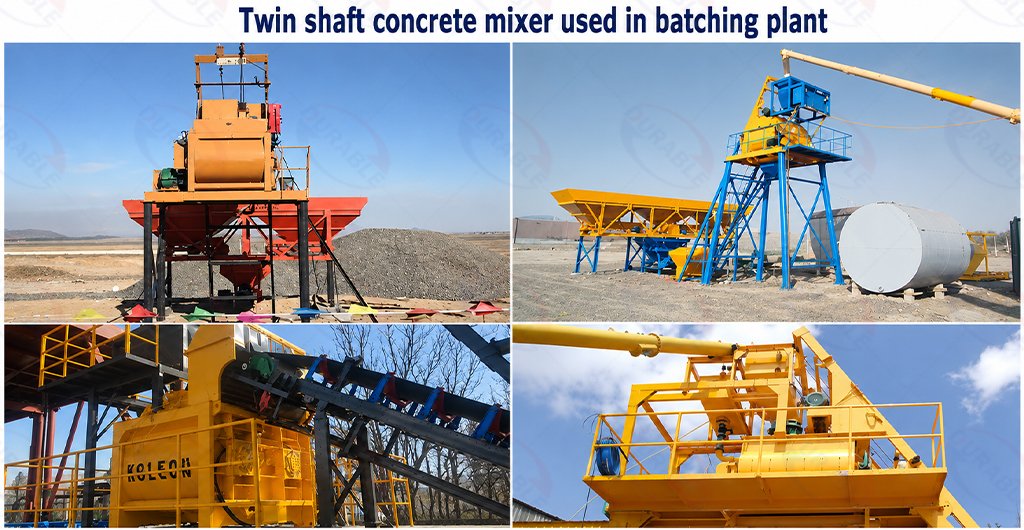
In 2026, most commercial batching plants use twin shaft mixers because they provide fast mixing, excellent concrete consistency, and high production capacity.
However, not all twin shaft mixers are the same.
Choosing the wrong model can lead to:
- Production bottlenecks
- Higher maintenance costs
- Increased wear part consumption
- Lower concrete quality
- Reduced plant profitability
Therefore, buyers should focus on performance, reliability, and long-term ROI rather than purchase price alone.
Why Twin Shaft Mixers Dominate Modern Batching Plants
Concrete quality requirements continue increasing worldwide.
Today, contractors and concrete suppliers must deliver:
- Consistent concrete strength
- Uniform mixing quality
- Faster production cycles
- Reliable supply schedules
Because of these requirements, twin shaft mixers have become the preferred solution for commercial concrete production.
Unlike traditional drum mixers, twin shaft mixers create intensive mixing action throughout the entire mixing chamber.
As a result, concrete becomes more uniform in less time.
Key Benefits
Better cement distribution
Faster mixing cycles
Better concrete consistency
Higher production capacity
Reduced material segregation
What Is a Twin Shaft Concrete Mixer?
A twin shaft concrete mixer uses two horizontal shafts equipped with mixing blades.
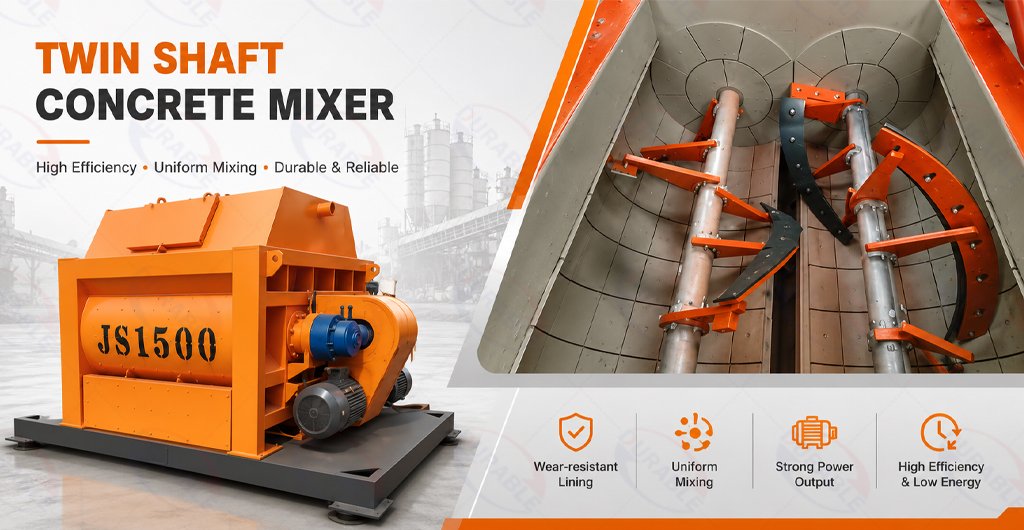
The shafts rotate in opposite directions, creating strong mixing action that rapidly blends:
- Cement
- Sand
- Aggregate
- Water
- Fly ash
- Admixtures
This design produces highly uniform concrete suitable for demanding construction projects.
Common Applications
- Ready-mix concrete plants
- Commercial batching plants
- Precast concrete factories
- Infrastructure projects
- Bridge construction
- High-rise buildings
Many modern Concrete Batching Plant systems use twin shaft mixers as their core mixing equipment.
Why Mixing Quality Matters
Many buyers focus on production capacity.
However, concrete quality is often even more important.
Poor mixing can create:
- Uneven concrete strength
- Segregation
- Reduced durability
- Customer complaints
- Failed quality tests
Benefits of Better Mixing
A high-quality twin shaft mixer helps achieve:
- Consistent concrete strength
- Uniform aggregate distribution
- Improved workability
- Reduced waste
Industry Reality
Many concrete quality problems originate from poor mixing rather than poor raw materials.
Twin Shaft Mixer Capacity Guide
Choosing the correct capacity is critical.
Buying a mixer that is too small limits growth.
Buying a mixer that is too large increases investment costs unnecessarily.
Common Twin Shaft Mixer Models
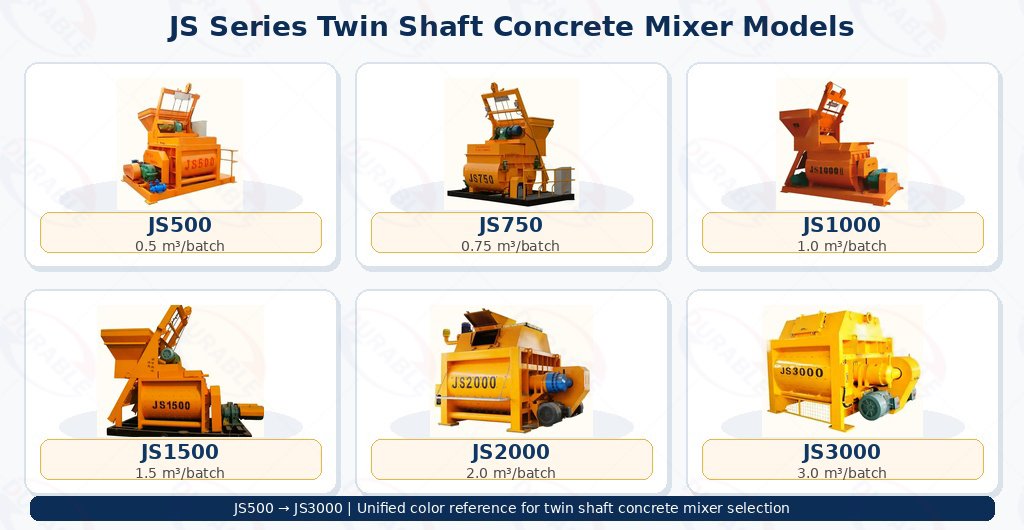
| Model | Discharge Capacity | Suitable Plant Size |
|---|---|---|
| JS500 | 0.5 m³ | Small Plant |
| JS750 | 0.75 m³ | Small-Medium Plant |
| JS1000 | 1.0 m³ | Medium Plant |
| JS1500 | 1.5 m³ | Commercial Plant |
| JS2000 | 2.0 m³ | High-Output Plant |
| JS3000 | 3.0 m³ | Industrial Plant |
Which Model Is Most Popular?
For most commercial producers:
- JS1500
- JS2000
remain the most common choices.
These models provide excellent productivity without excessive investment.
Best Twin Shaft Mixer by Plant Type
Small Concrete Batching Plants
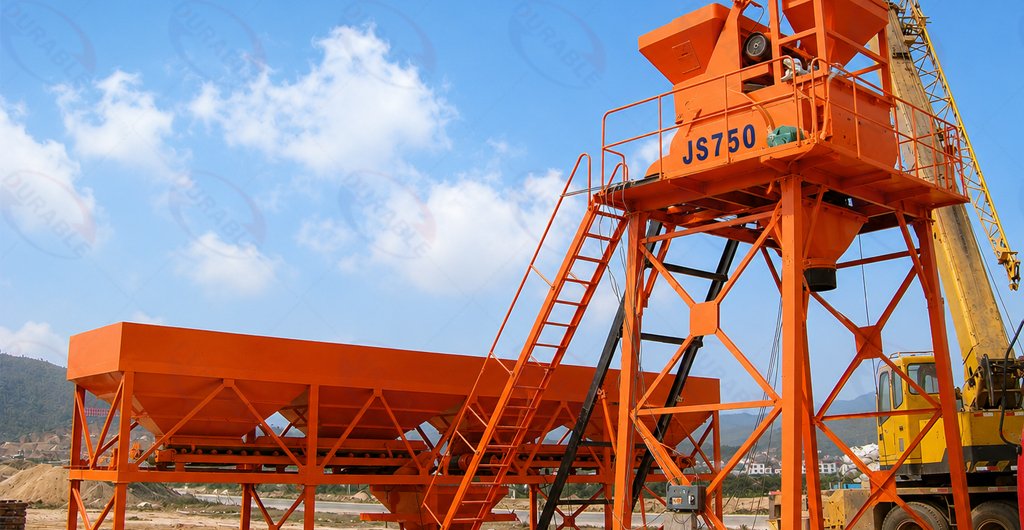
Recommended Models:
- JS500
- JS750
Best for:
- Local contractors
- Small concrete suppliers
- Startup businesses
Medium Concrete Batching Plants
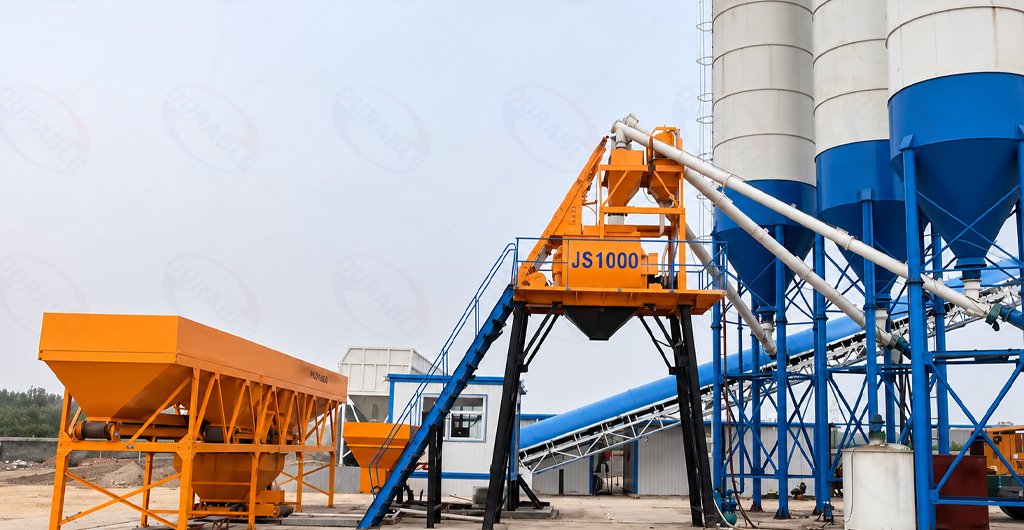
Recommended Models:
- JS1000
- JS1500
Best for:
- Regional concrete suppliers
- Growing businesses
- Commercial projects
Many producers integrate these mixers into a Mobile Concrete Batching Plant for greater flexibility.
Large Commercial Plants
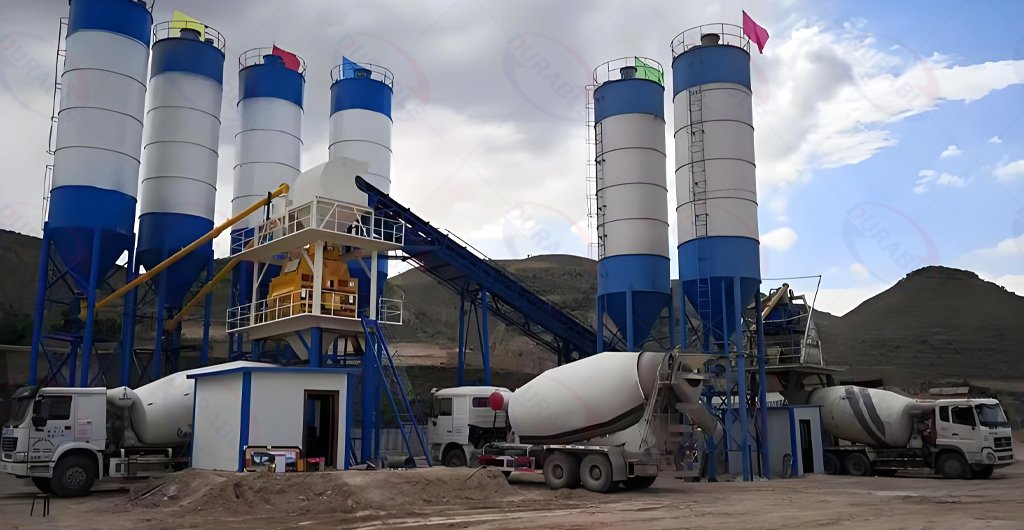
Recommended Models:
- JS2000
- JS3000
Best for:
- Ready-mix production
- Infrastructure projects
- Government contracts
These mixers are commonly installed in a Stationary Concrete Batching Plant for continuous production.
Twin Shaft Mixer vs Drum Mixer
Many buyers compare these two mixer types.
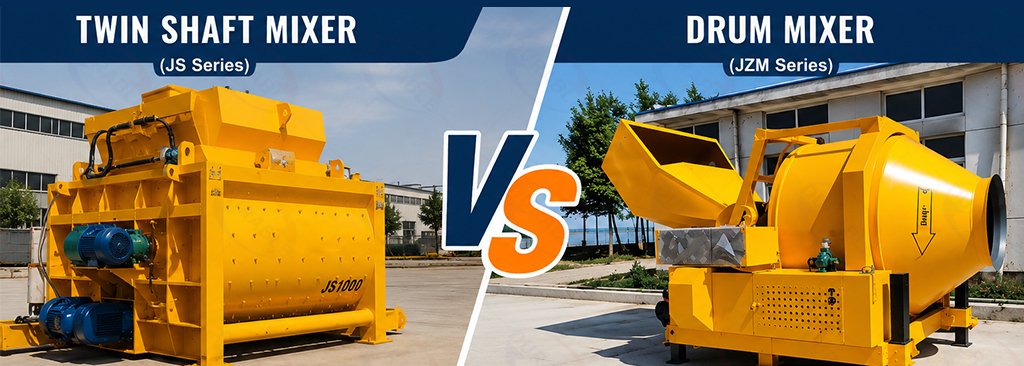
Comparison Table
| Factor | Twin Shaft Mixer | Drum Mixer |
|---|---|---|
| Mixing Quality | Excellent | Good |
| Production Capacity | High | Medium |
| Mixing Speed | Fast | Slower |
| Concrete Consistency | Excellent | Good |
| Automation Compatibility | Excellent | Limited |
| Initial Investment | Higher | Lower |
| ROI for Large Plants | Excellent | Moderate |
Key Takeaway
Twin shaft mixers are designed for commercial concrete production.
Drum mixers are generally better suited for smaller construction projects.
What Makes a Good Twin Shaft Mixer?
Not all mixers perform equally.
Heavy-Duty Mixing Arms
Strong mixing arms reduce wear and improve durability.
High-Quality Wear Liners
Good liners:
- Extend service life
- Reduce maintenance
- Lower operating costs
Reliable Drive System
A reliable gearbox and motor improve:
- Productivity
- Stability
- Equipment lifespan
Fast Discharge System
Fast discharge reduces cycle time and increases hourly output.
Easy Maintenance Access
Simple maintenance reduces downtime and labor costs.
Which Mixer Delivers the Best ROI?
ROI depends on production volume.
Small Plants
JS500 and JS750 often provide faster ROI because investment costs are lower.
Medium Plants
JS1000 and JS1500 usually provide the best balance between cost and productivity.
Large Plants
JS2000 and JS3000 offer excellent ROI when production demand remains high.
Industry Observation
For most commercial producers, JS1500 and JS2000 mixers provide the strongest long-term profitability.
Common Buying Mistakes
Choosing Based Only on Price
Low-cost mixers often increase maintenance expenses later.
Ignoring Future Growth
Production requirements often increase over time.
Choosing a Mixer That Is Too Small
Undersized equipment can limit business expansion.
Ignoring Spare Parts Availability
Reliable local support reduces downtime.
Overlooking Concrete Quality Requirements
Higher-quality projects require better mixing performance.
Decision Guide: Which Twin Shaft Mixer Should You Buy?
Daily Production Below 300 m³
Choose:
- JS500
- JS750
Daily Production Between 300-800 m³
Choose:
- JS1000
- JS1500
Expert Recommendation
This range offers the best balance between investment cost and productivity.
Daily Production Above 800 m³
Choose:
- JS2000
- JS3000
Best for:
- Commercial concrete suppliers
- Infrastructure contractors
- Ready-mix producers
Real Plant Example
A regional concrete producer upgraded from a drum mixer system to a JS1500 twin shaft mixer.
Results included:
- 30% faster production
- Improved concrete consistency
- Lower material waste
- Better customer satisfaction
The investment was recovered within approximately 24 months.
Industry Lesson
Higher-quality mixing often creates more value than simply increasing production capacity.
Industry Expert Conclusion
For most commercial batching plants, twin shaft mixers remain the best choice in 2026.
They provide:
- Superior concrete quality
- Faster mixing cycles
- Higher production capacity
- Better automation compatibility
- Strong long-term ROI
For most ready-mix concrete producers, JS1500 and JS2000 models offer the best combination of productivity, reliability, and profitability.
Frequently Asked Questions
Which twin shaft mixer is best for a batching plant?
For most commercial batching plants, JS1500 and JS2000 mixers provide the best balance between investment cost and productivity.
Why are twin shaft mixers used in batching plants?
They offer better mixing quality, faster production, and improved concrete consistency.
Are twin shaft mixers better than drum mixers?
For commercial concrete production, yes. They generally provide higher output and better concrete quality.
What is the most popular twin shaft mixer size?
JS1500 and JS2000 remain the most common choices for ready-mix concrete production.
How long does ROI usually take?
Many batching plants recover their investment within 18 to 36 months depending on production volume and market demand.
Related Concrete Production Solutions
If you are planning a complete concrete production project, you may also be interested in:
About Durable
Durable provides complete concrete mixing and batching solutions for customers worldwide.
Our product range includes:
- Twin Shaft Concrete Mixers
- Concrete Batching Plants
- Mobile Concrete Batching Plants
- Stationary Concrete Batching Plants
- Concrete Production Solutions
- Material Handling Equipment
We help customers select equipment based on production requirements, project goals, local conditions, and investment budgets.
Whether you are expanding a batching plant, starting a ready-mix concrete business, or supplying major infrastructure projects, our engineering team can help design the right solution for long-term profitability.
Contact Durable today for customized concrete batching solutions.