 Durable Machinery
Get Price
How to Choose the Right Comprehensive Crusher for Your Business
A comprehensive crusher is not the kind of machine buyers should choose only by motor power or price. In real wood waste recycling and biomass fuel projects, the bigger question is whether the crusher can handle your actual raw material: pallets with irregular shapes, scrap wood from factories, branches with different diameters, old boards, furniture waste, packaging wood, or mixed biomass material.
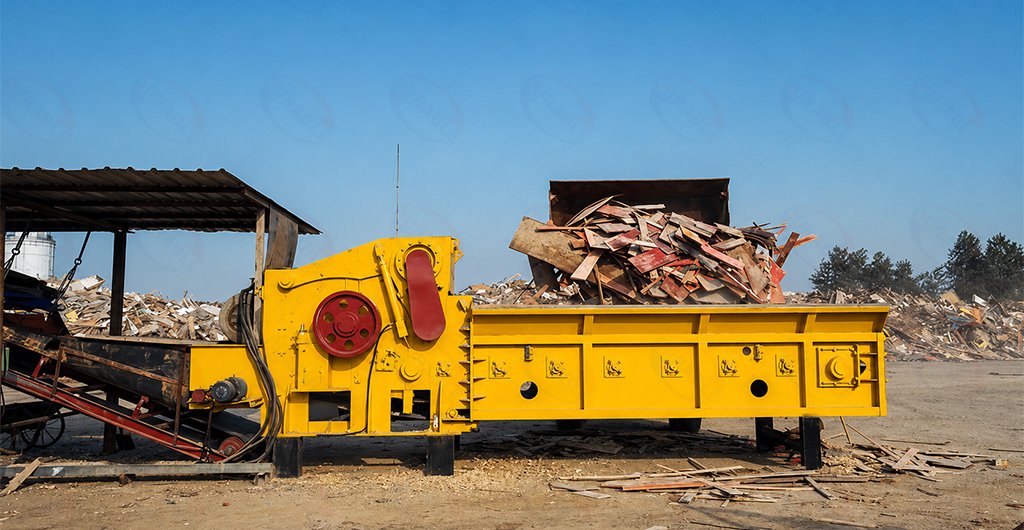
Many businesses first look for a “wood crusher” and assume all machines do the same job. However, a machine that works well for clean wood chips may not be suitable for bulky pallets. A hammer mill that performs well in fine grinding may not be the best first-stage machine for large waste wood. A wood chipper that cuts clean logs into chips may not be ideal for mixed scrap wood with uneven shapes.
That is why choosing the right comprehensive crusher requires more than comparing specifications. You need to understand your raw material, feeding size, required output size, downstream use, working hours, and maintenance conditions.
This guide explains how to choose a comprehensive crusher for your business, when it is the right machine, how it compares with wood chippers and hammer mills, and what you should confirm before requesting a quotation.
What Is a Comprehensive Crusher?
A comprehensive crusher is a heavy-duty wood waste crushing machine designed for bulky, irregular, and mixed wood materials. It is often used to process waste pallets, packaging wood, scrap boards, furniture waste, branches, templates, and other recyclable wood-based materials.
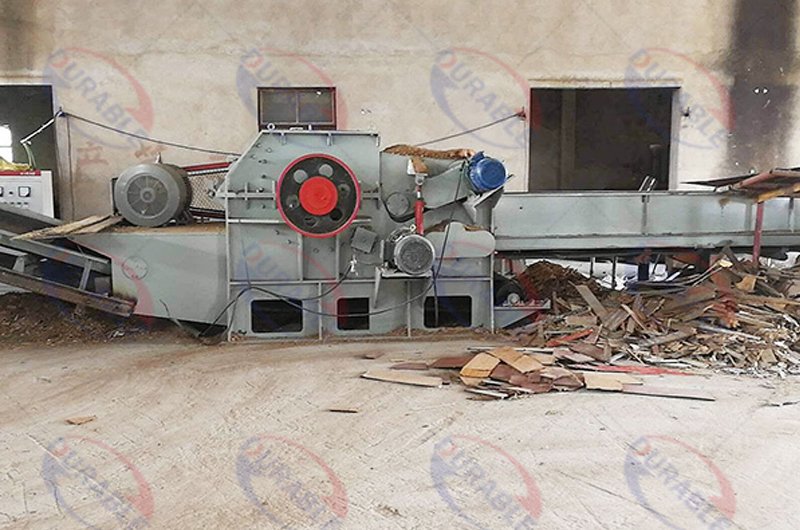
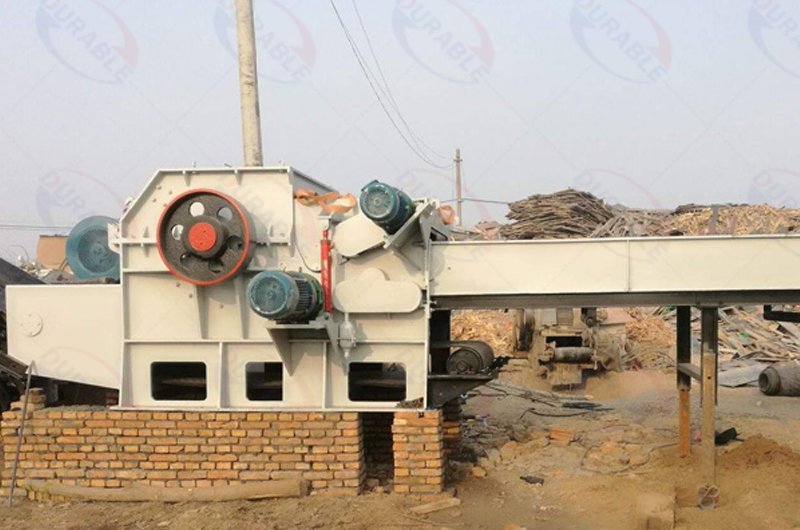
On the DURABLE products page, comprehensive crusher is also described as a scrap wood shredder or waste wood pallet grinder. This positioning is important because it shows the machine is not just a small crusher for clean raw material. It is mainly designed for large and medium-sized continuous crushing of waste wood and similar materials.
The main purpose of a comprehensive crusher is to reduce large, difficult-to-feed wood waste into smaller material that can be used for recycling, fuel preparation, briquetting, pelletizing, boiler fuel, or carbonization.
Compared with ordinary small crushers, a comprehensive crusher usually focuses on:
- Larger feeding capacity
- Better tolerance for irregular material
- Stronger crushing structure
- Continuous operation
- Wood waste recycling applications
- Easier connection with conveyors and downstream equipment
In simple terms, if your problem is not just “wood is too large,” but “wood waste is bulky, mixed, irregular, and hard to feed,” a comprehensive crusher may be the right direction.
What Materials Can a Comprehensive Crusher Handle?
The most important step in choosing a comprehensive crusher is checking whether your raw material matches the machine.
Different wood materials behave differently during crushing. A pallet, a tree branch, a furniture board, and sawdust should not be treated as the same material.
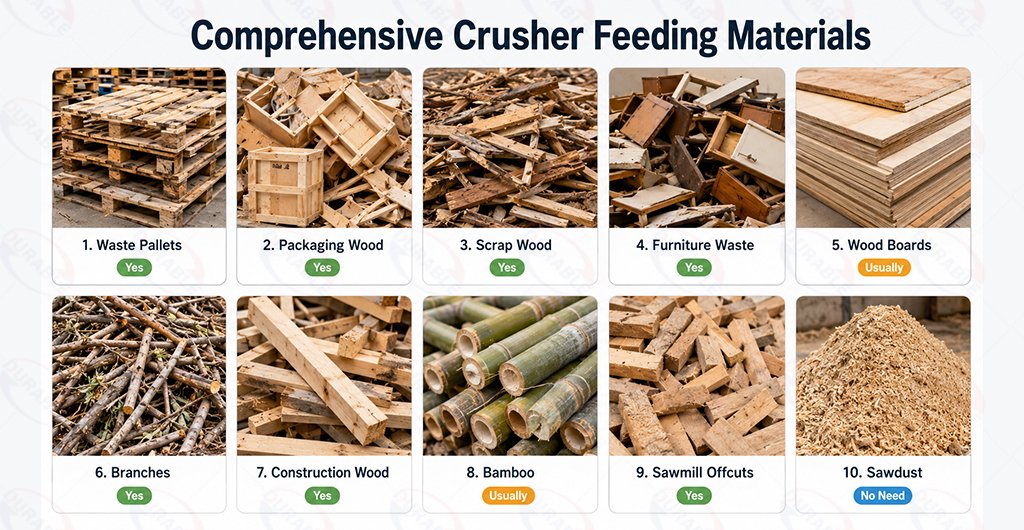
| Material | Suitable? | Notes |
|---|---|---|
| Waste Pallets | Yes | Remove large metal parts before crushing |
| Packaging Wood | Yes | Common recycling material |
| Scrap Wood | Yes | Suitable for wood recycling yards |
| Furniture Waste | Usually | Check nails, hinges, and impurities |
| Wood Boards | Yes | Good for bulky board waste |
| Branches | Yes | Depends on diameter and feeding size |
| Construction Wood | Usually | Check sand, cement, nails, and metal |
| Bamboo | Usually | Blade and feeding design should match material |
| Sawmill Offcuts | Yes | Suitable for biomass fuel preparation |
| Sawdust | No Need | Already too fine for this stage |
| Charcoal Lumps | No | Use a charcoal crusher instead |
A comprehensive crusher is most useful when the material is large or irregular before crushing. If your material is already fine, such as sawdust or powder, this machine may not be necessary.
If your raw material is carbonized charcoal rather than raw wood, a Charcoal Crusher is usually more suitable. Charcoal crushing has different requirements because the goal is often to prepare uniform charcoal powder or granules for briquette making.
Before choosing a machine, prepare photos or videos of your material. A supplier can make a much better recommendation after seeing the actual size, shape, moisture, and impurity level.
Comprehensive Crusher vs. Wood Chipper vs. Hammer Mill
Many buyers become confused because comprehensive crushers, wood chippers, hammer mills, and charcoal crushers all reduce material size. However, they are not used in the same way.
The easiest way to understand the difference is to look at the raw material and final output.
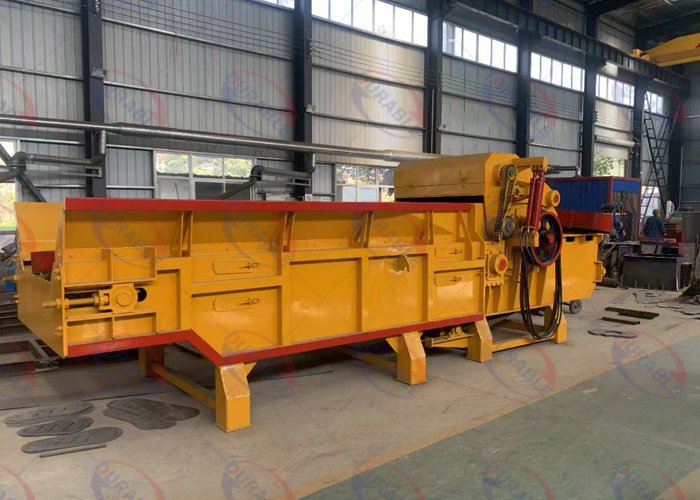
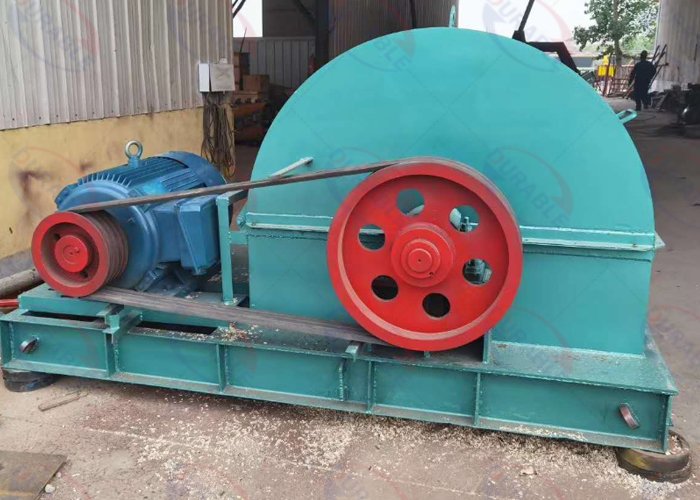
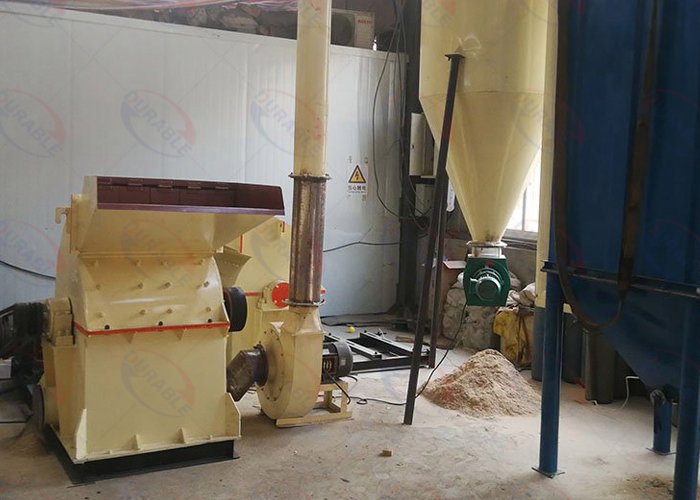
| Machine | Best For | Typical Output | Common Use |
|---|---|---|---|
| Comprehensive Crusher | Mixed bulky wood waste | Rough crushed wood material | Pallet recycling, waste wood processing, biomass preparation |
| Wood Chipper | Logs, branches, clean wood | Wood chips | Biomass fuel, pellet plants, boiler fuel |
| Hammer Mill Crusher | Smaller wood material and fine grinding | Fine particles or powder | Briquette and pellet preparation |
| Charcoal Crusher | Charcoal lumps or carbonized material | Charcoal powder or granules | BBQ charcoal and shisha briquette production |
A Disc Wood Chipper is a good choice when the goal is to cut logs, branches, or clean wood into chips. This is different from rough crushing mixed waste wood.
A Hammer Mill Crusher is more suitable when material needs further size reduction into smaller particles for briquetting, pelletizing, or other processing steps.
The guide Wood Chipper vs. Crusher: Which Machine Do You Actually Need? is useful when buyers are not sure whether they need cutting, crushing, or fine grinding.
For many wood waste projects, the process may even include more than one machine. A comprehensive crusher can handle the first-stage rough crushing, while a hammer mill may be used later if fine particles are required for biomass briquettes or pellets.
When Does Your Business Need a Comprehensive Crusher?
A comprehensive crusher is usually needed when raw material preparation has become the bottleneck in your business.
For example, if workers spend too much time cutting pallets manually, if branches block smaller machines, or if mixed wood waste cannot feed smoothly into the line, a comprehensive crusher may solve the problem.
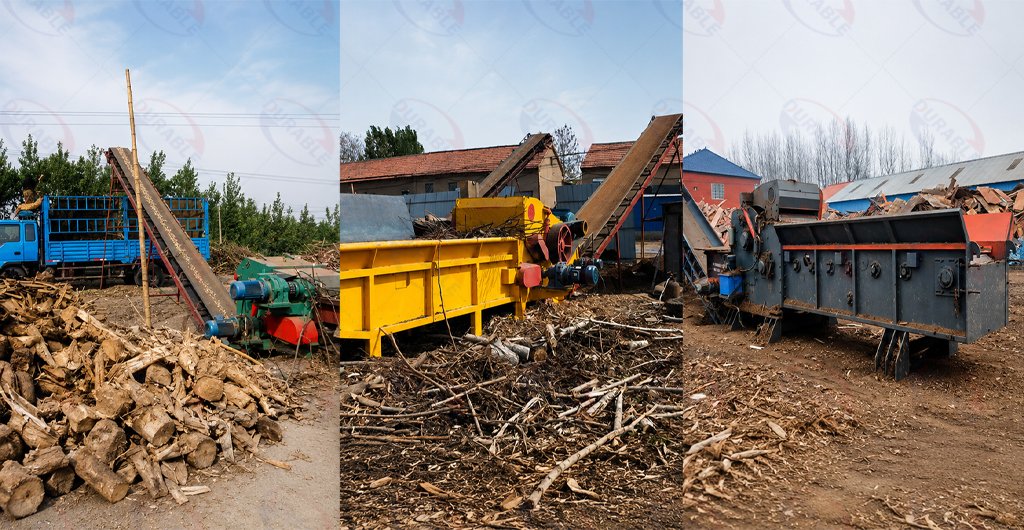
Common businesses that may need this machine include:
- Wood recycling yards
- Pallet recycling companies
- Furniture factories
- Packaging wood recycling businesses
- Construction wood waste processors
- Biomass fuel plants
- Sawmills and wood processing plants
- Biomass briquette producers
- Pellet fuel manufacturers
- Charcoal production projects using wood waste
The machine is especially useful when the business receives material from different sources. Mixed wood waste is often difficult to standardize. One truck may contain pallets. Another may contain boards, branches, and packaging waste. A third may contain longer pieces that are difficult to feed into smaller machines.
In this situation, a comprehensive crusher helps make the first stage of processing more stable.
However, if your business only processes clean logs into uniform chips, a wood chipper may be a better choice. If your material is already small and you only need fine grinding, a hammer mill may be more suitable.
The key is to choose based on the problem you are solving.
How to Choose Capacity and Feeding Size
Capacity is one of the most important specifications, but it is also one of the easiest to misunderstand.
Many buyers ask only, “How many tons per hour can this machine process?” That question is important, but it is not enough. Real capacity depends on raw material size, moisture, density, feeding method, discharge system, blade condition, and operator experience.
Before choosing capacity, confirm these points:
- Maximum material length
- Maximum material width
- Maximum material thickness or diameter
- Average material type
- Required hourly output
- Daily working hours
- Whether feeding is manual or conveyor-based
- Whether material contains nails, sand, or metal
- Required discharge size
- Downstream equipment capacity
A large feed opening is important if you process pallets, boards, and bulky wood waste. If the feed opening is too small, workers may still need to cut material before feeding, which reduces the value of the crusher.
Use this table as a practical reference:
| Business Scale | Recommended Focus |
|---|---|
| Small Recycling Workshop | Lower investment, easy maintenance, simple feeding |
| Medium Biomass Plant | Stable feeding, continuous output, manageable power use |
| Large Wood Waste Yard | Large feed opening, heavy-duty rotor, conveyor feeding |
| Industrial Fuel Supplier | High capacity, stable discharge, downstream integration |
Do not choose a crusher only because it has the highest motor power. A machine with better feeding design and proper rotor structure may perform better in real production than a machine that only looks powerful on paper.
What Output Size Do You Need for Downstream Processing?
The right output size depends on what you want to do after crushing.
A comprehensive crusher usually produces rough crushed material. This may be enough for some fuel or recycling applications, but other projects need further processing.
| Downstream Use | Output Requirement |
|---|---|
| Boiler Fuel | Coarse crushed wood may be acceptable |
| Biomass Briquette Production | Usually needs further fine crushing and drying |
| Pellet Production | Requires smaller and more uniform particles |
| Carbonization | Depends on furnace type and feeding system |
| Mulch or Compost | Size depends on local market demand |
| Wood Recycling | Depends on resale or reuse requirements |
If your crushed wood will be used before a Biomass Briquette Machine, you may need drying and further fine crushing after the first-stage crusher. Briquette machines usually require more controlled particle size and moisture.
If your project is pellet production, the material usually needs to be prepared before entering a Pellet Making Machine. In many pellet plants, rough crushed wood must be dried and milled into smaller particles before pelletizing.
If your material will enter a Rotary Drum Biomass Carbonization Furnace, feeding size and uniformity also matter. Carbonization equipment works more smoothly when material size is controlled according to the furnace design.
This is why output size should be decided by the complete process, not by the crusher alone.
Key Features to Check Before Buying
A comprehensive crusher works in tough conditions. It may face dirty pallets, uneven boards, heavy branches, or mixed waste wood. Therefore, machine structure and maintenance design matter.
Before buying, check these key features.
Feed Opening Size
The feed opening should match your largest common material. If your workers still need to cut most materials before feeding, the machine may not solve your labor problem.
Rotor and Blade Design
The rotor and blades determine crushing efficiency, wear resistance, and output stability. Ask what material the blades are made from and how often they may need replacement under your working conditions.
Feeding Method
For small projects, manual feeding may be acceptable. For larger projects, conveyor feeding can improve safety and output stability.
Discharge System
The discharge system should match your next step. If crushed material cannot discharge smoothly, the crusher may block or reduce output.
Impurity Tolerance
Wood waste may contain nails, screws, sand, or small metal parts. Ask the supplier how the machine handles impurities and what material cleaning is recommended before crushing.
Maintenance Access
Easy access to blades, screens, bearings, and wear parts can reduce downtime. A machine that is difficult to maintain may become expensive in long-term operation.
Spare Parts Supply
Confirm the availability of blades, screens, belts, bearings, and other wear parts before placing an order.
A cheaper machine may look attractive at first. However, if wear parts are difficult to replace or the structure is too light for your material, downtime can quickly become more expensive than the initial saving.
Common Buying Mistakes
Many buyers choose the wrong crusher because they focus on simple specifications instead of real working conditions.
Avoid these common mistakes.
Mistake 1: Treating All Wood Waste as the Same
Clean logs, old pallets, furniture waste, and branches behave differently during crushing. A correct recommendation starts with real material photos, size, and impurity information.
Mistake 2: Choosing Only by Motor Power
Motor power does not guarantee good crushing performance. Feeding design, rotor structure, blade quality, discharge method, and material type are equally important.
Mistake 3: Ignoring Nails and Metal Parts
Waste pallets and construction wood may contain metal. Large metal parts should be removed before crushing to protect the machine and reduce blade damage.
Mistake 4: Forgetting Downstream Equipment
If the crusher output is too large for the dryer, hammer mill, briquette machine, pellet machine, or carbonization furnace, the next step may become the bottleneck.
Mistake 5: Buying Too Small
If the feed opening is too small, workers must cut material manually. This increases labor cost and slows production.
Mistake 6: Buying Too Large
An oversized crusher may increase investment, power consumption, and maintenance cost without improving actual profit.
Mistake 7: Not Planning Dust and Safety Control
Wood crushing can produce dust and noise. Plan suitable dust control, safety guards, and operator procedures.
Before making a final decision, confirm your material, output target, downstream process, and budget together. A good crusher selection should reduce labor, improve feeding stability, and support the next production step.
How to Choose the Right Crusher Configuration for Your Project
The right configuration depends on your raw material and final product.
For a small recycling business, a simple comprehensive crusher with manual or basic conveyor feeding may be enough. For a larger biomass fuel plant, the crusher may need to work with conveyors, magnetic separation, dust control, drying, fine crushing, briquetting, pelletizing, or carbonization equipment.
Use this table as a starting point.
| Project Type | Main Challenge | Recommended Direction |
|---|---|---|
| Pallet Recycling | Bulky material and nails | Comprehensive crusher with impurity control |
| Furniture Waste Processing | Mixed boards and hardware | Heavy-duty crushing and pre-sorting |
| Biomass Briquette Plant | Need stable material before pressing | Crusher + dryer + fine crushing + briquette machine |
| Pellet Fuel Plant | Need small uniform particles | Crusher or chipper + dryer + hammer mill + pellet machine |
| Wood Waste Carbonization | Need controlled feeding size | Crusher or chipper + dryer + carbonization furnace |
| Boiler Fuel Supply | Need cost-effective fuel size | Crusher matched to boiler feeding requirements |
If your business is still at the planning stage, do not start by asking only for machine price. Start by describing your production goal.
A useful inquiry should include:
- Raw material type
- Photos or videos of material
- Maximum feed size
- Average moisture level
- Whether nails or metal are present
- Required hourly output
- Required final size
- Final product use
- Power supply
- Factory layout
- Budget range
- Expansion plan
With this information, DURABLE can help evaluate whether you need a comprehensive crusher, wood chipper, hammer mill, charcoal crusher, or combined biomass processing line.
Frequently Asked Questions
What is a comprehensive crusher used for?
A comprehensive crusher is used to crush bulky and irregular wood waste such as pallets, scrap wood, furniture waste, branches, boards, packaging wood, and similar biomass materials.
Is a comprehensive crusher the same as a wood chipper?
No. A wood chipper usually cuts logs or branches into chips, while a comprehensive crusher is more suitable for mixed, bulky, or irregular waste wood.
Can a comprehensive crusher process waste pallets?
Yes. Waste pallets are one of the common applications. However, large metal parts should be removed before crushing to reduce blade damage and safety risks.
Can crushed wood be used for biomass briquettes?
Yes, but rough crushed wood usually needs further drying and fine crushing before entering a biomass briquette machine.
Can crushed wood be used for pellet production?
Yes. However, pellet production normally requires smaller and more uniform particles, so a hammer mill is often needed after rough crushing or chipping.
What capacity should I choose?
Choose capacity based on your raw material size, hourly processing target, working hours, feeding method, discharge size, and downstream equipment capacity.
Do I need a hammer mill after a comprehensive crusher?
If your final process requires fine particles, such as pelletizing or briquetting, a hammer mill may be required after rough crushing.
What should I provide before asking for a quotation?
Provide raw material photos, maximum size, moisture content, impurity level, required output size, hourly capacity target, power condition, and final application.
About DURABLE
DURABLE provides biomass processing equipment for wood recycling, fuel production, briquetting, pellet making, carbonization, and related industrial projects.
Our team helps buyers evaluate raw material type, feeding size, capacity target, downstream process, and investment budget before recommending a suitable machine configuration.
Whether you need a comprehensive crusher for waste pallets, a wood chipper for biomass fuel preparation, a hammer mill for fine grinding, or a complete biomass processing solution, DURABLE can help you build a practical equipment plan for your business.
Contact DURABLE today to receive a customized comprehensive crusher recommendation and quotation.