 Durable Machinery
Get Price
Why More Biomass Plants Are Switching to Drum Chippers
Biomass plants are no longer treating raw material preparation as a simple “make it smaller” step. As fuel briquette plants, pellet plants, carbonization projects, and industrial biomass energy systems become larger, the first machine in the line has become more important than many buyers expect.
If wood waste, branches, slabs, or mixed forestry materials enter the line in unstable sizes, the entire production process becomes harder to control. Dryers may work unevenly. Conveyors may block. Pellet mills may lose output. Briquette machines may receive inconsistent feedstock. Carbonization furnaces may struggle with uneven heating.
This is one reason more biomass plants are paying closer attention to chipping equipment, especially drum chippers.
A drum chipper is not always the only choice. In many projects, a Disc Wood Chipper is still an excellent solution for producing clean and uniform wood chips from logs, branches, and wood waste. However, when a biomass plant needs higher continuous capacity, stronger feeding ability, and better tolerance for irregular raw materials, a drum chipper can become a more practical option.
This article explains why more biomass plants are switching to drum chippers, how they compare with disc chippers, which materials are suitable, and how to choose the right chipping equipment for a biomass production line.
Why Raw Material Preparation Matters in Biomass Plants
In a biomass plant, raw material preparation affects almost every step after it.
Many buyers focus first on the main production machine, such as a briquette machine, pellet machine, dryer, or carbonization furnace. However, these machines can only perform well when the material entering them is stable.
For example, a Biomass Briquette Machine needs prepared biomass material with suitable particle size and moisture. If the material is too large or too inconsistent, feeding becomes unstable and briquette quality may drop.
The same problem appears in pellet production. A Pellet Making Machine works better when the upstream material is easier to dry, crush, and feed evenly.
Poor raw material preparation can cause:
- Uneven drying
- Conveyor blockage
- Lower production capacity
- Higher labor demand
- Higher wear on downstream equipment
- Inconsistent fuel or charcoal quality
- More downtime during continuous operation
This is why chipping is not just a support process. In many biomass plants, it is the foundation of stable production.
When a plant grows from small-batch operation to continuous commercial production, the question changes from:
“Can this machine cut wood?”
to:
“Can this machine feed my entire production line every day without becoming the bottleneck?”
That is where drum chippers become attractive.
What Is a Drum Chipper?
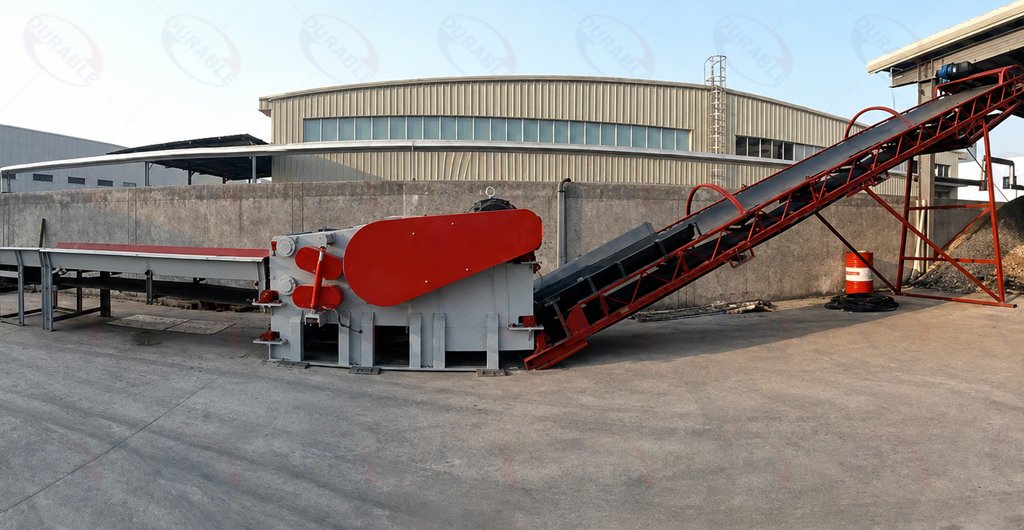
A drum chipper is a wood chipping machine that uses a rotating cylindrical drum equipped with knives to cut wood materials into chips. The material is fed into the cutting area, where the rotating drum chips it into smaller pieces for further processing.
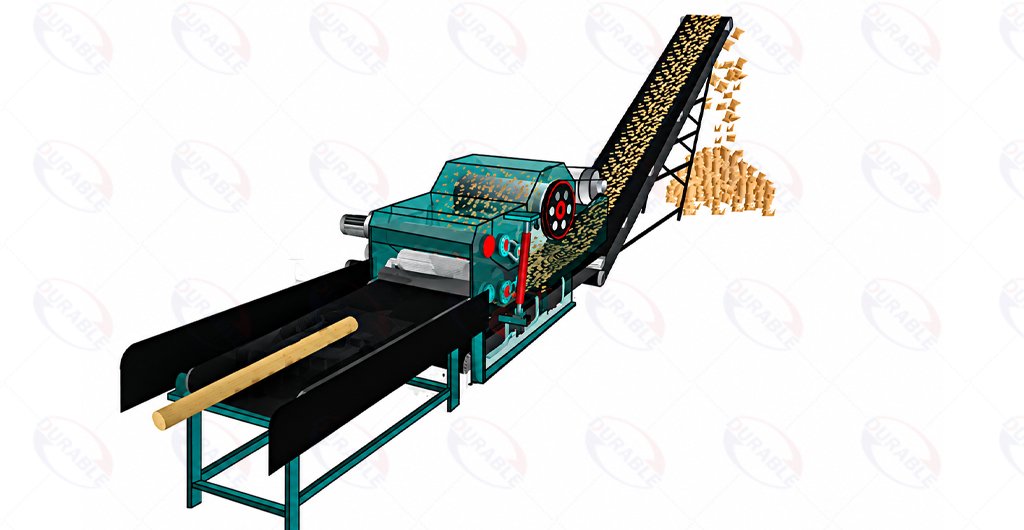
In biomass production, drum chippers are commonly used to process:
- Logs
- Branches
- Forestry waste
- Sawmill slabs
- Wood offcuts
- Bamboo
- Palm waste
- Mixed biomass feedstock
- Wood waste for fuel production
The main advantage of a drum chipper is its ability to handle continuous, high-volume material preparation. Compared with smaller or more precision-focused chipping machines, a drum chipper is often chosen when the plant needs stronger feeding performance and higher throughput.
However, this does not mean a drum chipper is always better. It depends on the raw material and final application.
If your priority is producing very uniform chips from clean logs or straight wood materials, a disc chipper may still be the better choice. If your plant processes large volumes of irregular biomass material, a drum chipper may offer better production flow.
Drum Chipper vs. Disc Chipper: What Is the Difference?
Both drum chippers and disc chippers are used to produce wood chips, but they are designed for different operating priorities.
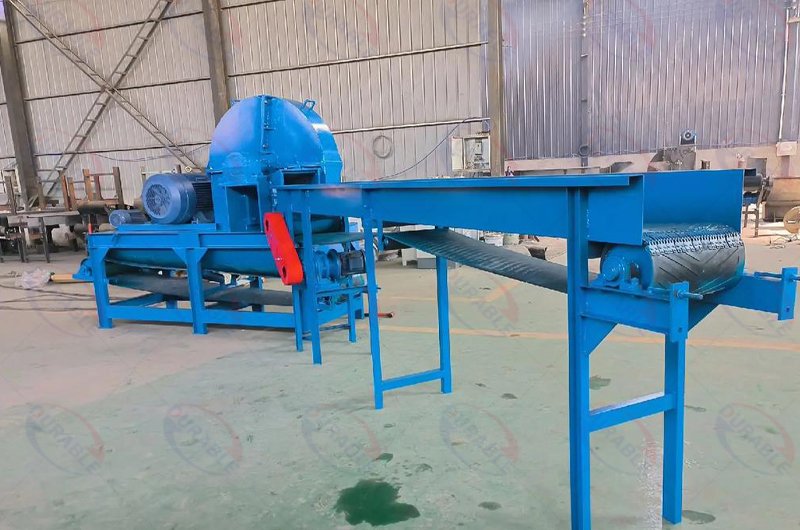
A disc chipper uses a rotating disc with knives. The material is usually fed into the disc at a controlled angle, creating cleaner and more uniform chips. This makes it suitable for projects that care more about chip consistency.
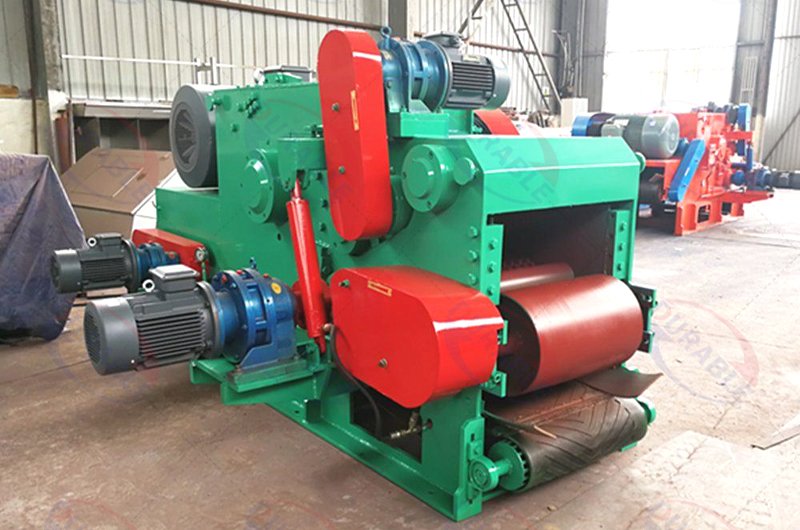
A drum chipper uses a rotating drum with knives. It is usually better suited for continuous feeding, higher volume processing, and more irregular wood materials.
| Comparison Point | Drum Chipper | Disc Chipper |
|---|---|---|
| Main Strength | High-volume continuous processing | Uniform and cleaner chip quality |
| Best Raw Material | Irregular wood, branches, slabs, mixed biomass | Logs, straight branches, clean wood |
| Feeding Ability | Stronger for larger or mixed materials | More controlled feeding |
| Chip Uniformity | Good, but usually less precise than disc chipper | Very uniform chips |
| Typical Use | Biomass fuel, rough wood chip preparation, high-output plants | Pellets, pulp, boiler fuel, clean wood chips |
| Best Buyer | Plants needing capacity and feeding strength | Plants needing chip consistency |
The key is not to ask which machine is “better.”
The better question is:
Which machine matches your raw material and final product?
For biomass plants, this distinction matters. A factory making high-quality pellets from clean wood may prefer disc chipping. A large biomass fuel plant handling mixed branches, slabs, and forestry waste may prefer drum chipping.
Why More Biomass Plants Prefer Drum Chippers
More biomass plants are considering drum chippers because their production requirements are changing.
Small plants can often rely on simple crushing or smaller chipping equipment. But once daily production increases, weak feeding and uneven raw material preparation become expensive problems.
Here are the main reasons drum chippers are gaining attention.
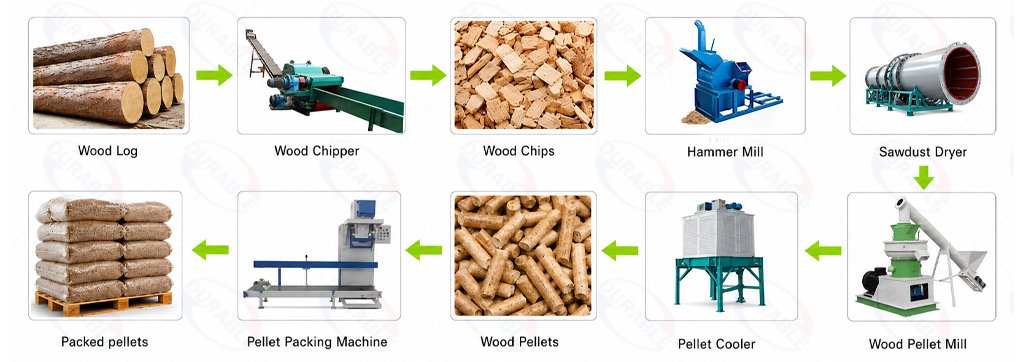
Higher Continuous Capacity
Biomass plants often need stable feeding for many hours per day. If the chipping equipment cannot keep up, the whole line slows down.
A drum chipper is often selected for projects where continuous high-volume wood preparation is required.
This is especially important for:
- Biomass fuel plants
- Pellet production facilities
- Large briquette projects
- Wood waste recycling centers
- Industrial fuel supply projects
Higher capacity does not only mean more output. It also means fewer interruptions and better line balance.
Better Handling of Irregular Materials
Many biomass plants do not receive perfect logs.
They may process:
- Branches with uneven shapes
- Sawmill offcuts
- Slabs
- Forestry residues
- Mixed wood waste
- Bamboo or palm waste
These materials can be difficult to feed into some machines. A drum chipper is often more forgiving when raw material shape is less regular.
For plants buying or collecting raw material from many sources, this flexibility can be valuable.
More Stable Feeding for Large Lines
Stable feeding is one of the biggest differences between small production and industrial production.
In a small workshop, workers can manually adjust material flow. In a commercial plant, frequent manual correction increases labor cost and downtime.
A drum chipper can support a more continuous raw material preparation process. When combined with conveyors, storage bins, screens, and dryers, it can help create a smoother production line.
Easier Integration with Drying and Fuel Lines
Wood chips are usually not the final product. They are often an intermediate material.
After chipping, the material may go to:
- Drying
- Fine crushing
- Pelletizing
- Briquetting
- Carbonization
- Boiler fuel preparation
For example, wood chips can enter a drying system before further size reduction and pellet forming. They can also be prepared for biomass briquette production or carbonization.
If a plant uses a Rotary Drum Biomass Carbonization Furnace, raw material size and feeding stability become especially important because uniform material helps improve continuous processing.
Which Biomass Materials Are Suitable for Drum Chippers?
Drum chippers are usually suitable for medium to large wood-based biomass materials.
Common materials include:
| Material | Suitability | Notes |
|---|---|---|
| Logs | Good | Suitable when feed size matches machine opening |
| Branches | Good | Better for irregular forestry waste |
| Sawmill Slabs | Very Good | Common material in wood processing plants |
| Wood Offcuts | Very Good | Suitable for recycling into fuel chips |
| Bamboo | Good | Requires suitable blade and feeding design |
| Palm Waste | Medium–Good | Depends on fiber structure and moisture |
| Mixed Forestry Waste | Good | Drum chipper often handles irregular shapes better |
| Sawdust | Not Necessary | Usually does not need chipping |
A drum chipper is not needed for every biomass material.
If your raw material is already sawdust, powder, or small particles, chipping may not be required. In that case, screening, drying, or fine crushing may be more relevant.
If your raw material is logs, slabs, branches, or large wood waste, chipping is usually the first step.
Before choosing equipment, prepare the following information:
- Maximum raw material diameter
- Average raw material length
- Moisture level
- Material type
- Impurity level
- Required chip size
- Hourly capacity target
- Final product use
This information helps determine whether a drum chipper, disc chipper, crusher, or combined preparation system is more suitable.
For buyers who are still deciding between chipping and crushing, the guide Wood Chipper vs. Crusher: Which Machine Do You Actually Need? can help clarify the difference.
How Drum Chippers Improve Downstream Production
The value of a drum chipper is not only in the chipping step itself. Its real value appears in downstream production.
When wood chips are more stable and easier to handle, the whole plant can run more smoothly.
Drying Becomes More Even
Large wood pieces dry slowly. Fine particles may dry too quickly. A more controlled chip size helps dryers work more efficiently.
Even drying is important because moisture affects pellet quality, briquette density, carbonization performance, and fuel value.
Feeding Becomes More Stable
Downstream machines need steady material flow.
Unstable feeding can reduce output and create frequent stoppages. A properly selected drum chipper helps prepare material that is easier to convey, store, and feed.
Briquette and Pellet Quality Can Improve
For briquette or pellet projects, raw material consistency affects final product strength and appearance.
A stable upstream chipping process helps reduce the pressure on later crushing and forming equipment. This does not replace drying or fine grinding, but it makes the whole preparation system easier to control.
Carbonization Becomes Easier to Manage
If biomass material will be carbonized, size consistency matters.
Large pieces may carbonize slowly, while fine material may overreact or create dust problems. More uniform feedstock helps improve carbonization stability, especially in continuous systems.
This is why raw material preparation should be planned together with the final production goal.
When Should You Choose a Disc Chipper Instead?
Although drum chippers are useful for many biomass plants, a disc chipper is still the better choice in some projects.
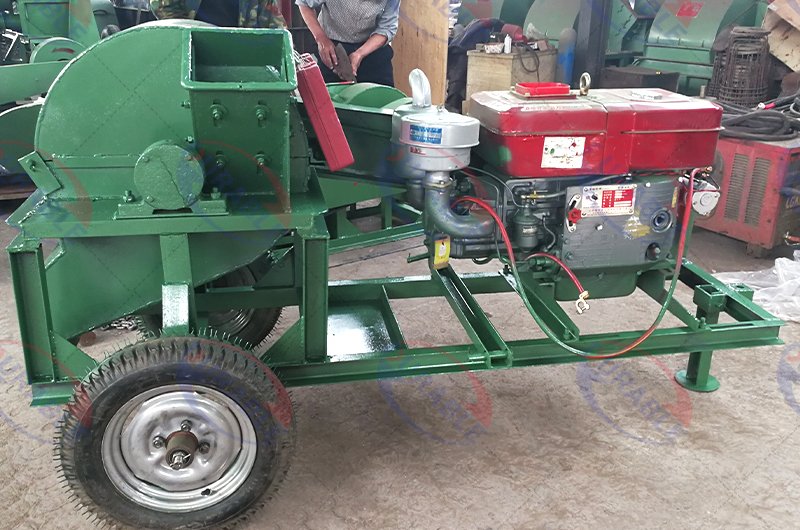
You should consider a disc chipper when:
- Your raw material is clean logs or straight branches
- You need more uniform chip thickness
- Your final product requires cleaner chips
- You are producing material for pellets, pulp, or controlled boiler fuel
- Your production capacity is medium rather than very large
- You want simpler operation and efficient cutting for regular wood
A Disc Wood Chipper is especially suitable when chip quality and consistency matter more than raw material flexibility.
For example, pellet plants often care about uniform chip preparation because it affects drying, hammer milling, and pellet die performance. Boiler fuel producers may also prefer consistent chips for easier feeding and combustion control.
In other words:
- Choose a drum chipper when your priority is high-volume processing of irregular wood biomass.
- Choose a disc chipper when your priority is clean, uniform chips from more regular wood materials.
This balanced comparison helps avoid a common mistake: buying the wrong machine simply because it has a higher capacity rating.
Common Buying Mistakes
Many biomass plants choose chipping equipment too late in the project planning stage. By the time they realize the raw material preparation system is weak, the dryer, pellet machine, briquette machine, or carbonization furnace is already underperforming.
Avoid these common mistakes.
Only comparing motor power
Motor power does not tell the full story. Feed opening, blade design, rotor structure, feeding system, discharge method, and raw material type all matter.
Ignoring raw material shape
Two plants may both process “wood waste,” but one may receive clean logs while the other receives irregular branches and slabs. These two projects may require different machines.
Choosing capacity without considering downtime
A machine rated for high output may still fail to support daily production if feeding, blade maintenance, discharge, or conveyors are poorly matched.
Forgetting downstream requirements
The chip size needed for boiler fuel may be different from the chip size needed before pelletizing or carbonization.
Not planning for impurities
Dirt, stones, metal, and sand can damage blades and increase wear. Raw material cleaning and operator inspection should be part of the process.
Buying the chipper as a standalone machine
A chipper should be selected based on the whole production line, not only the chipping stage.
Before buying, confirm:
- Raw material type and size
- Required chip size
- Required hourly capacity
- Final product use
- Downstream equipment requirements
- Power supply
- Feeding method
- Discharge and conveying plan
- Blade material and spare parts
- Maintenance access
How to Choose the Right Chipping Equipment for Your Plant
The right chipping equipment depends on your material, production scale, and final application.
Use this table as a practical starting point.
| Project Type | Recommended Focus | Suitable Direction |
|---|---|---|
| Small biomass fuel project | Simple operation and lower investment | Disc chipper or small chipper |
| Pellet plant using clean logs | Uniform chips and stable drying | Disc wood chipper |
| Large biomass fuel plant | High capacity and continuous feeding | Drum chipper |
| Mixed wood waste recycling | Strong feeding and material tolerance | Drum chipper |
| Briquette production line | Stable preparation before drying and pressing | Chipper + crusher + briquette machine |
| Carbonization project | Consistent material size and steady feeding | Chipper + dryer + carbonization furnace |
The best solution is rarely based on one machine alone.
For a complete biomass plant, chipping equipment may need to work with conveyors, screens, dryers, crushers, briquette machines, pellet machines, or carbonization furnaces.
That is why buyers should explain their full production goal before asking for a quotation.
Useful information includes:
- What raw material do you process?
- What is the maximum material size?
- How many tons per hour do you need?
- What chip size do you want?
- Will the chips be used for pellets, briquettes, boiler fuel, or carbonization?
- Do you need mobile or stationary equipment?
- Is your power source diesel or electric?
- Do you plan to expand capacity later?
With this information, DURABLE can help evaluate whether a disc chipper, drum chipper, crusher, or combined preparation system is more suitable for your plant.
Frequently Asked Questions
Why are biomass plants using drum chippers?
Many biomass plants use drum chippers because they need higher continuous capacity, stronger feeding ability, and better handling of irregular wood waste.
Is a drum chipper better than a disc chipper?
Not always. A drum chipper is often better for high-volume and irregular biomass materials. A disc chipper is often better when clean and uniform wood chips are required.
Can a drum chipper be used before a biomass briquette machine?
Yes, but usually as part of a preparation system. Large wood materials may be chipped first, then dried or further crushed before entering the briquette machine.
Can a drum chipper be used before a pellet machine?
Yes. Wood chips can be prepared before drying and hammer milling. Pellet production usually requires further size reduction before pelletizing.
What materials can a drum chipper process?
Common materials include logs, branches, slabs, sawmill waste, wood offcuts, bamboo, forestry waste, and some mixed biomass materials.
Do I need a crusher after a drum chipper?
It depends on the final product. For pellets or briquettes, further crushing may be needed to achieve a smaller and more uniform particle size.
What information should I provide before asking for a quote?
You should provide raw material type, maximum diameter, moisture level, target chip size, required capacity, power condition, and final application.
About DURABLE
DURABLE provides biomass processing equipment for fuel producers, wood processing plants, farms, recycling projects, and industrial energy applications.
Our equipment range includes wood chipping, biomass briquetting, pellet making, crushing, and carbonization solutions. Instead of recommending equipment based only on machine name, our team helps buyers evaluate raw material type, capacity target, factory layout, downstream process, and investment budget.
Whether you are preparing wood chips for fuel briquettes, pellets, boiler fuel, or carbonization, DURABLE can help you choose a practical raw material preparation solution for your biomass plant.
Contact DURABLE today to receive a customized chipping and biomass processing equipment recommendation.