 Durable Machinery
Get Price
How to Choose the Right Hydraulic Brick Making Machine
Choosing a hydraulic brick making machine is not only about pressure, motor power, or hourly output. The right machine must match your block type, local materials, daily demand, automation level, curing plan, and investment budget.
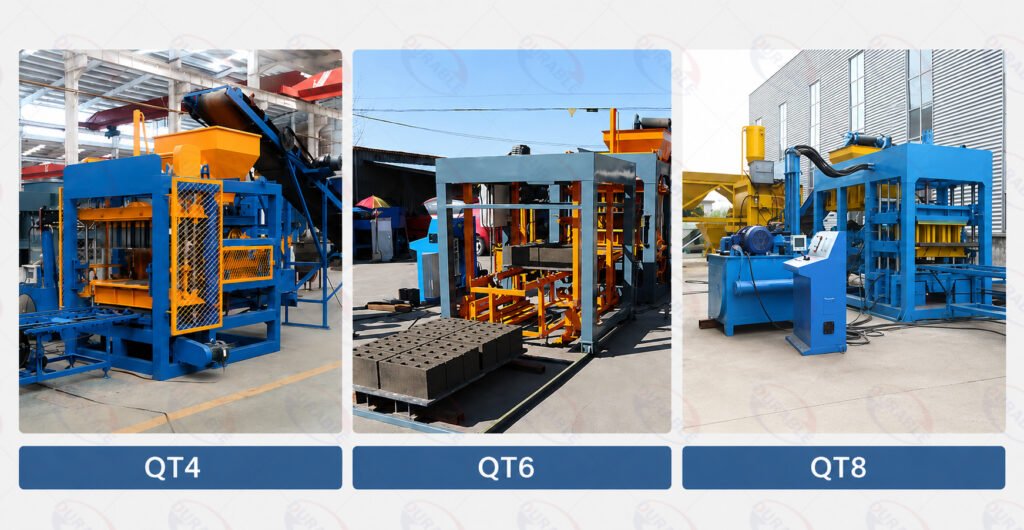
Many buyers start by comparing QT4, QT6, QT8, semi-automatic, or fully automatic models. However, model selection should come later.
First, you need to define your products, market, raw materials, labor conditions, factory space, and long-term operating cost.
A machine that is too small can restrict growth and delay orders. At the same time, an oversized line can consume cash, electricity, space, and maintenance resources before your market is ready.
This guide explains how to choose a hydraulic brick making machine based on real factory conditions, not only catalog specifications.
What Is a Hydraulic Brick Making Machine?
A hydraulic brick making machine is a forming machine that uses hydraulic pressure to compact materials inside a mold.
Depending on the machine design, it can produce cement blocks, hollow blocks, solid blocks, pavers, curbstones, interlocking blocks, and some stabilized soil products.
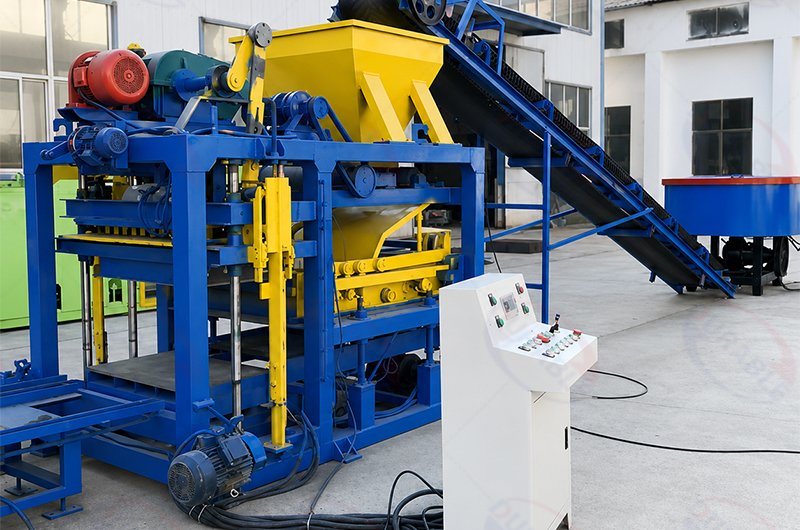
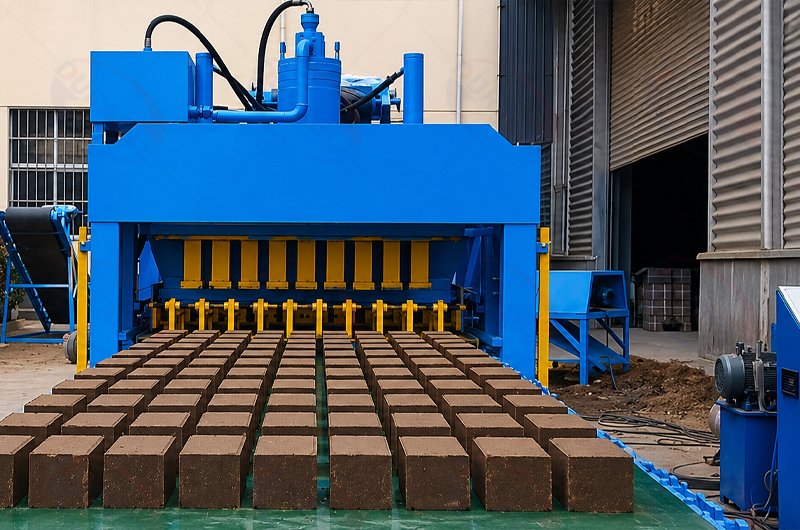
Unlike fired clay brick production, many hydraulic block machines are used for non-fired products. These products usually gain strength through cement hydration, compaction, and curing instead of high-temperature kiln firing.
A hydraulic system helps apply controlled pressure during forming. This can improve density, edge definition, demolding stability, and dimensional consistency when the material formula is suitable.
However, hydraulic pressure alone does not create a good block.
You still need proper mixing, stable moisture, accurate molds, suitable vibration, enough pallets, controlled curing, and trained operators.
A hydraulic brick making machine is most useful for buyers who want to produce commercial blocks with stable size, reliable strength, and repeatable output.
It may be suitable for:
- Local block factories
- Building material suppliers
- Contractors with regular block demand
- Paver and curbstone producers
- Businesses upgrading from manual production
- Factories planning multiple block types
- Projects using cement, sand, fly ash, stone powder, slag, or stabilized soil
Before choosing a model, make sure the machine fits your actual product and market.
What Should You Decide Before Choosing a Machine?
Before comparing equipment quotations, define the basic direction of your brick business.
A useful machine selection begins with six questions:
- What products will you manufacture?
- Which raw materials are locally available?
- How many saleable blocks do you need each day?
- How many workers can you employ?
- How much factory space and power do you have?
- What is your total project budget?
These questions are connected.
For example, a factory producing standard hollow blocks for local housing may need a different configuration from one supplying pavers and curbstones to municipal projects.
A business using cement, sand, and stone powder will also need a different material system from one producing soil-cement interlocking bricks.
The total project should consider:
- Raw material storage
- Batching and mixing
- Conveying
- Forming
- Pallets
- Block transfer
- Curing
- Stacking
- Finished-product storage
- Mold changes
- Maintenance access
Do not choose the forming machine first and attempt to design the factory around it later.
A well-planned factory starts with the market and production flow. The machine is selected to support that plan.
Start with the Blocks You Want to Produce
The first equipment decision is not machine size. It is the product.
Hydraulic brick machines can produce many types of building materials by changing molds, but different products require different pressure, vibration, feeding, pallet, and curing conditions.
Common products include:
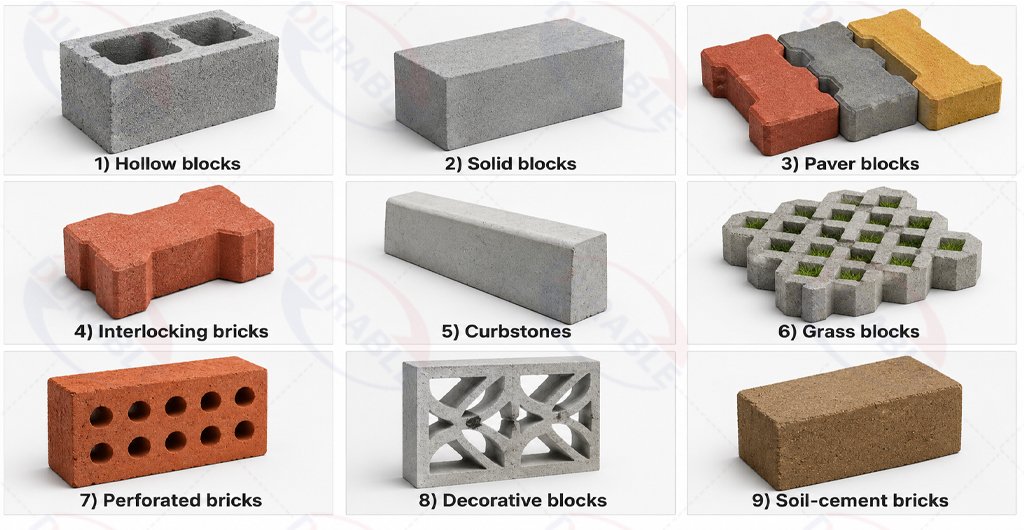
- Hollow blocks
- Solid blocks
- Paver blocks
- Interlocking bricks
- Curbstones
- Grass blocks
- Perforated bricks
- Decorative blocks
- Soil-cement bricks
| Product Type | Main Equipment Consideration |
|---|---|
| Hollow Block | Accurate cavity formation and stable vibration |
| Solid Block | Sufficient compaction and uniform feed weight |
| Paver Block | Surface quality, pressure, and mold precision |
| Interlocking Brick | Accurate shape and tight dimensional tolerance |
| Curbstone | Larger mold, stronger structure, and handling capacity |
| Grass Block | Complex mold filling and controlled vibration |
| Soil-Cement Brick | Material preparation and hydraulic compaction |
A buyer producing only one standard hollow block may not need the same mold flexibility as a factory serving contractors, landscapers, municipalities, and retail distributors.
If interlocking products are important in your market, review the production requirements of an Interlocking Brick Machine. Interlocking shapes require good mold accuracy because small dimensional errors can affect how blocks fit together.
Do not assume that every advertised mold can be installed on every machine.
Before buying, confirm:
- Mold dimensions
- Pallet size
- Block quantity per cycle
- Required pressure
- Required vibration
- Mold change method
- Mold weight
- Available clearance
- Product height range
The product mix should determine the mold system, and the mold system should help determine the machine.
Match Machine Capacity with Real Market Demand
Rated capacity is one of the most misunderstood machine specifications.
Suppliers may present output per cycle, per hour, or per shift. However, these figures depend on block size, mold quantity, cycle time, material supply, pallet handling, operator performance, curing space, and production interruptions.
Theoretical output is not the same as saleable daily output.
Before selecting capacity, estimate:
- Confirmed daily orders
- Seasonal demand
- Dealer requirements
- Expected market growth
- Working hours per shift
- Number of shifts
- Planned maintenance time
- Curing capacity
- Finished-product storage
- Available pallets
Use a realistic production target rather than the most optimistic market forecast.
| Factory Situation | Capacity Direction |
|---|---|
| New local startup | Compact or semi-automatic machine |
| Established local supplier | Medium automatic hydraulic machine |
| Regional distributor network | Higher-capacity automatic line |
| Large contractor or project supplier | High-output line with reliable curing |
| Multiple product factory | Flexible molds and planned changeovers |
A machine producing faster than your mixer, conveyors, curing area, or stacking system does not increase factory output. It simply creates waiting time and unfinished products.
For most growing businesses, some expansion capacity is useful. Still, the machine should not be much larger than your realistic sales, curing space, and cash flow can support.
Understand Your Raw Materials Before Comparing Models
A hydraulic system can apply strong pressure, but it cannot turn an unsuitable mixture into a reliable block.
The raw material formula affects:
- Density
- Compressive strength
- Surface finish
- Edge quality
- Demolding
- Water absorption
- Cement consumption
- Machine wear
Common materials include:
- Cement
- Sand
- Stone powder
- Crusher dust
- Fly ash
- Slag
- Gravel
- Quarry fines
- Stabilized soil
- Clay-soil mixtures
Different materials behave differently during feeding and compaction.
| Material Condition | Possible Production Effect |
|---|---|
| Excess Moisture | Sticking, deformation, and slow curing |
| Insufficient Moisture | Weak edges and poor compaction |
| Oversized Aggregate | Rough surfaces and incomplete cavities |
| Too Many Fines | Higher water demand and possible shrinkage |
| Poor Mixing | Strength and color variation |
| Unstable Cement Content | Inconsistent compressive strength |
| Material Segregation | Uneven density across the block |
Before requesting a quotation, provide the supplier with:
- Raw material names
- Approximate proportions
- Maximum aggregate size
- Moisture condition
- Material photos
- Local cement type
- Target block strength
- Sample block dimensions
A reliable recommendation should be based on your actual material, not only the block photograph you send.
For cement-based hollow, solid, and paving products, a suitable Concrete Block Machine configuration should combine material preparation, vibration, hydraulic pressure, mold design, and curing.
Choose the Right Automation Level
Automation affects investment, labor requirements, output stability, and factory management.
A fully automatic line is not automatically more profitable. It becomes valuable when market demand, factory organization, technical support, and curing capacity can use its output.
| Automation Level | Suitable Factory | Main Characteristics |
|---|---|---|
| Manual | Very small or test market | Low cost, high labor dependence |
| Semi-Automatic | Startup or growing local factory | Balanced cost and production |
| Automatic | Commercial block producer | Stable cycles and lower labor per block |
| Fully Automatic | Large regional or export supplier | Integrated feeding, forming, transfer, and stacking |
Semi-Automatic Systems
Semi-automatic machines can be practical where labor remains affordable and investment needs to stay controlled.
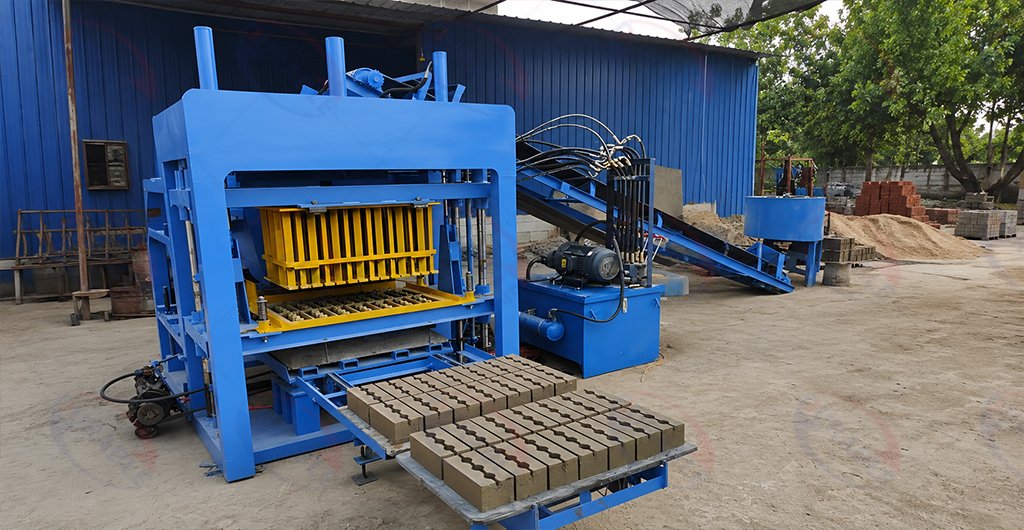
They allow a factory to enter the market without purchasing a complete automated handling system. However, production consistency may depend more heavily on operators.
Automatic Systems
An Automatic Brick Making Machine can coordinate feeding, vibration, hydraulic pressing, demolding, and conveying.
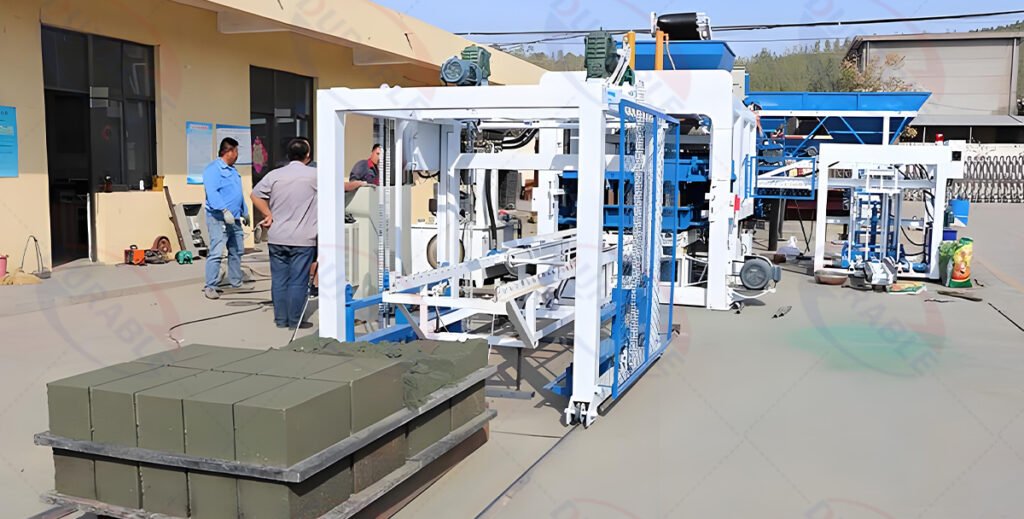
This reduces manual variation and can improve cycle stability.
Automatic production becomes especially useful when daily orders are stable, labor costs are rising, product consistency matters, long shifts are planned, or several block types are produced.
Fully Automatic Lines
A fully automatic line may include batching, mixing, conveyors, block forming, pallet handling, stacking, and control systems.
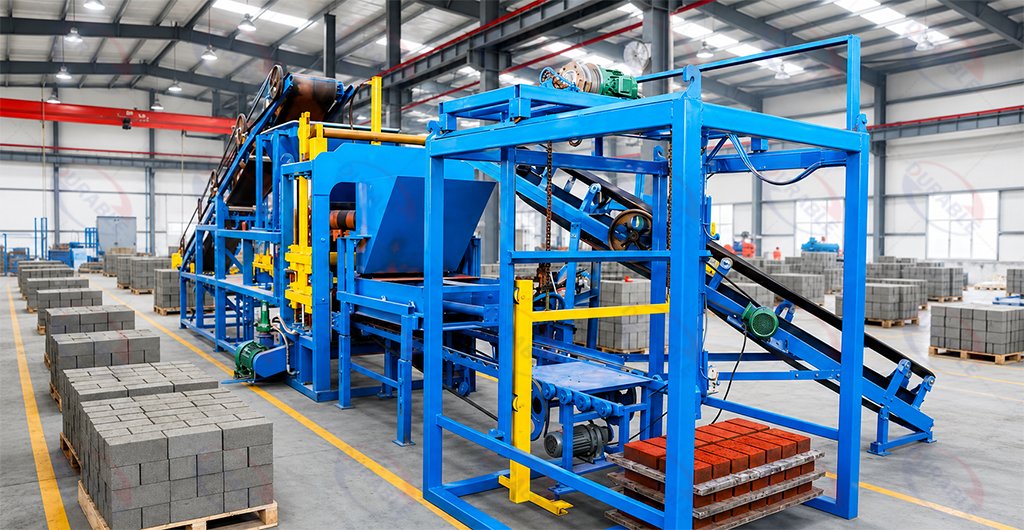
Before choosing this level, confirm that the factory also has:
- Reliable electricity
- Trained operators
- Maintenance support
- Enough pallets
- Adequate curing area
- Sufficient raw materials
- Stable product demand
Automation should remove a real bottleneck. It should not be purchased only because it appears more advanced.
Do Not Compare Machines by Hydraulic Pressure Alone
Pressure figures are easy to advertise, so many buyers compare machines by tonnage.
However, maximum hydraulic pressure does not tell you whether the machine will produce stable blocks.
You should also evaluate:
- Pressure stability
- Dwell-time control
- Vibration force
- Vibration frequency
- Mold filling
- Feed-box design
- Frame rigidity
- Hydraulic component quality
- PLC control
- Sensor reliability
- Pressure release
- Cycle repeatability
A machine with very high stated pressure may still produce inconsistent products if material distribution is uneven or the frame flexes during pressing.
| Specification | What You Should Ask |
|---|---|
| Hydraulic Pressure | Is pressure stable through repeated cycles? |
| Dwell Time | Can it be adjusted for different products? |
| Vibration | Does it fill corners and cavities evenly? |
| Frame | Is it rigid enough for long-term use? |
| Hydraulic Station | Which pumps, valves, and seals are used? |
| Control System | Can operators save product settings? |
| Cycle Time | Is it practical with real feeding and demolding? |
| Cooling | Can the hydraulic system run long shifts reliably? |
A properly designed Hydraulic Brick Making Machine should allow the operator to control pressure and forming conditions according to product requirements.
The best pressure is not the highest pressure. It is the pressure that repeatedly produces the required density, dimensions, and strength without excessive wear or energy use.
Evaluate Mold Flexibility and Future Product Plans
Molds are not a minor accessory. They determine what your factory can sell.
A low-cost machine with limited mold flexibility may restrict future growth. A machine that supports accurate and practical mold changes can help the factory enter new product segments.
Before buying, ask:
- Which molds are included?
- What is the cost of additional molds?
- How long does a mold change take?
- Can the machine produce different block heights?
- Can one pallet size support all planned products?
- Are wear parts replaceable?
- How long does mold manufacturing take?
- How is mold alignment controlled?
- What steel and heat treatment are used?
Product flexibility may allow your factory to move from ordinary blocks into:
- Pavers
- Curbstones
- Decorative products
- Grass blocks
- Interlocking blocks
- Higher-margin customized shapes
However, more molds do not automatically mean higher profit.
Every new product requires market demand, correct material formula, product testing, storage space, sales support, and changeover planning.
Start with products that have confirmed demand. Add new molds when dealers, contractors, or projects create a real opportunity.
Calculate Long-Term Operating Cost, Not Only Purchase Price
The machine quotation is only the beginning of the investment.
Long-term cost may include:
- Electricity
- Labor
- Hydraulic oil
- Seals and valves
- Vibration motors
- Bearings
- Molds
- Pallets
- Mixer wear parts
- Conveyor maintenance
- Cement consumption
- Rejects
- Downtime
- Technical support
A cheaper machine can become expensive if it produces more rejects, requires frequent repairs, or cannot obtain spare parts.
Use total cost of ownership when comparing quotations.
| Cost Area | Why It Matters |
|---|---|
| Energy Use | Affects every production shift |
| Labor | Determines cost per saleable block |
| Mold Life | Influences downtime and replacement budget |
| Spare Parts | Controls repair speed |
| Reject Rate | Wastes material, labor, and curing space |
| Maintenance | Affects equipment availability |
| Pallets | Can become a major recurring expense |
| Technical Support | Reduces startup and troubleshooting delays |
Ask every supplier to clarify what is included:
- Main machine
- Mixer
- Conveyors
- Hydraulic station
- Control cabinet
- Molds
- Pallets
- Installation
- Commissioning
- Training
- Spare parts
- Freight
- Foundation drawings
A low quotation may exclude components required for actual production.
Maintenance Points Buyers Should Not Ignore
Hydraulic brick machines work under pressure, vibration, dust, and repeated production cycles.
Regular preventive maintenance helps protect pressure stability, mold alignment, forming quality, and machine life.
Important maintenance points include:
- Check hydraulic oil level and cleanliness.
- Inspect hoses, seals, valves, and cylinders for leaks.
- Clean oil filters and reservoir breathers according to schedule.
- Lubricate guide pillars, mold sliders, and moving parts.
- Remove wet concrete buildup from mold cavities after production.
- Check vibration motors, fasteners, and electrical connections.
- Inspect pallets for bending, cracking, or uneven surfaces.
- Keep the control cabinet clean and dry.
- Train operators to report abnormal noise, slow movement, or pressure fluctuation.
Maintenance should not be treated only as repair work.
It reduces downtime, protects block consistency, and helps the factory keep stable output during long production shifts.
Avoid These Common Buying Mistakes
Many poor equipment decisions begin with one of the following mistakes.
Buying the largest machine available
Capacity should match demand, curing, material supply, and cash flow.
Choosing only by price
Price does not reveal frame quality, hydraulic reliability, mold accuracy, service, or long-term downtime.
Ignoring molds
A machine may be affordable while the required mold package is expensive or technically limited.
Using theoretical output
Daily sales should be calculated from saleable production, not brochure capacity.
Ignoring curing
A fast machine without sufficient curing space creates a new bottleneck.
Not testing raw materials
Material conditions affect pressure, vibration, surface quality, and final strength.
Underestimating pallets
Insufficient or poor-quality pallets can stop production and deform fresh blocks.
Forgetting local voltage and power stability
Motors, hydraulic stations, and PLC systems must match the local power supply.
Buying without a factory layout
The machine needs space for feeding, maintenance, transfer, curing, storage, and vehicle access.
Failing to plan spare parts
Critical seals, sensors, valves, bearings, and mold parts should be available before production begins.
Choose a Manufacturer That Understands the Whole Project
A hydraulic brick machine should not be selected from one capacity figure and one block photo.
A capable manufacturer should ask about:
- Target products
- Block dimensions
- Daily demand
- Material formula
- Local voltage
- Labor availability
- Factory space
- Curing method
- Automation level
- Budget
- Expansion plan
The supplier should also explain the relationship between mixer capacity, conveyor speed, feed volume, forming cycle, pallet supply, curing capacity, and finished-product handling.
DURABLE’s broader Brick Making Machine range includes different forming and automation directions for hollow blocks, solid bricks, pavers, clay products, and related construction materials.
Before ordering, request:
- Technical specifications
- Actual production videos
- Block samples
- Layout drawings
- Foundation requirements
- Power list
- Spare-parts list
- Warranty terms
- Installation plan
- Training details
A professional recommendation may lead you to a smaller machine than you first expected—or a more complete line than the main machine quotation suggested.
Both outcomes can be correct when they are based on the project rather than the catalog.
Buyer Project Self-Check List
Prepare these details before requesting a quotation.
This helps the supplier recommend a practical hydraulic brick making machine instead of guessing your needs.
- What block types do you want to produce?
- What are the exact block dimensions?
- Which raw materials are locally available?
- What is your estimated material formula?
- What daily or hourly output do you need?
- Do you already have customers or project demand?
- What automation level do you prefer?
- How many workers can you arrange?
- What is your local voltage and power condition?
- How much factory space is available?
- Do you have curing space?
- Do you need mixer, conveyors, molds, pallets, or stacker?
- Which country will the machine be shipped to?
- What is your estimated investment range?
The more complete your project details are, the more accurate the recommendation will be.
Frequently Asked Questions
What blocks can a hydraulic brick making machine produce?
Depending on its mold system and design, it may produce hollow blocks, solid blocks, pavers, interlocking bricks, curbstones, grass blocks, and other cement- or soil-based products.
How do I choose the correct machine capacity?
Estimate realistic daily sales, working hours, curing capacity, material supply, available pallets, maintenance time, and future growth. Do not rely only on theoretical blocks per cycle.
Is a fully automatic hydraulic brick machine always better?
No. It is better when the factory has enough demand, power, maintenance support, curing space, raw materials, and trained operators to use the additional capacity.
Does higher hydraulic pressure produce stronger blocks?
Not automatically. Strength also depends on material proportions, moisture, vibration, mold filling, cement quality, compaction, and curing.
What information should I send for an accurate quotation?
Send target block photos and dimensions, required daily output, raw materials, local voltage, automation preference, factory space, curing method, and budget range.
Final Thoughts
Choosing the right hydraulic brick making machine requires more than comparing pressure, model number, or hourly capacity.
A suitable machine should match your products, raw materials, realistic demand, automation level, curing space, mold plan, operating cost, and long-term factory layout.
Small startups usually need a practical entry-level setup rather than the largest machine available. A compact or semi-automatic system may be easier to manage when orders, labor, and cash flow are still developing.
As demand becomes more stable, an automatic hydraulic machine can improve output consistency and reduce manual variation. This option is more suitable for factories that already have regular orders, trained workers, and enough curing space.
Larger projects should evaluate the full production line, not only the forming machine. Batching, mixing, pallet handling, curing, storage, labor, and maintenance must all support the selected machine capacity.
The best hydraulic brick machine is not always the biggest or the most expensive model. It is the machine that produces saleable blocks your market needs at a cost your factory can sustain.
About DURABLE
DURABLE supplies hydraulic, semi-automatic, automatic, and mobile brick-making equipment for hollow blocks, solid bricks, pavers, interlocking products, and related building materials.
Our team evaluates your block market, raw materials, production target, automation requirements, factory space, curing conditions, and investment budget before recommending a machine configuration.
A successful block factory is not built around one machine. Material preparation, mixing, forming, molds, pallets, curing, stacking, maintenance, and quality control must work as one system.
Please contact DURABLE with your target block samples, raw material details, required output, local voltage, factory conditions, and investment range to receive a customized hydraulic brick making machine recommendation.