 Durable Machinery
Get Price
Hydraulic Brick Machines: Better Quality, Fewer Defects
Consistent block quality is one of the most important requirements in commercial brick production. Buyers expect blocks from the first shift and the last shift to have similar dimensions, density, strength, cavity shape, edge definition, and surface finish.
However, consistency becomes difficult when pressure, feeding volume, moisture, vibration, mold condition, or curing conditions change between production cycles. Even small variations can cause uneven heights, weak edges, damaged corners, rough surfaces, or unstable strength.
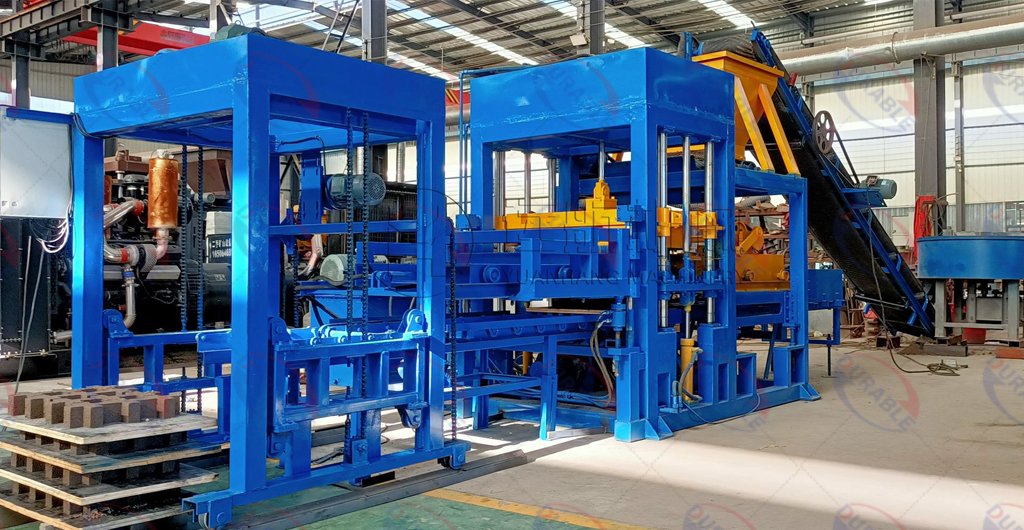
A hydraulic brick machine helps reduce these variations because pressure, dwell time, and release control can be managed more precisely than many basic mechanical forming systems.
Still, hydraulic pressure alone does not guarantee perfect blocks. The whole production process must remain stable.
This guide explains how hydraulic brick machines improve block consistency, why pressure control matters more than maximum pressure, and what buyers should check before choosing equipment.
What Does Block Consistency Actually Mean?
Consistent blocks do not simply look similar. They should also perform predictably during handling, curing, transport, masonry, and long-term use.
Factories usually evaluate consistency through several quality factors.
| Consistency Factor | Why It Matters |
|---|---|
| Block Dimensions | Supports straight walls and controlled mortar joints |
| Block Weight | Indicates stable feeding and compaction |
| Density | Influences strength, durability, and water absorption |
| Compressive Strength | Determines whether blocks meet project requirements |
| Surface Finish | Affects appearance and saleability |
| Edge Definition | Reduces damaged corners and customer complaints |
| Cavity Shape | Important for hollow and interlocking products |
| Cycle Stability | Keeps quality consistent through long production shifts |
If one block is heavier than another, the cause may be inconsistent feeding. If one side is denser, pressure or material distribution may be uneven. If block height changes, the problem may involve feed volume, mold filling, moisture, or machine adjustment.
This is why quality control should measure more than occasional strength samples.
Factories should also check dimensions, weight, density, surface finish, defect rate, and curing results throughout each shift.
A stable hydraulic system improves repeatability, but consistency comes from all production variables working within a controlled range.
How Hydraulic Pressure Improves Block Density
A hydraulic brick machine uses hydraulic cylinders to apply pressure to material inside a mold. This pressure forces particles closer together, reduces internal voids, and helps the mixture take the shape of the mold.
Compared with loosely compacted material, a properly compressed block usually has:
- Higher density
- Better edge definition
- More stable dimensions
- Improved handling strength
- Lower risk of surface collapse
- More consistent product weight
The important advantage is not simply that hydraulic systems can generate high pressure. It is that pressure can be applied in a more controlled and repeatable way.
A properly configured Hydraulic Brick Making Machine can use controlled hydraulic force to compact cement, sand, stone powder, fly ash, clay, or stabilized soil mixtures, depending on the machine design and product type.
During compression, smaller particles move into spaces between larger particles. At the same time, excess air is reduced and the material becomes more tightly packed.
However, the mixture must be suitable for compaction.
Material that is too dry may not bind properly. Excessive moisture may cause sticking, deformation after ejection, or unstable block height.
Hydraulic pressure improves density most effectively when particle size, moisture, mixing, and feed weight are already under control.
Why Pressure Control Matters More Than Maximum Pressure
Many buyers compare hydraulic brick machines by maximum pressure. Although pressure capacity matters, the highest pressure does not automatically produce the best block.
A better evaluation should focus on pressure stability, cycle repeatability, dwell time, pressure distribution, material matching, and smooth pressure release.
Dwell time means the period during which pressure remains on the material before the block is ejected. If dwell time changes from cycle to cycle, density and height may also change.
| Pressure Issue | Possible Result |
|---|---|
| Low Pressure | Loose blocks and weak edges |
| Excessive Pressure | Mold wear, sticking, or demolding problems |
| Uneven Distribution | Different density across one block |
| Unstable Dwell Time | Cycle-to-cycle quality variation |
| Fast Pressure Release | Cracks or damaged corners |
| Pressure Fluctuation | Inconsistent block weight and strength |
Overcompaction can also create problems.
Excessive pressure may not improve strength if the raw material formula is poor. Instead, it may increase energy use, accelerate mold wear, and make ejection more difficult.
The best machine setting is therefore not the highest available pressure. It is the pressure and dwell time that consistently produce the required density without damaging the mold or block.
Factories should test settings using real raw materials rather than relying only on standard factory parameters.
How Hydraulic Pressure and Vibration Work Together
For many concrete blocks, hollow blocks, pavers, and cement bricks, pressure alone cannot distribute material evenly inside the mold.
Dry or semi-dry concrete mixtures do not flow like liquid concrete. They must be spread across the mold and encouraged to fill corners, cavities, and narrow sections.
Vibration helps rearrange aggregate particles, reduce trapped air, fill mold corners, improve cavity formation, and create a more even surface.
After the material is distributed, hydraulic pressure compacts it into the final shape and density.
In simple terms:
Vibration helps the material fill the mold, while hydraulic pressure creates density and final shape.
An Automatic Brick Making Machine may combine automatic feeding, vibration, hydraulic pressing, demolding, and conveying to reduce manual variation between cycles.
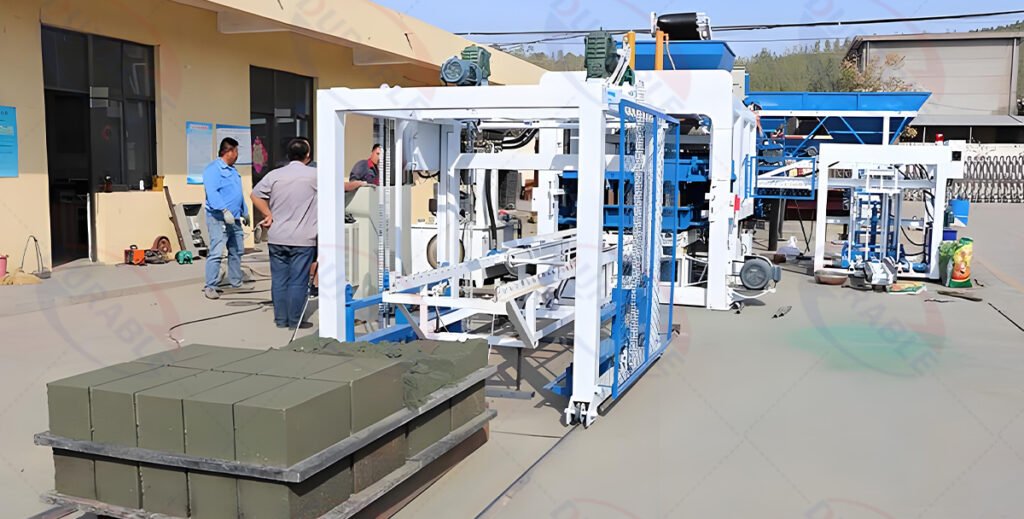
The timing between vibration and pressure is important.
Too little vibration may leave empty corners or uneven density. Excessive vibration may separate fine and coarse particles or slow the cycle without improving quality.
A well-adjusted system usually follows a stable sequence:
- Material feeding
- Mold filling
- Initial vibration
- Hydraulic compression
- Pressure holding
- Controlled release
- Block ejection
The more repeatable this sequence becomes, the more consistent the finished blocks are likely to be.
How PLC Control Supports Stable Production
Modern hydraulic brick machines often use PLC control to manage production steps more consistently.
PLC control does not replace good raw materials or proper operation. However, it can help reduce variation caused by manual timing, inconsistent operation, or repeated adjustment errors.
A PLC-based system may control feeding sequence, vibration time, pressing time, pressure holding, demolding, pallet movement, alarm signals, and production records.
This is useful when a factory produces several block types or works with multiple shifts.
For example, operators may use one setting for solid blocks and another setting for hollow blocks or pavers. When settings are recorded and repeated, the factory is less dependent on memory and manual judgment.
Still, PLC control should not be treated as a guarantee of perfect consistency.
If material moisture changes too much, the mold is worn, or the curing area is poorly managed, block quality can still vary. The control system supports repeatability, but the production process must remain stable.
How Mold Precision Affects Block Size and Shape
A stable hydraulic system cannot compensate for a damaged, worn, or poorly aligned mold.
The mold determines block length, width, height, cavity dimensions, surface texture, edge shape, interlocking features, and the number of blocks produced per cycle.
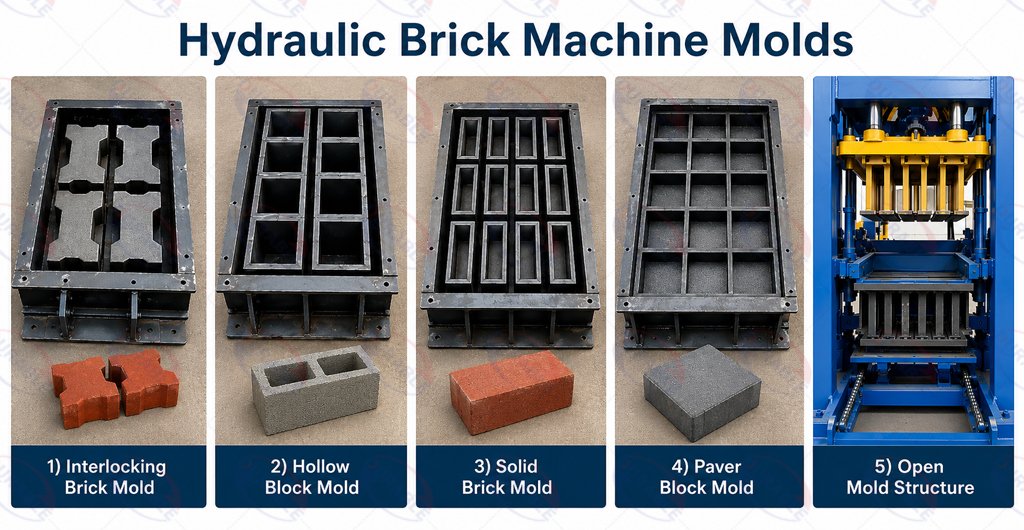
If the upper and lower mold sections do not align correctly, one side of the block may receive more pressure than the other. When several mold cavities wear at different rates, blocks produced during the same cycle may have different dimensions.
Common mold-related problems include:
- Rounded or damaged edges
- Uneven block height
- Inconsistent cavity walls
- Sticking during ejection
- Surface scratches
- Cracks appearing in the same location
- Weight differences between cavities
Many factories blame the hydraulic system when the real problem is a worn mold or uneven material filling.
Molds should be inspected for wear, deformation, loose connections, buildup, and alignment. Multi-cavity molds also require comparisons between individual cavities.
Changing molds allows one Brick Making Machine to produce hollow blocks, solid bricks, pavers, curbstones, or other products.
However, every new mold may require adjustments to feeding volume, vibration time, pressure, and cycle settings.
A setting that works for a solid block may not work for a thin-wall hollow block.
Why Stable Feeding and Moisture Still Matter
Hydraulic control improves repeatability, but it cannot produce identical blocks from inconsistent material.
Each mold cycle should receive a similar amount of mixture with similar moisture, particle distribution, and density.
| Material Problem | Likely Effect |
|---|---|
| High Moisture | Sticking, deformation, and slow setting |
| Low Moisture | Poor compaction and damaged edges |
| Uneven Mixing | Density and color variation |
| Unstable Feed Weight | Different block weight and height |
| Oversized Aggregate | Poor surface and cavity formation |
| Material Segregation | Uneven strength across the block |
| Feeding Delay | Longer cycles and inconsistent production |
Moisture is especially important in semi-dry concrete block production. The mixture must be dry enough to hold its shape after demolding but wet enough for cement hydration and effective compaction.
Feeding also needs to be uniform across the mold.
If more material reaches one side, hydraulic pressure may produce a block that looks complete but has uneven density.
Automatic feeding systems can reduce operator variation, but they still require proper adjustment. Material buildup, worn feed drawers, inconsistent mixer discharge, and conveyor interruptions can affect mold filling.
Factories should regularly measure moisture, feed weight, fresh block weight, block height, cycle time, material temperature, and aggregate size distribution.
Stable input produces stable output. Hydraulic pressure can only preserve consistency when the material entering each cycle is already reasonably controlled.
How Curing Influences Final Block Consistency
A block may leave the machine with good dimensions and density but still fail after curing.
Hydraulic forming creates the initial shape. Cement hydration creates much of the final strength.
Poor curing can cause low compressive strength, surface drying, cracking, color variation, uneven strength between batches, high water absorption, and damaged edges during handling.
Fresh blocks should be protected from rapid moisture loss, excessive heat, strong wind, heavy rain, and early handling.
If one production batch cures under shade while another remains exposed to direct sun, final strength may differ even though both were formed with the same machine settings.
Curing control should include consistent resting time, controlled moisture retention, stable stacking, suitable ventilation, weather protection, sufficient curing period, and strength testing before delivery.
For commercial factories, curing space must match forming capacity.
Increasing machine speed without enough curing area can force workers to move blocks too early or stack them improperly.
Therefore, final block consistency depends on both forming repeatability and curing discipline.
Hydraulic vs. Mechanical Brick Machines: Which Is More Consistent?
Hydraulic and mechanical brick machines can both produce marketable blocks when properly selected and operated. However, their control characteristics differ.
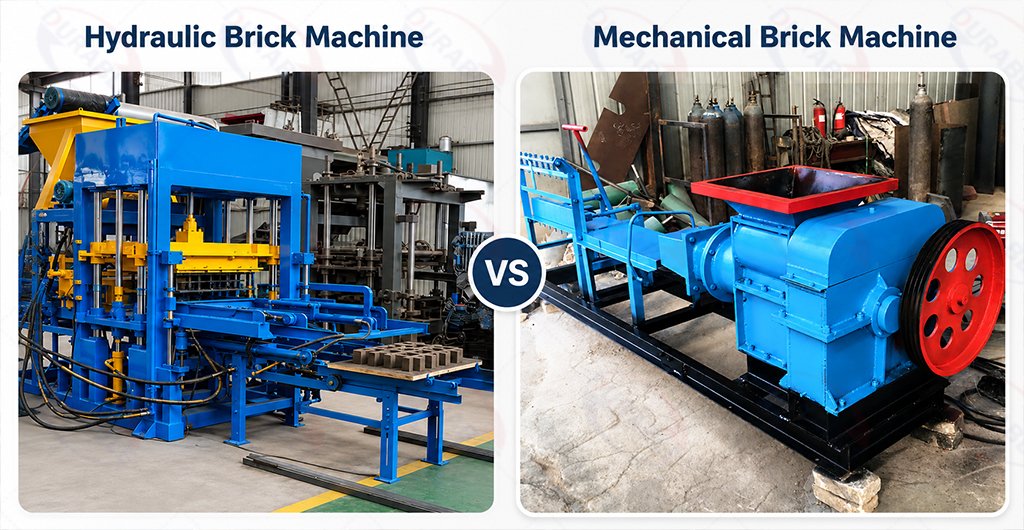
| Factor | Hydraulic Brick Machine | Mechanical Brick Machine |
|---|---|---|
| Pressure Control | More adjustable | Often more fixed |
| Dwell Time | Easier to control | Usually tied to the mechanical cycle |
| Product Flexibility | Generally higher | Depends on machine design |
| Density Stability | Strong with correct settings | Can be stable for fixed products |
| Changeover Adjustment | More flexible | May require mechanical changes |
| Maintenance Focus | Hydraulic oil, seals, valves, cylinders | Gears, cams, bearings, linkages |
| Best Use | Quality-focused and multi-product production | Simple repetitive production |
Common Causes of Inconsistent Blocks on Hydraulic Machines
When a hydraulic machine produces inconsistent blocks, the hydraulic system may not be the only cause.
Use this troubleshooting table as a starting point.
| Problem | Possible Cause |
|---|---|
| Different Block Heights | Uneven feeding, moisture variation, or mold wear |
| Weak Corners | Low moisture, poor filling, or early handling |
| One Side Is Denser | Uneven feeding or pressure alignment |
| Blocks Stick to Mold | Excess moisture, dirty mold, or release problem |
| Surface Is Rough | Poor grading, low vibration, or oversized aggregate |
| Strength Changes by Batch | Mixing, cement, moisture, or curing variation |
| Cycle Time Changes | Feeding delay, sensor issue, or hydraulic instability |
| Cracks After Ejection | Excess pressure, fast release, or dry mixture |
A practical troubleshooting process should follow a clear order:
- Check the raw material formula.
- Measure moisture.
- Compare feed weight.
- Inspect the mold.
- Review vibration timing.
- Confirm hydraulic pressure.
- Check dwell time.
- Observe block ejection.
- Examine curing conditions.
- Change only one major setting at a time.
Adjusting pressure, moisture, vibration, and feed volume simultaneously makes it difficult to identify the real cause.
Production records should connect each block-quality issue to the shift, operator, material batch, mold, pressure setting, and curing area.
How Much Does a Hydraulic Brick Machine Cost?
The cost of a hydraulic brick machine depends on capacity, mold size, automation level, hydraulic system design, mixer type, pallet system, and supporting equipment.
A basic machine may be enough for small production, while a larger commercial project may require batching, mixing, conveying, pallet feeding, curing space, and stacking equipment.
| Project Type | Typical Equipment Direction |
|---|---|
| Small Workshop | Simple hydraulic forming machine with manual feeding |
| Growing Factory | Semi-automatic hydraulic machine with mixer and conveyor |
| Commercial Block Plant | Automatic feeding, vibration, pressing, pallet transfer, and curing |
| Multi-Product Factory | Stronger mold system and adjustable pressure settings |
| High-Output Project | Integrated line with batching, mixing, forming, handling, and stacking |
The lowest price is not always the lowest cost.
A machine that lacks stable feeding, mold accuracy, or hydraulic control may create higher rejection rates. A higher-quality system may reduce waste, improve repeatability, and support a wider product range.
Before comparing quotations, buyers should confirm whether the offer includes molds, mixer, pallet system, hydraulic station, control panel, conveyors, spare parts, installation guidance, and training.
Hydraulic Brick Machine Maintenance for Stable Quality
A hydraulic brick machine needs preventive maintenance to keep pressure, alignment, and cycle stability under control.
If hydraulic oil is contaminated, seals are worn, or the mold frame is dirty, block density and dimensions may become unstable even if the machine still runs.
Important maintenance points include:
- Check hydraulic oil level and cleanliness regularly.
- Inspect seals, valves, hoses, and cylinders for leaks.
- Monitor oil temperature during continuous operation.
- Clean filters according to the maintenance schedule.
- Lubricate guide pillars and moving parts.
- Remove material buildup from the mold frame.
- Inspect vibration motors and fasteners.
- Check mold alignment and wear.
- Keep sensors, switches, and control cabinet components clean.
- Stop the machine when abnormal noise, pressure fluctuation, or slow movement appears.
Maintenance should not be treated only as repair work.
It protects product consistency, reduces downtime, extends machine life, and helps the factory maintain stable production during long shifts.
How to Choose a Reliable Hydraulic Brick Machine Supplier
A reliable supplier should not only sell a machine. They should help match the hydraulic system, vibration system, mold design, feeding method, and automation level to your raw materials and products.
| Supplier Factor | What You Should Check | Why It Matters |
|---|---|---|
| Hydraulic System Design | Pump, valves, seals, cylinders, and cooling method | Helps maintain stable pressure |
| Machine Frame Strength | Structural steel, guide pillars, and machine weight | Supports pressing and vibration stability |
| Mold Capability | Mold material, accuracy, changeover support, and product range | Affects size accuracy and edge definition |
| Control System | PLC functions, settings, alarms, and operator interface | Helps repeat production cycles |
| Line Integration | Mixer, conveyor, pallet system, curing, and stacking support | Reduces bottlenecks |
| Wear Part Supply | Molds, seals, valves, cutters, and vibration parts | Reduces downtime |
| Installation Guidance | Setup, calibration, test running, and operator training | Helps shorten startup time |
| Export Experience | Packing, shipping, voltage, documentation, and after-sales support | Reduces international purchase risk |
A good supplier should ask about your raw materials, block size, strength target, daily output, local voltage, labor condition, curing space, and budget before recommending equipment.
A small price difference should not be the only decision factor.
For B2B buyers, long-term stability, spare parts, mold support, and engineering experience often matter more than the lowest initial quotation.
Buyer Project Self-Check List
Before requesting a quotation, prepare your basic project information.
This helps the supplier recommend a practical machine instead of guessing your needs.
- What raw materials will you use?
- What cement, sand, fly ash, stone powder, slag, or aggregate ratio do you plan?
- What block type do you want to produce?
- Are the products hollow blocks, solid blocks, pavers, curbstones, or interlocking blocks?
- What are the exact dimensions and wall thicknesses?
- What strength requirement do your customers need?
- What daily or hourly output do you expect?
- Do you need manual, semi-automatic, or fully automatic operation?
- What is your local voltage and power condition?
- How much factory space is available?
- Do you already have curing space?
- Do you need mixer, conveyor, molds, pallets, or stacker?
- Which country will the equipment be shipped to?
- What is your estimated investment range?
The more complete your project details are, the more accurate the equipment recommendation will be.
When Is a Hydraulic Brick Machine Worth the Investment?
A hydraulic machine is most valuable when the business can earn a return from better product control, lower rejection rates, greater product flexibility, or reduced labor dependence.
It is often worth considering when:
- Customers require consistent dimensions.
- Blocks must meet strength standards.
- The factory produces hollow, solid, paving, or interlocking products.
- Mold changes are frequent.
- Existing blocks have uneven density.
- Labor costs are rising.
- Export or engineering customers require reliable quality.
- The business plans to increase automation.
- High rejection rates are reducing profit.
A Concrete Block Machine with suitable hydraulic and vibration systems may support higher consistency in commercial hollow block, solid block, or paver production.
However, a large hydraulic system may not be the right investment when market demand is limited, product quality requirements are low, raw material supply is unstable, power conditions are unreliable, or curing space is not planned.
The best investment is not always the machine with the highest pressure or fastest cycle.
It is the machine that matches product specifications, real daily demand, raw material conditions, available labor, factory space, curing capacity, maintenance ability, and expansion plans.
Frequently Asked Questions
Why do hydraulic brick machines produce denser blocks?
Hydraulic cylinders apply controlled pressure to material inside the mold. This reduces internal voids and compacts particles more tightly when moisture, feeding, and vibration are properly controlled.
Does higher hydraulic pressure always make stronger blocks?
No. Excess pressure may increase mold wear, energy consumption, sticking, or internal stress. Strength also depends on material proportions, cement quality, moisture, compaction, and curing.
Why is vibration used with hydraulic pressure?
Vibration helps distribute semi-dry material throughout the mold and reduces trapped air. Hydraulic pressure then compacts the material into its final density and shape.
Why are blocks from the same machine sometimes different?
Common causes include uneven feeding, changing moisture, mold wear, pressure fluctuations, incorrect vibration, material segregation, and inconsistent curing.
How should a hydraulic brick machine be maintained?
Check hydraulic oil, seals, valves, hoses, filters, guide pillars, vibration motors, mold alignment, and control components regularly. Preventive maintenance helps keep pressure and cycle stability consistent.
Final Thoughts
Hydraulic brick machines can improve block consistency, but they do not work alone.
Stable pressure, controlled dwell time, synchronized vibration, accurate molds, uniform feeding, proper moisture, careful curing, and regular maintenance all affect final block quality.
This is why buyers should not evaluate a hydraulic brick machine only by maximum pressure or machine price.
The better question is whether the machine can help your factory produce saleable blocks with stable dimensions, density, strength, and appearance under real production conditions.
For growing block factories, a well-matched hydraulic system can support better repeatability, lower rejection rates, more flexible product production, and stronger quality control.
For small or simple projects, the best choice still depends on market demand, raw material stability, curing space, labor skill, and investment budget.
A consistent block factory is not built around pressure alone. It is built around a complete, balanced production process.
About DURABLE
DURABLE supplies hydraulic, automatic, semi-automatic, and mobile brick-making equipment for hollow blocks, solid bricks, pavers, interlocking blocks, and related construction products.
Our team evaluates raw materials, product dimensions, required strength, daily capacity, automation level, curing conditions, factory layout, and investment budget before recommending a machine configuration.
Consistent blocks do not come from hydraulic pressure alone. Feeding, mixing, moisture, vibration, molds, pressure control, handling, and curing must operate as one coordinated system.
Please contact DURABLE with your raw material information, target block samples, required capacity, local voltage, curing conditions, and factory layout to receive a more practical hydraulic brick machine recommendation.