 Durable Machinery
Get Price
Mobile vs Stationary Concrete Batching Plant: Which Is Better?
Choosing between a mobile concrete batching plant and a stationary concrete batching plant is one of the most important decisions for contractors, concrete suppliers, and construction companies.
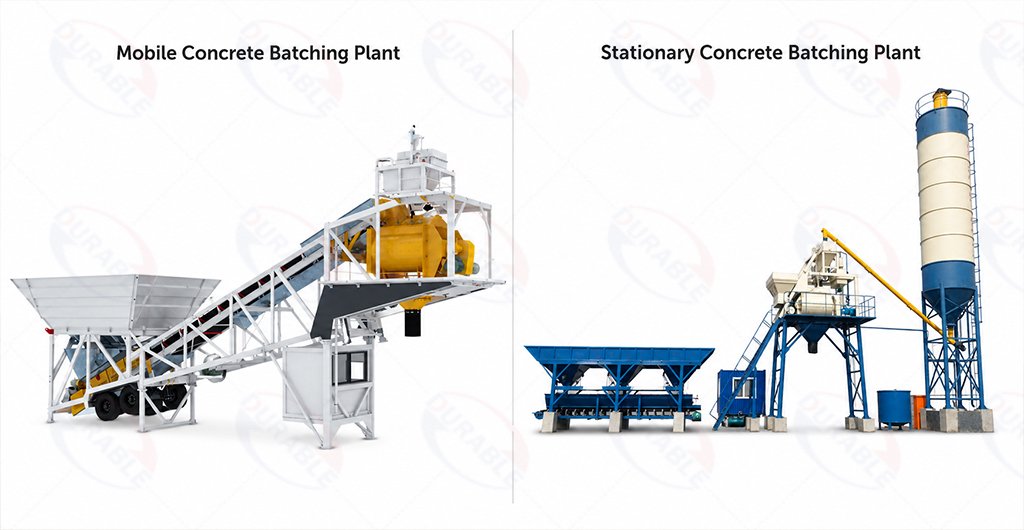
Both systems are designed to produce concrete efficiently. However, they serve different business models and project requirements.
Many buyers focus only on plant price. In reality, factors such as project location, production volume, operating costs, installation requirements, and long-term growth plans are often more important.
As infrastructure investment and construction activity continue growing worldwide in 2026, understanding the strengths and limitations of each plant type can help buyers make a smarter investment decision.
Why More Buyers Compare Mobile and Stationary Plants in 2026
Concrete demand continues increasing across many regions.
At the same time:
- Infrastructure projects are expanding
- Ready-mix concrete demand is growing
- Transportation costs remain high
- Labor costs continue increasing
- Contractors require greater flexibility
Because of these changes, buyers are looking beyond equipment price.
Today, successful producers evaluate:
- Production efficiency
- Mobility
- Installation costs
- Concrete quality
- Long-term profitability
Industry Insight: The most profitable batching plant is not always the largest one. It is the plant that best matches the project environment and business model.
What Is a Mobile Concrete Batching Plant?
A mobile batching plant is a portable concrete production system designed for rapid deployment and relocation.
The plant is mounted on a mobile chassis, making transportation between project sites much easier.
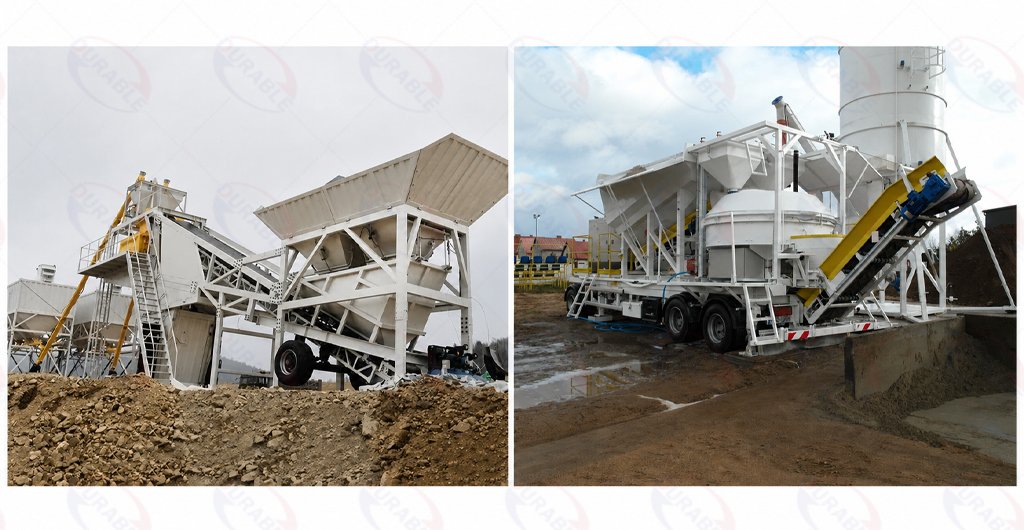
Most systems include:
- Aggregate batching machine
- Concrete mixer
- Control system
- Material weighing system
- Mobile frame structure
A Mobile Concrete Batching Plant is commonly used for:
- Highway construction
- Railway projects
- Bridge construction
- Mining operations
- Remote infrastructure projects
Key Advantages
- Fast installation
- Easy transportation
- Lower foundation costs
- Flexible deployment
- Reduced concrete transportation expenses
What Is a Stationary Concrete Batching Plant?
A stationary batching plant is a fixed concrete production facility designed for long-term operation.
Unlike mobile systems, it is permanently installed on a foundation.
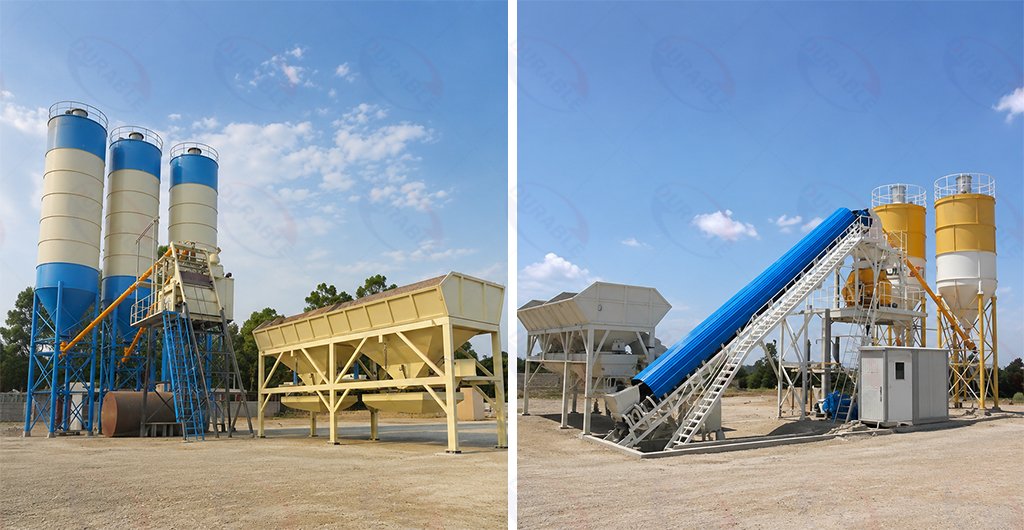
A Stationary Concrete Batching Plant typically includes:
- Aggregate batching system
- Concrete mixer
- Cement silos
- Control system
- Conveying equipment
- Material storage systems
Common Applications
- Ready-mix concrete production
- Commercial concrete supply
- Large industrial projects
- Permanent production facilities
Key Advantages
- Higher production capacity
- Better scalability
- Lower long-term production costs
- Greater automation potential
Mobile vs Stationary Concrete Batching Plant
Side-by-Side Comparison
| Factor | Mobile Plant | Stationary Plant |
|---|---|---|
| Mobility | Excellent | None |
| Installation Time | Short | Longer |
| Foundation Requirement | Low | High |
| Production Capacity | Medium-High | High |
| Expansion Potential | Moderate | Excellent |
| Transportation Between Sites | Easy | Difficult |
| Long-Term Production Cost | Moderate | Lower |
| Automation Potential | Good | Excellent |
| Initial Investment | Moderate | Moderate |
| Best For | Project-Based Work | Permanent Production |
Key Takeaway
Mobile plants prioritize flexibility.
Stationary plants prioritize production efficiency.
Which Plant Costs Less?
Many buyers assume mobile plants are always cheaper.
This is not necessarily true.
Mobile Plant Cost
Typical investment range:
| Capacity | Estimated Price |
|---|---|
| 25–35 m³/h | $30,000–$60,000 |
| 50–60 m³/h | $50,000–$100,000 |
| 75–90 m³/h | $80,000–$150,000 |
| 120 m³/h+ | $120,000–$200,000+ |
Stationary Plant Cost
Typical investment range:
| Capacity | Estimated Price |
|---|---|
| HZS25 | $20,000–$35,000 |
| HZS50 | $35,000–$60,000 |
| HZS90 | $70,000–$130,000 |
| HZS120 | $100,000–$180,000 |
| HZS180 | $150,000–$300,000+ |
Industry Reality
Mobile plants often cost more per unit of production capacity because mobility adds engineering complexity.
Which Plant Produces More Concrete?
Production capacity is one of the biggest differences.
Mobile Plant Capacity
Most mobile plants operate between:
- 25 m³/h
- 120 m³/h
These capacities are sufficient for most project-based operations.
Stationary Plant Capacity
Stationary plants commonly operate between:
- 25 m³/h
- 240 m³/h+
- 300 m³/h+
Large commercial facilities can achieve significantly higher output.
Expert Recommendation
If long-term high-volume production is your goal, stationary plants usually provide greater capacity and efficiency.
Which Plant Is Easier to Install?
Installation requirements can significantly affect project costs.
Mobile Plant Installation
Advantages include:
- Minimal foundation work
- Faster commissioning
- Easier transportation
Many mobile plants can begin operation within days after arrival.
Stationary Plant Installation
Requirements often include:
- Concrete foundations
- Permanent infrastructure
- Larger storage systems
Installation typically takes longer.
Industry Observation
For short-term projects, installation speed can have a major impact on profitability.
Which Plant Delivers Better ROI?
ROI depends heavily on how the plant will be used.
Mobile Plant ROI
Mobile plants often provide stronger ROI when:
- Projects change locations frequently
- Concrete transportation costs are high
- Construction schedules are short
Stationary Plant ROI
Stationary plants often provide stronger ROI when:
- Production remains at one location
- Demand is consistent
- High output is required
Many producers eventually expand from a mobile setup to a complete Concrete Batching Plant as demand grows.
Industry Lesson
The best ROI comes from matching plant type to business strategy.
Which Plant Is Best for Different Projects?
| Project Type | Recommended Plant |
|---|---|
| Road Construction | Mobile Plant |
| Railway Projects | Mobile Plant |
| Bridge Construction | Mobile Plant |
| Mining Operations | Mobile Plant |
| Ready-Mix Concrete Supply | Stationary Plant |
| Commercial Concrete Production | Stationary Plant |
| Industrial Production Facility | Stationary Plant |
| Long-Term Infrastructure Supply | Stationary Plant |
Expert Recommendation
Project duration is often the deciding factor.
Temporary projects usually benefit from mobility.
Permanent production facilities usually benefit from stationary systems.
Common Buying Mistakes
Choosing Based Only on Price
The cheapest plant may create higher operating costs later.
Ignoring Transportation Costs
Concrete delivery expenses can significantly affect profitability.
Buying Excessive Capacity
Oversized plants increase investment costs unnecessarily.
Underestimating Future Growth
Production requirements often increase faster than expected.
Selecting the Wrong Plant Type
A plant should match the project structure and business model.
Decision Guide
Choose a Mobile Concrete Batching Plant If:
- Projects frequently move
- Installation speed is important
- Transportation flexibility is required
- Construction sites are remote
Choose a Stationary Concrete Batching Plant If:
- Production remains at one location
- Demand is consistent
- High output is required
- Long-term growth is planned
Best Choice for Most Contractors
Mobile batching plants typically provide greater flexibility and project mobility.
Best Choice for Concrete Producers
Stationary batching plants usually provide lower production costs and stronger long-term profitability.
Real Project Example
A highway contractor operating across multiple regions invested in a mobile batching plant.
The company reduced:
- Concrete transportation costs
- Project delays
- Equipment mobilization expenses
Meanwhile, a ready-mix concrete supplier invested in an HZS120 stationary batching plant and achieved significantly higher production efficiency after several years of operation.
Industry Lesson
Both investments succeeded because each company selected equipment that matched its operating environment.
Industry Expert Conclusion
Neither mobile nor stationary batching plants are universally better.
The right choice depends on:
- Project location
- Production volume
- Mobility requirements
- Budget
- Long-term business goals
For contractors working on multiple projects, mobile batching plants often provide the greatest value.
For commercial concrete producers, stationary batching plants typically deliver higher production efficiency and stronger long-term ROI.
Final Expert Advice: Choose the plant that supports your business model, not just your current project. The right batching plant should create value for years, not just months.
Frequently Asked Questions
Is a mobile batching plant cheaper than a stationary plant?
Not always. Mobile plants may cost more per unit of capacity, but they often reduce transportation and installation expenses.
Which batching plant produces more concrete?
Stationary batching plants generally provide higher production capacity and better scalability.
Which plant is easier to install?
Mobile batching plants are usually faster and easier to install because they require less foundation work.
Which plant offers better ROI?
ROI depends on project type. Mobile plants often perform better for temporary projects, while stationary plants usually provide stronger returns for permanent production facilities.
Can a mobile plant replace a stationary plant?
For some projects, yes. However, large-scale commercial concrete production often requires a stationary system.
Related Concrete Production Solutions
If you are planning a complete concrete production project, you may also be interested in:
- Mobile Concrete Batching Plant
- Stationary Concrete Batching Plant
- Concrete Batching Plant
- Twin Shaft Concrete Mixer
- Planetary Concrete Mixer
About Durable
Durable provides complete concrete production solutions for customers worldwide.
Our product range includes:
- Mobile Concrete Batching Plants
- Stationary Concrete Batching Plants
- Twin Shaft Concrete Mixers
- Planetary Concrete Mixers
- Cement Silos
- Aggregate Batching Systems
We help customers select equipment based on project requirements, production goals, local conditions, and investment budgets.
Whether you are supplying infrastructure projects, producing ready-mix concrete, or expanding a construction business, our engineering team can help design the right solution for long-term profitability.
Contact Durable today for customized batching plant recommendations.