 Durable Machinery
Get Price
Sawdust Briquette Charcoal vs Charcoal Powder Rods: Which Production Route is Better?
With 50 years of experience in the biomass energy field, I have seen many people confuse different types of “machine-made charcoal.” In reality, there is a huge difference between sawdust briquette charcoal and charcoal powder rods. One uses a “press then carbonize” logic. The other uses a “carbonize then press” logic. These two paths change the physical structure and the burning quality of the final product. This article explains the real gap between these two products. It focuses on production logic, equipment investment, and commercial value. This information helps producers choose the right route for their budget and raw materials.
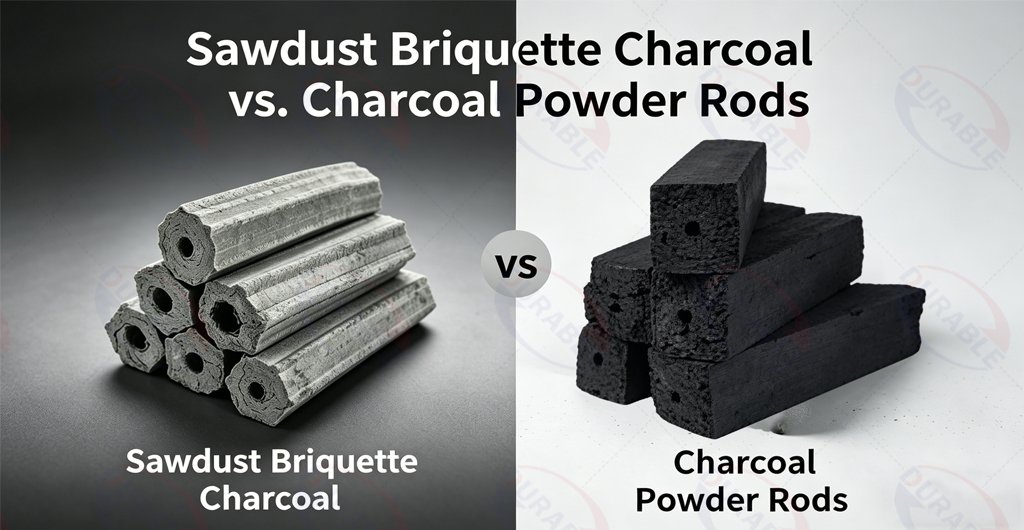
What are the definitions and structural differences between sawdust briquette charcoal and charcoal powder rods?
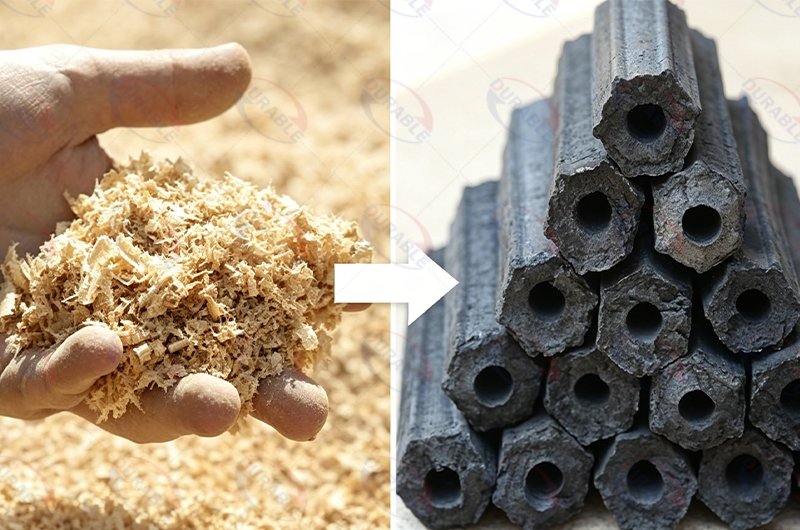
Sawdust briquette charcoal is a product created by compressing raw sawdust into logs first. These logs are then carbonized in a furnace. The core secret is the use of lignin. Lignin is a natural polymer found in plant cell walls. Under high pressure and heat, lignin melts and acts as a natural glue. It locks the sawdust fibers together without any external chemicals. After carbonization, the product retains a fibrous structure. It often has a spiral texture on the surface. This structure allows air to penetrate the charcoal easily during burning. It creates a “self-oxygenating” effect. This makes the fire strong and the ignition fast.
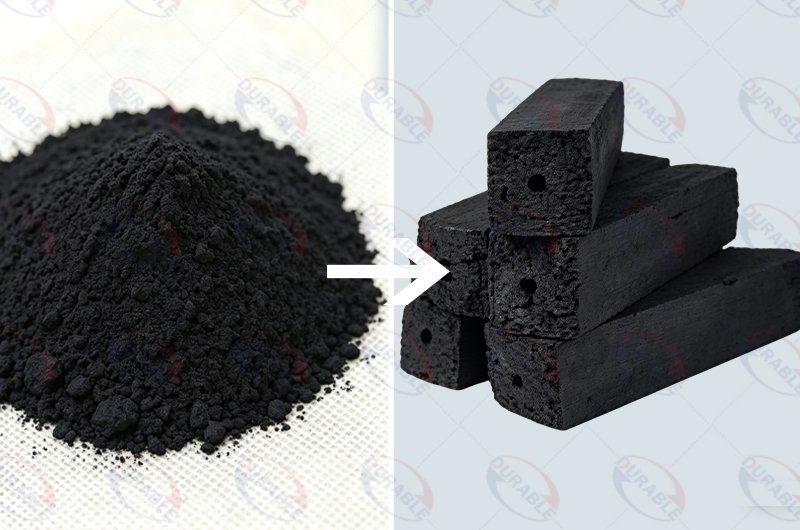
Charcoal powder rods, on the other hand, start with carbonized material. Raw biomass is turned into charcoal first. This charcoal is then ground into a very fine powder. Because the carbonization process destroys the natural lignin, the powder has no stickiness. To form a rod, an external binder must be added. Common binders include corn starch, cassava starch, or sometimes clay. These are mixed with the powder and pressed under high pressure. The resulting rod is extremely dense and has a smooth surface. It lacks the natural fiber channels of sawdust charcoal. This results in a very stable and slow release of heat. The structure is more like a solid stone than a piece of wood.
How does the “press then carbonize” process for sawdust briquettes work?
The production of sawdust briquette charcoal follows a specific sequence. It starts with raw material preparation. Fresh sawdust must be dried to a specific moisture level, usually between 8% and 12%. If the sawdust is too wet, the press cannot form a solid log. If it is too dry, the lignin will not melt properly. I recommend using a sawdust dryer to ensure consistent moisture. This consistency is the first step to a high-quality product.
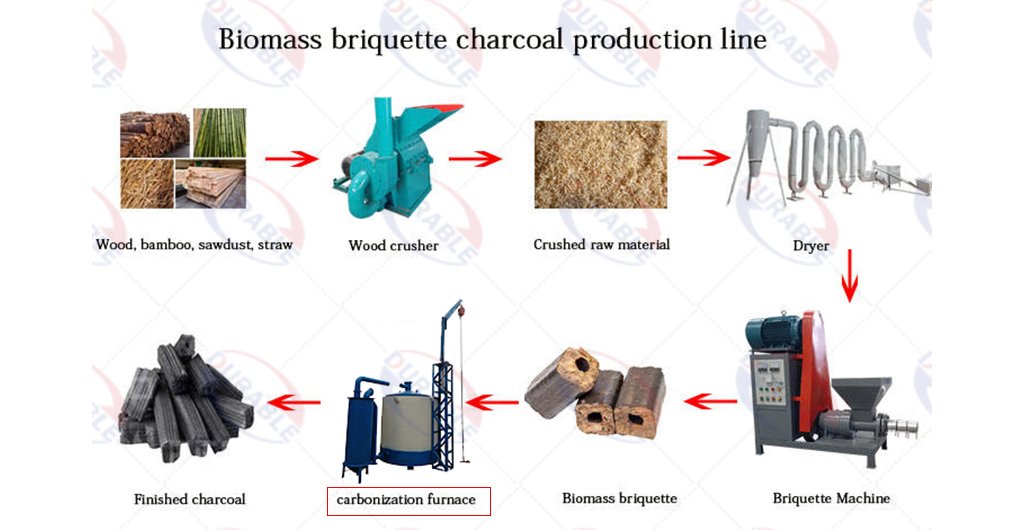
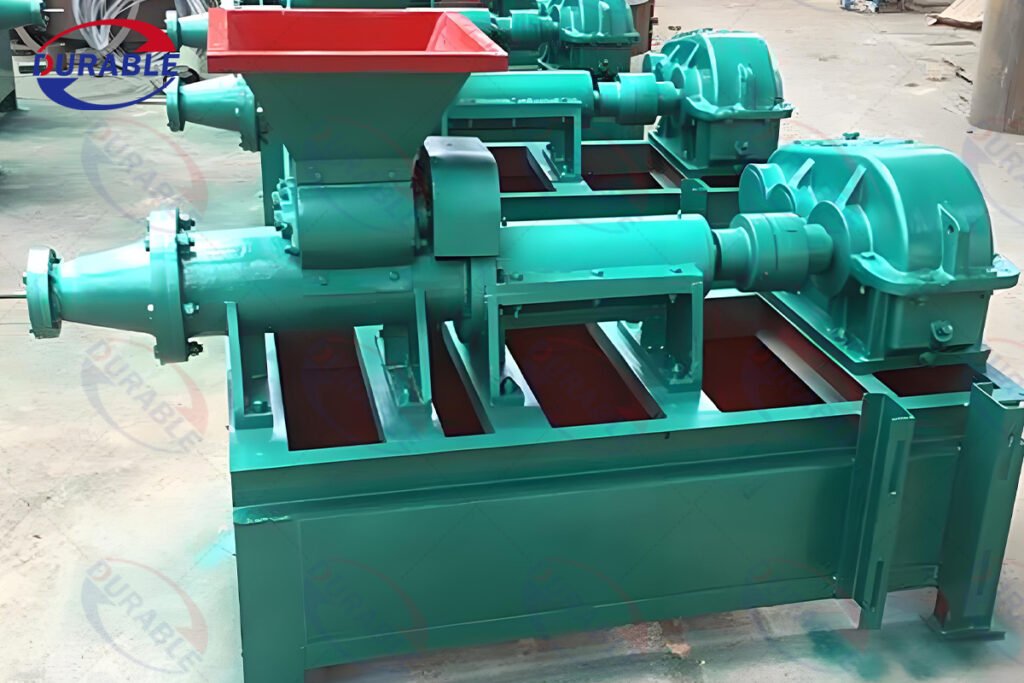
Once dried, the sawdust enters a biomass briquette machine. This machine uses a screw extruder. The screw pushes the sawdust through a heated die. The friction creates heat, reaching 150°C to 200°C. At this temperature, the natural lignin softens. It binds the sawdust into a dense, hard log. These logs are called “white briquettes” because they are not yet charcoal. Next, these white briquettes are placed in a vertical hoist biomass carbonization furnace or a similar kiln. The furnace heats the logs in an oxygen-free environment. This removes water and volatile gases. The result is a pure carbon log. This method is highly valued because it requires no chemical additives. It produces the purest form of machine-made charcoal.
How does the “carbonize then press” process for charcoal powder rods work?
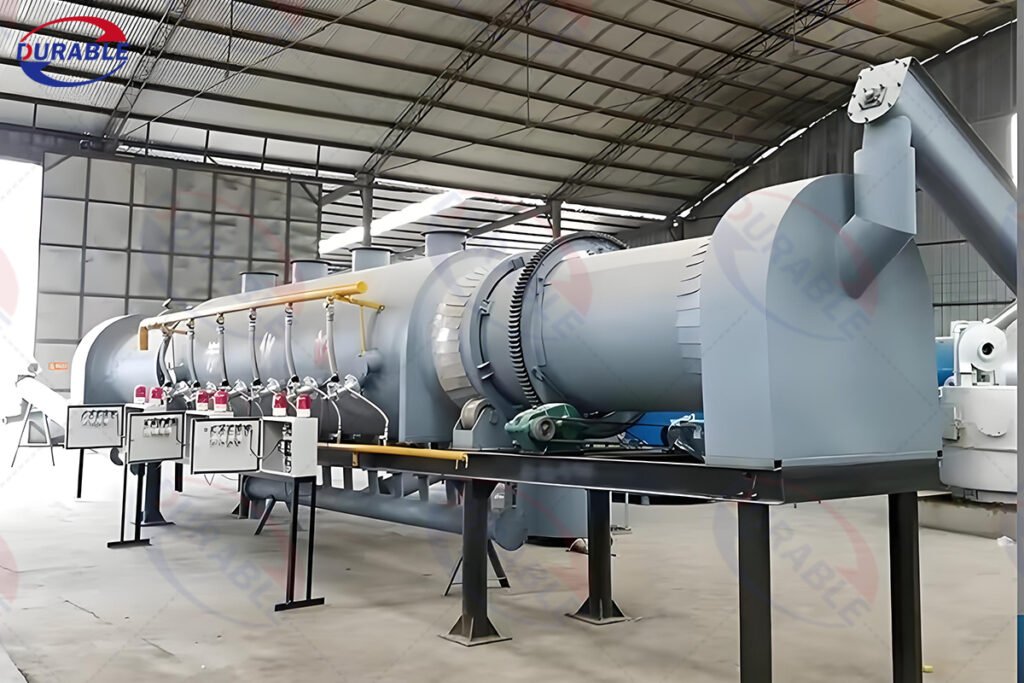
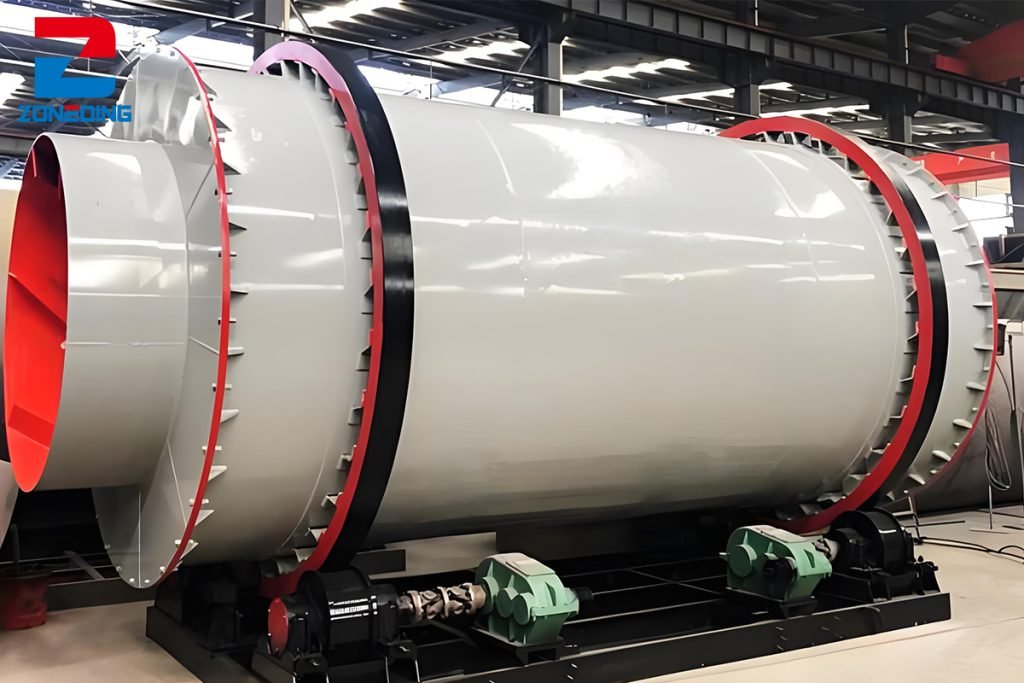
The logic for charcoal powder rods is completely different. The first step is the carbonization of raw biomass. This can be sawdust, coconut shells, or wood scraps. The material is processed in a rotary drum biomass carbonization furnace or a horizontal charcoal carbonization furnace. This stage converts the biomass into raw lump charcoal. The goal here is to get a high percentage of fixed carbon.
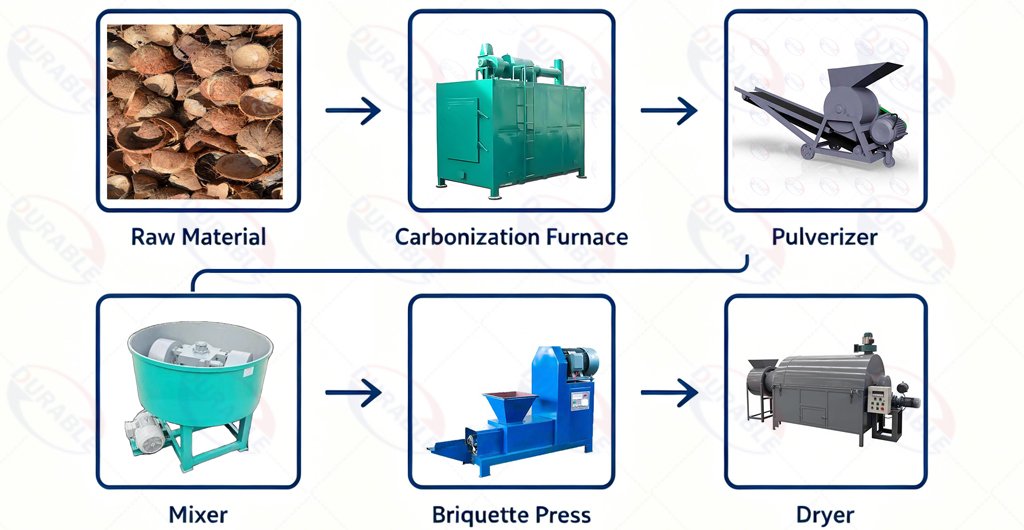
The process begins by pulverizing carbonized lump charcoal into a fine powder to ensure the smoothness and strength of the final product. This powder is then mixed with a binder paste—typically food-grade starch and water—to ensure every particle is evenly coated. The mixture is fed into an extruder or ball press, which uses extreme pressure to shape it into rods or balls. Finally, the products are dried to remove moisture, effectively transforming charcoal waste and dust into high-value products.
Burning Performance: What are the differences in heating value, burning time, and ash content?
The burning behavior of these two products is very different due to their internal structures. Sawdust briquette charcoal typically has a higher “perceived” heat. Because of the spiral textures and fibrous channels, it ignites quickly. It allows oxygen to flow deep into the charcoal. This creates a strong, aggressive fire. It is ideal for fast grilling, such as Korean BBQ or street-side skewers. The calorific value is high because it is pure carbon. The ash content is extremely low. This is because there are no external binders. The only ash comes from the original wood minerals.
Due to their high density and lack of air channels, charcoal powder rods are harder to ignite than sawdust charcoal, but once lit, they provide an exceptionally stable, slow, and long-lasting heat. This makes them ideal for slow-cooking, smoking meats, or shisha. However, they tend to produce more ash; if low-quality clay binders are used instead of starch, the resulting ash buildup can block airflow and reduce the burning temperature.
| Performance Metric | Sawdust Briquette Charcoal | Charcoal Powder Rods | Winner/Best Use |
|---|---|---|---|
| Ignition Speed | Fast | Slow | Sawdust (Fast BBQ) |
| Heat Stability | Medium | Very High | Powder (Slow Roast) |
| Burning Duration | Medium | Long | Powder (Stability) |
| Ash Content | Very Low | Low to Medium | Sawdust (Purity) |
| Smoke Level | Extremely Low | Low (Depends on Binder) | Sawdust (Purest) |
Raw Material Requirements: How do pure sawdust and charcoal powder waste compare in suitability?
The choice of production route often depends on what raw materials are available. Sawdust briquette charcoal requires high-quality, fresh biomass. Pure sawdust or wood chips are the best. Hardwoods like oak or maple are preferred because they have more lignin and produce higher carbon. Softwoods can be used, but the logs may be less stable. The material must be clean. Sand or stones in the sawdust can damage the biomass briquette machine. This route is best for those who have a direct connection to sawmills or furniture factories. It allows them to turn raw waste into a premium product.
Charcoal powder rods are much more flexible with materials. They can use raw charcoal powder, crushed lump charcoal, or even charcoal dust collected from the bottom of a carbonization plant. This makes the powder route a perfect “waste recovery” system. Producers can buy cheap charcoal scraps and turn them into high-end rods. The quality of the final product depends more on the carbonization level of the powder than the original wood species. However, if the powder contains too many impurities, the final rods will produce more smoke and ash. This route is ideal for carbonization plant owners who want to monetize their waste dust.
Equipment Configuration: How do the core machines differ between the two lines?
The machinery needed for these two paths is fundamentally different. The sawdust briquette line focuses on mechanical pressure first. The core machines are the sawdust dryer, the biomass briquette machine, and a large carbonization kiln. In this line, the briquette press is the most power-hungry machine. It requires a high-torque motor to compress the wood. The carbonization furnace must be large enough to hold many logs for a long time. Because the logs are dense, the heat needs time to reach the core.
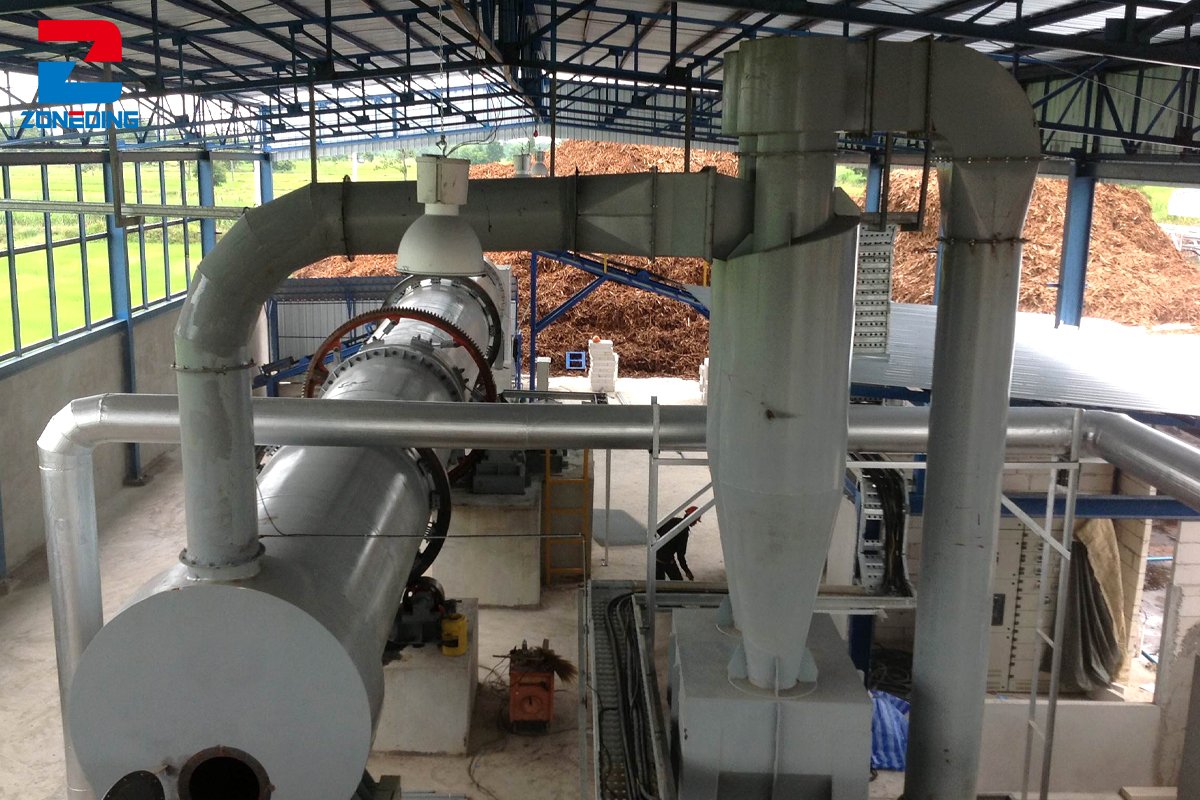
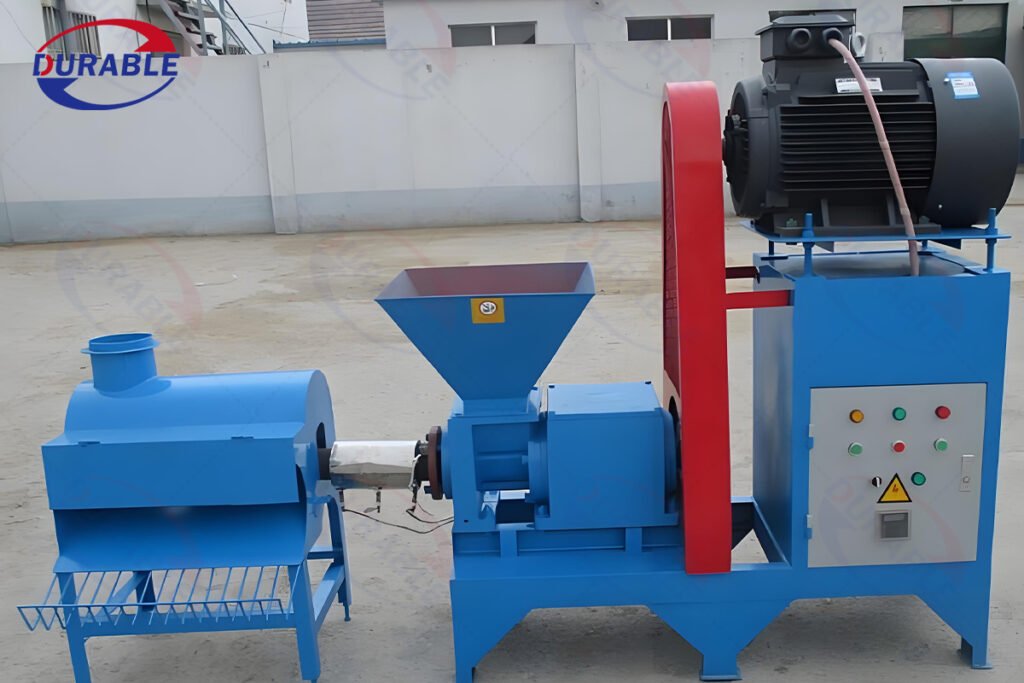
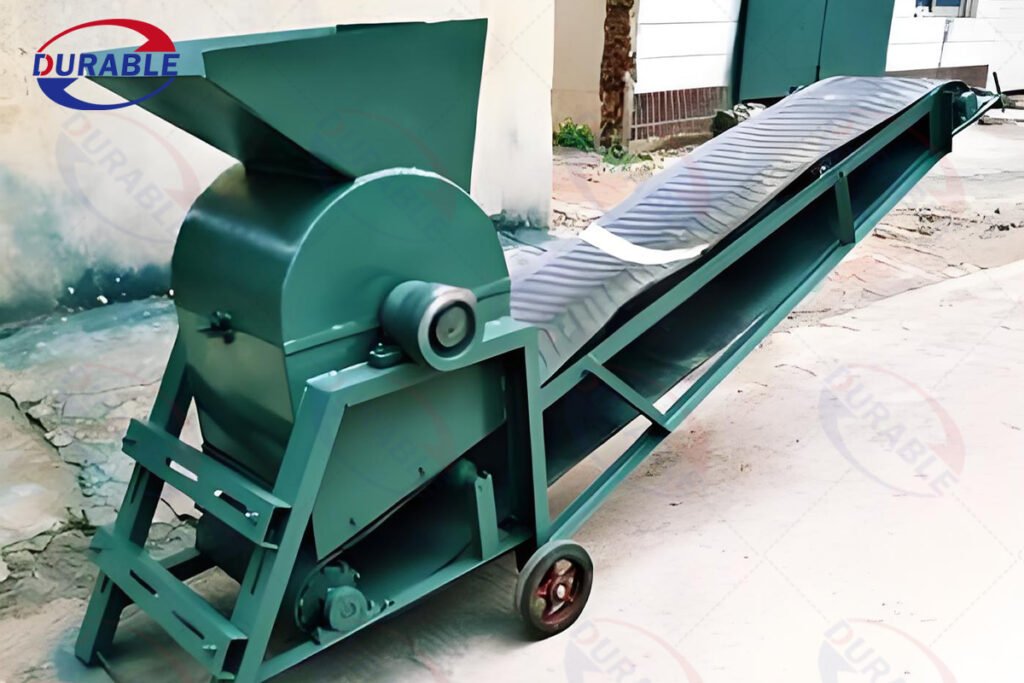
The charcoal powder rod line focuses on chemical bonding and fine grinding. The core machines are the rotary drum biomass carbonization furnace, the charcoal pulverizer, a high-shear mixer, and a charcoal powder extruder. In this line, the carbonization happens first. The pressing stage is much faster than in the sawdust line. The rods are formed quickly and then sent to a dryer. The triple pass rotary drum dryer is often used here to remove moisture from the binder. The energy focus shifts from the press to the carbonization and drying stages.
Investment Cost Analysis: Which route has higher initial equipment and operational costs?
From a financial perspective, these two routes have different cost structures. Sawdust briquette charcoal usually requires a higher initial investment in high-power pressing equipment. The biomass briquette machine must be heavy-duty to handle the raw wood. Operational costs are dominated by electricity. Compressing raw wood requires significant power. Also, the carbonization cycle is longer. This means the producer needs more kiln space to maintain a steady output. However, there is no cost for binders. The “glue” is free because it is already in the wood.
Charcoal powder rods may have a lower initial cost for the press, but higher operational costs for materials. The biggest expense is the external binder. High-quality food-grade starch is expensive. If the producer uses cheap binders, the product value drops. There is also the cost of raw charcoal powder. If the producer does not own a carbonization plant, they must buy the powder. However, the production speed is much faster. One powder extruder can produce more units per hour than a screw press. This leads to a faster cash flow. The energy cost is distributed more evenly between the furnace and the final dryer.
Production Efficiency: How do the production cycles and energy consumption compare?
Production efficiency is measured by the time it takes to turn raw material into a sellable product. Sawdust briquettes have a slow cycle. The pressing is fast, but the carbonization is the bottleneck. A dense log can take many hours or even days to carbonize completely. If the cycle is too short, the center of the log remains brown (uncarbonized). This leads to smoke and a poor product. Energy consumption is high at the start due to the press and high at the end during the long kiln heating.
Charcoal powder rods have a much faster cycle. The carbonization is done in bulk first. Once the powder is ready, the mixing and pressing happen in minutes. The final drying takes a few hours. This means the “lead time” from powder to rod is very short. Energy consumption is more consistent. The rotary drum biomass carbonization furnace is very efficient for bulk processing. The energy used for pressing is lower because the powder is easier to compress than raw wood. This makes the powder route more agile for meeting sudden market demands.
Binder Influence: Do additives in charcoal powder rods affect the burning quality?
The binder is the most controversial part of charcoal powder rods. Because these rods have no natural lignin, the binder determines everything. High-quality binders, like pure cassava starch, are almost invisible during burning. They leave very little ash and have no smell. These are used for high-end shisha charcoal and premium BBQ. They maintain the purity of the carbon. When used correctly, the buyer cannot tell that a binder was added.
Low-quality binders, such as industrial glues or clay, create serious problems. Clay is cheap and makes the rods very hard. But clay does not burn. It stays in the grill as heavy, white ash. This ash blocks oxygen and kills the fire. Some chemical binders release a “chemical smell” when heated. This is a disaster for BBQ because the smell enters the food. This is why I always advise clients to avoid the cheapest binders. The risk to the brand reputation is too high. The secret to a great powder rod is a low percentage of high-purity binder (usually 3% to 5%). Too much binder increases ash and lowers the heating value.
Market Demand Analysis: What are the preferences of different end customers?
The market is split based on the needs of the user. High-end restaurants and professional chefs prefer sawdust briquette charcoal. They want the strongest fire and the purest taste. They value the “zero-additive” nature of the product. For them, any chemical smell is unacceptable. They need a product that ignites quickly and provides intense heat for searing meats. This is where the sawdust route wins. It is a premium product with a higher price point.
Home users and specialized markets like shisha or slow-smoking often prefer charcoal powder rods. Home users like the stability and long burn time. They do not want to manage the fire every ten minutes. Shisha users need a very consistent, low-temperature heat that does not fluctuate. The dense structure of the powder rod is perfect for this. Also, industrial users who need a steady heat source for hours prefer rods. They value the predictability of the burn over the intensity of the fire. This creates a huge market for powder rods in the consumer retail sector.
Selection Guide: How to choose a production route based on raw materials and budget?
Choosing the right route is a business decision. I use these three rules to guide my clients. First, look at the raw material. If you have a massive supply of fresh sawdust and no charcoal waste, go with the sawdust briquette route. It allows you to skip the pulverizing and mixing stages. You create a premium product from raw waste. Second, look at the waste. If you already run a carbonization plant and have tons of charcoal dust, the powder rod route is the only choice. It turns a waste liability into a profit center.
Third, look at the budget and target market. If you want to enter the high-end “natural” market and have the capital for heavy pressing equipment, choose sawdust charcoal. If you want a high-volume, fast-turnover business for the general consumer market or shisha market, choose powder rods. The powder route is often easier to scale quickly because the pressing stage is so fast. But remember, the quality of your powder rods will depend entirely on your binder. If you cannot afford high-quality starch, your product will struggle to compete.
Technical Tips: Common problems and precautions when building these lines?
Building a production line comes with technical risks. For sawdust briquettes, the biggest problem is “incomplete carbonization.” If the logs are too dense or the kiln is too small, the center of the log remains wood. This causes the charcoal to smoke and crack. To fix this, I recommend using a square continuous biomass carbonization furnace. It ensures the heat penetrates the logs evenly. Also, moisture control is key. Even a 2% difference in sawdust moisture can cause the briquette press to jam.
For charcoal powder rods, the main problem is “structural failure” or crumbling. This happens if the binder is not mixed uniformly or if the drying process is too fast. If the exterior dries quickly, the interior remains wet. When the rod cools, it cracks. Use a triple pass rotary drum dryer to ensure a gradual temperature increase. This prevents surface cracking. Also, ensure the powder is ground to a very fine consistency. Large particles create weak points in the rod. A high-quality charcoal pulverizer is non-negotiable for a professional line.
FAQs
Question 1: Can I use the same machine to make both sawdust briquettes and charcoal rods?
No. The machines are fundamentally different. A sawdust briquette press handles raw wood and uses high heat to melt lignin. A charcoal powder extruder handles carbonized powder and requires a binder. The materials have different densities and chemical properties.
Question 2: Which one is truly “100% natural”?
Only sawdust briquette charcoal is truly zero-additive. It uses the wood’s own lignin as a binder. Charcoal powder rods always require an external binder to hold the carbon particles together, even if that binder is a natural starch.
Question 3: Why does my charcoal powder rod produce so much white ash?
This is usually caused by the binder. If you use clay or low-grade industrial binders, they leave behind a mineral residue. Switching to high-purity food-grade cassava or corn starch will significantly reduce the ash content.
Question 4: Why are sawdust briquettes harder to produce in large volumes?
The bottleneck is the carbonization time. Because they are pressed into dense logs before carbonization, the heat takes a long time to reach the core. Powder rods are carbonized in bulk first, so the final pressing is very fast.
Question 5: Which product has a higher market price?
Generally, sawdust briquette charcoal has a higher price. It is marketed as a premium, additive-free product for professional cooking. Powder rods are more common and are often sold as a utility fuel for home or shisha use.
Conclusion
The battle between sawdust briquette charcoal and charcoal powder rods is a matter of “gene” and “logic.” One relies on the natural power of lignin to create a pure, high-heat product. The other relies on precise blending and compression to create a stable, long-burning fuel. Sawdust charcoal is the king of purity and intensity. Powder rods are the kings of stability and waste recovery. For a producer, the choice depends on the raw material and the target customer. Whether choosing the “press then carbonize” or “carbonize then press” route, success depends on the quality of the equipment and the precision of the process. Understanding these deep differences is the first step to building a profitable and sustainable biomass energy business.
About Durable
Durable Machine, established in 2001, is a professional manufacturer of mineral processing equipment and biomass energy solutions. We specialize in providing a full range of equipment, from hammer mill crushers to advanced continuous carbonization lines. With 50 years of industry expertise, we don’t just sell machines; we design complete production systems. Our focus is on high efficiency, environmental compliance, and maximum ROI for our B2B clients. We provide full-service support, including plant design, installation, and operator training.
For a professional consultation on your biomass charcoal equipment needs, contact Durable Machine today for a custom production plan.