 Durable Machinery
Get Price
Wet Concrete Batching Plant: A Complete Professional Analysis
A wet concrete batching plant represents the gold standard for high-precision concrete production. This system performs all mixing inside a central mixer before the concrete enters a delivery truck. I have spent decades observing the construction industry. I can state that this method is the only way to guarantee absolute concrete homogeneity control. It removes the variability associated with truck-based mixing. This ensures every cubic meter of concrete possesses the same strength and quality. This is vital for projects where structural failure is not an option.
What Is a Wet Concrete Batching Plant and How Does It Define Homogeneity?
A wet concrete batching plant is a facility that mixes all raw materials—aggregates, cement, water, and additives—inside a central mixing unit. The product is a fully blended, wet concrete slurry. This process ensures total concrete homogeneity control. It means the distribution of cement paste and water is perfectly uniform across the entire batch.
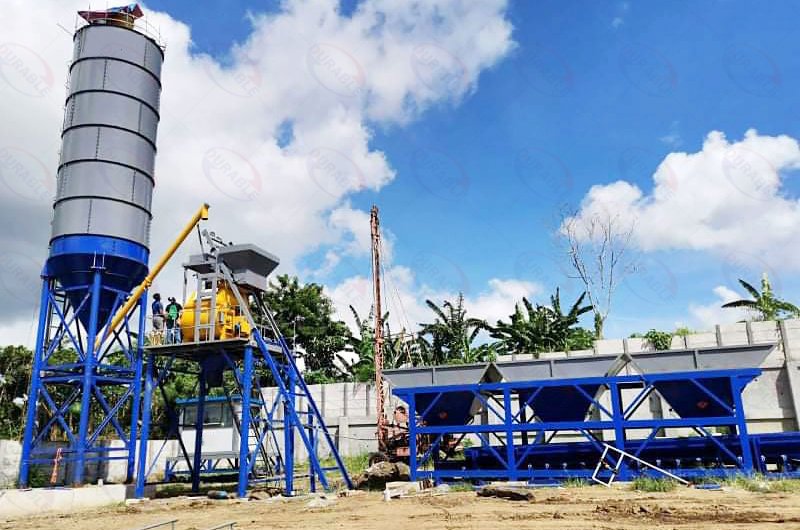
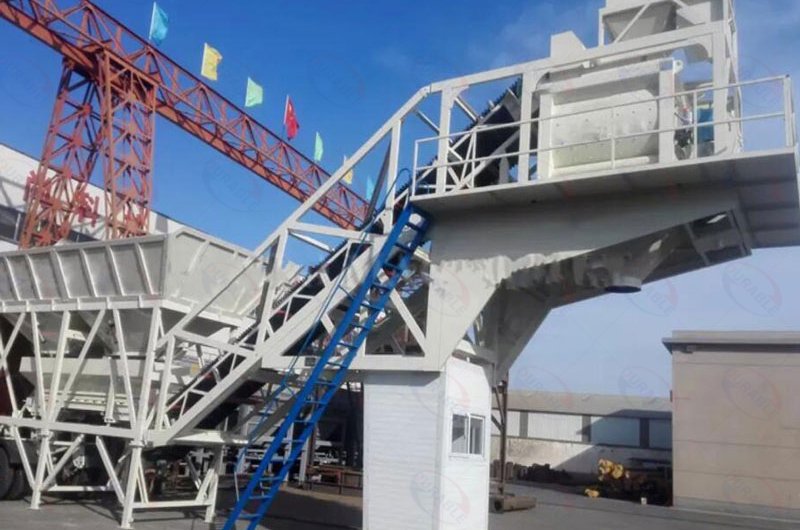
Unlike dry plants, where mixing relies on unpredictable driver performance and truck efficiency—often leading to inconsistent strength and “weak spots”—a wet plant eliminates this risk. By using a central mixer’s intense mechanical force, it ensures every aggregate particle is uniformly coated in cement paste. This guarantees a consistent mixture from start to finish, ensuring the specified concrete grade is met throughout the entire pour. For high-stakes engineering, this precision is essential for structural reliability and safety.
Wet vs Dry Mixing: What Are the Physico-Chemical Differences?
Wet mixing occurs in a controlled, high-shear environment. Dry mixing occurs in a transit mixer during transport. The primary difference lies in the distribution of the water-cement ratio and the intensity of the blending force. Wet mixing creates a more stable and predictable chemical reaction during the hydration process.
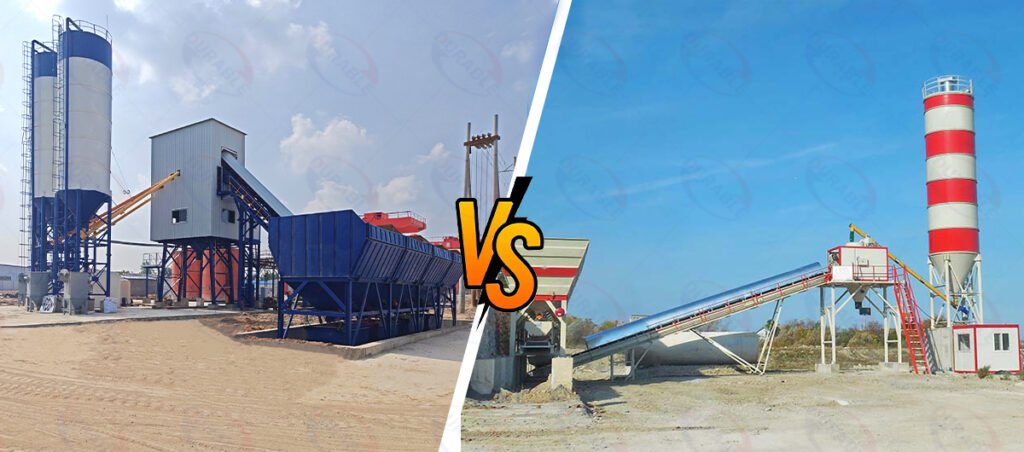
While dry mixing relies on the relatively slow tumbling of a truck drum—which often fails to break up cement clumps and leads to uneven hydration—wet mixing utilizes a twin-shaft mixer to deliver massive shear force. This aggressive action breaks down cement agglomerates and forces water and admixtures into every aggregate pore, creating a dense, uniform cement matrix. By ensuring a more consistent chemical distribution, wet mixing minimizes internal stresses and shrinkage cracks, making it the superior choice for high-performance concrete.
How Do Core Components Work Together to Eliminate Batching Errors?
A wet plant operates as a synchronized ecosystem. The aggregate batcher, cement silos, and liquid scales must communicate perfectly. An automated batching system manages these components. This synchronization eliminates human error and ensures the mix design is followed exactly.
The process begins at the aggregate bins, where high-precision load cells weigh stone and sand, sending real-time data to the PLC. Simultaneously, bolted silos release cement via screw conveyors into a weighing hopper. To prevent common dosing errors, the liquid system utilizes high-accuracy pumps for precise water and admixture measurement. All ingredients enter the central mixer according to a strict recipe, with the PLC continuously monitoring weights and instantly adjusting flows. This “zero-deviation” sensing and adjustment loop ensures perfect ingredient ratios, minimizes additive waste, and guarantees consistent quality.
Why Is the Twin-Shaft Compulsory Mixer the “Heart” of the Plant?
The twin-shaft compulsory mixer is the most critical component of a wet plant. It uses two horizontal shafts with mixing paddles that rotate in opposite directions. This design creates a high-intensity folding and shearing action. This action determines the final discharge quality of the concrete.
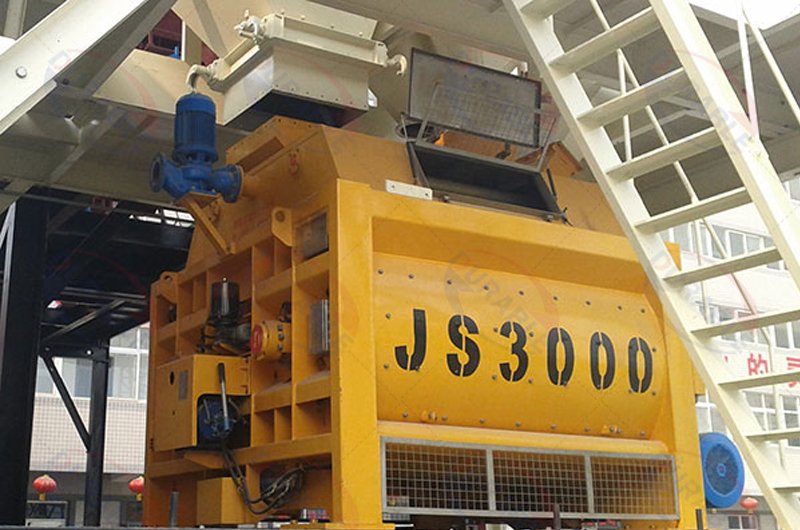
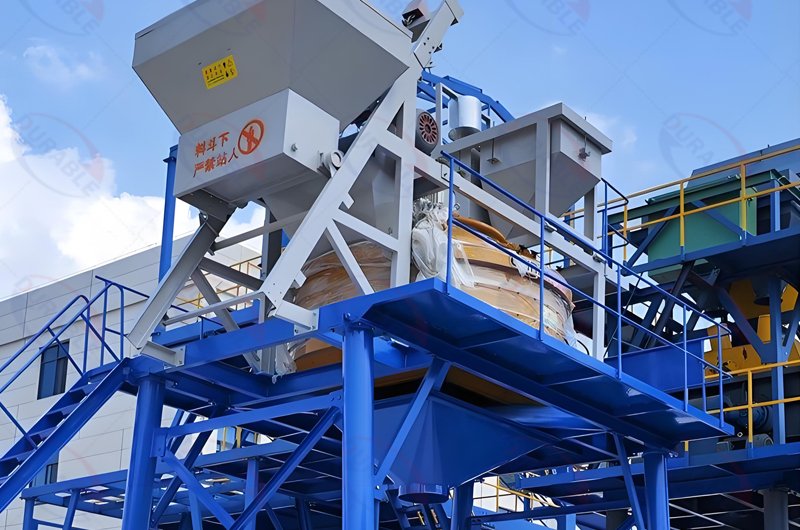
While standard mixers rely on simple tumbling, twin-shaft mixers use aggressive paddle movement to force material, effectively cutting through thick, low w/c ratio mixes. Superior torque and paddle design are key to eliminating “dead zones” and ensuring total homogeneity. This produces a smooth, creamy consistency that is easy to pump and place, providing the structural reliability and high compressive strength necessary for high-rise engineering.
| Feature | Twin-Shaft Mixer | Planetary Mixer |
|---|---|---|
| Mixing Action | High-shear, opposite rotation | Revolving and rotating arms |
| Best Use Case | Commercial ready-mix, high-strength | Precast, UHPC, ultra-low water |
| Production Speed | Very Fast | Moderate |
| Homogeneity | Excellent | Superior |
| Maintenance | Standard | More Complex |
Practical Maintenance Tips:
- Check paddle wear weekly: Use a caliper to measure the thickness of the mixing arms.
- Inspect liner bolts: Vibration can loosen the bolts holding the wear-resistant liners.
- Grease the main bearings: Use high-temperature grease every 50 operating hours to prevent seizure.
How Does Digital Control Achieve Zero-Deviation Batching?
Digital control is managed by a PLC system. This system replaces manual valves and timers with electronic sensors. It allows the operator to store exact “recipes” for different concrete grades. The software ensures that the physical components execute the recipe without variation.
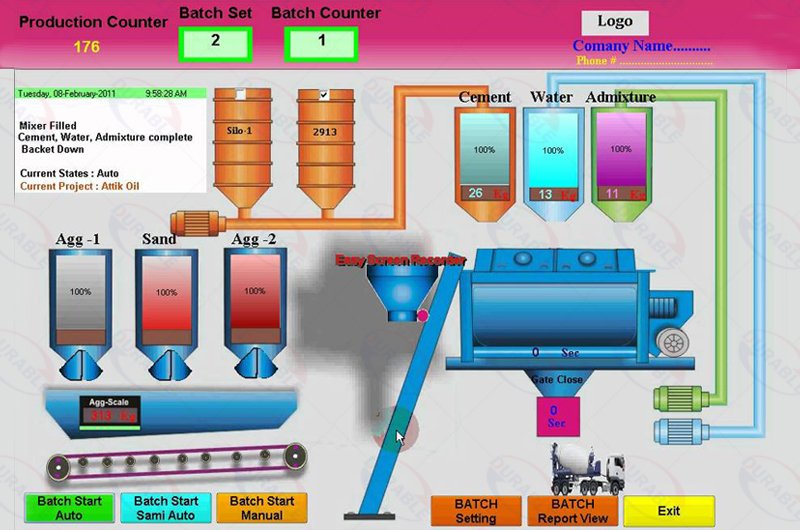
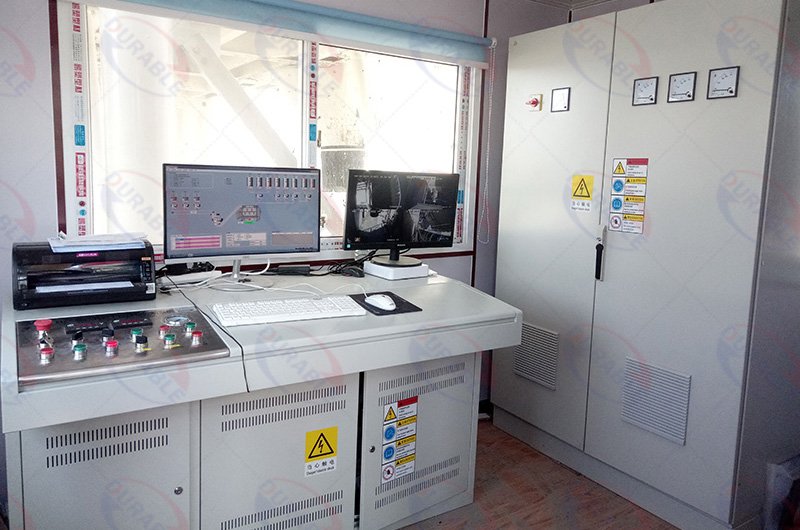
Replacing inaccurate timers with weight-based PLC control, modern systems focus on load cell precision rather than duration, reducing raw material waste by up to 3%. To account for variable sand moisture, integrated microwave sensors automatically calculate and subtract existing water from the batch. This precise moisture compensation prevents over-watering and ensures structural integrity, guaranteeing that the concrete produced at 6 AM is identical in quality to that produced at 6 PM.
How Does the Plant Handle Different Aggregate Viscosities and Densities?
Different aggregates, such as basalt, limestone, or recycled concrete, have different weights and surface textures. Some are “sticky,” while others flow easily. A professional wet plant adjusts the mixing time and paddle speed to handle these variations.
A high-torque motor with a VFD is essential for managing the resistance of high-density aggregates. When combined with digital “residence time” controls, the system precisely adjusts mixing durations to prevent poor coating or overheating. This ensures consistent mix viscosity and quality, providing stability regardless of raw material fluctuations.
Wet vs Dry Mixing: How to Choose Between Cost, Quality, and Efficiency?
The choice between wet and dry mixing is a balance of initial investment versus long-term risk. Dry plants are cheaper and simpler to build. Wet plants require more equipment and a higher initial budget. However, wet plants provide superior quality and faster logistics.
While dry plants offer lower initial CAPEX, the true metric for success is the five-year cost per cubic meter. Wet plants drive superior ROI through “load-and-go” logistics; because trucks depart immediately rather than waiting to mix on-site, they complete more trips, allowing for a smaller, more efficient fleet. Furthermore, the higher quality of wet-mix concrete ensures greater acceptance rates and minimizes costs from rejected batches. Ultimately, while dry plants may suffice for low-grade projects, a wet plant is the only logical choice for a professional commercial enterprise.
Which Projects Mandate the Use of Wet Mixing?
High-standard infrastructure projects have strict building codes. These codes often mandate wet mixing to ensure structural integrity. Projects such as mega-dams, long-span bridges, and high-rise buildings require high-strength concrete production lines.
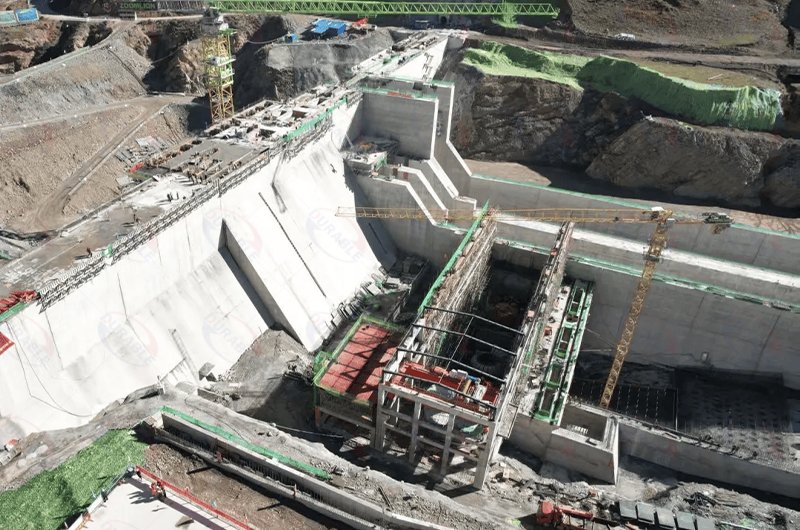
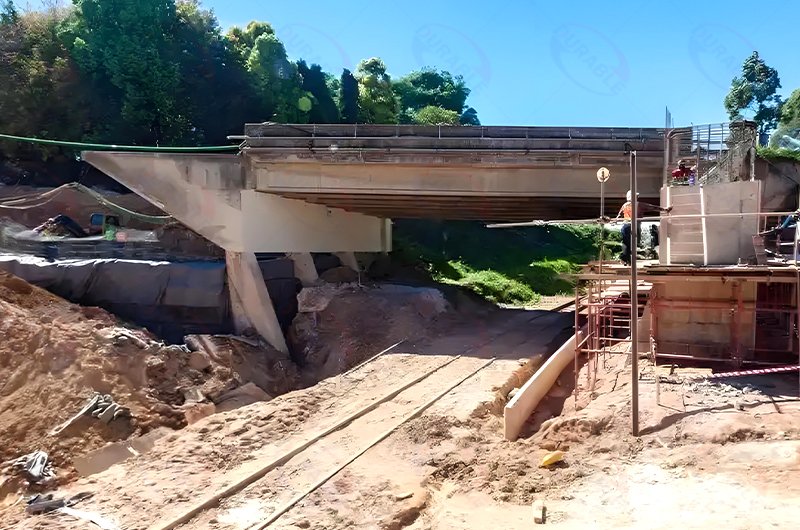
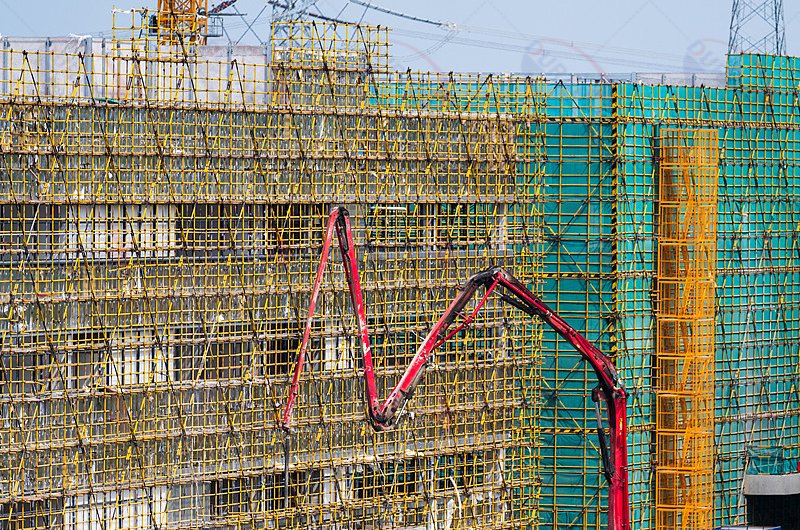
Wet plants are essential for high-stakes engineering. For skyscrapers, they provide the extreme precision in water-cement ratios required for C80/C100 high-strength concrete. In dam construction, they allow for precise temperature control through ice or chilled water addition, preventing thermal cracking. Furthermore, for public infrastructure like bridges, wet plants ensure legal compliance through detailed batch reports, providing the traceability that government inspectors demand.
How Does Wet Mixing Reduce Raw Material Waste and Improve Pass Rates?
Wet plants use closed-loop automated systems. This minimizes the loss of cement dust and chemical admixtures. Precise dosing prevents the “over-designing” of mixes, which saves expensive materials.
Precision is the key differentiator. Unlike dry plants, which rely on excess cement to mitigate mixing inconsistencies, wet plants offer exact dosing that can reduce cement consumption by 2–5%. They also feature closed-system designs and precision additive pumps to prevent environmental loss and spillage. Crucially, the superior homogeneity of wet-mix concrete ensures higher cylinder test pass rates, providing a safeguard against the immense costs associated with structural failures and mandatory demolition.
What Maintenance Strategies Extend the Life of Wear-Resistant Parts?
Concrete is highly abrasive. The mixing process acts like a giant grinder on the internal surfaces of the mixer. A strict wear-resistant liner maintenance schedule is the only way to prevent catastrophic equipment failure.
Don’t let avoidable wear drive your maintenance costs into the stratosphere. By using high-chromium alloy steel for your paddles and liners and performing monthly thickness checks, you can prevent the devastating scenario where a worn liner grinds directly into the mixer shell—turning a small repair into a weeks-long, expensive shutdown. To truly bulletproof your operations, always maintain an on-site inventory of spare paddles to avoid international shipping delays, and never neglect gearbox lubrication; the high torque of a wet plant demands constant, regular care to prevent gear failure.
How to Recover Costs and ROI Through Product Grading?
A wet concrete batching plant allows a company to produce “Premium Grade” concrete. This higher-grade product commands a higher market price. The increase in profit per cubic meter accelerates the return on investment (ROI).
Dry plants can only produce standard-grade concrete. Wet plants can produce High-Performance Concrete (HPC) and Ultra-High Performance Concrete (UHPC). These specialized mixes are used in luxury hotels, airports, and specialized industrial floors. Contractors are willing to pay a premium for the guarantee of homogeneity and strength. For example, if standard concrete sells for $100 per cubic meter, premium high-strength concrete might sell for $140. This 40% increase in revenue directly impacts the bottom line. Additionally, the faster truck turnaround increases the total daily volume. More volume means more revenue. I have seen wet plants recover their extra initial cost within 12 to 18 months through these price premiums and efficiency gains.
What Technical Indicators Matter Most When Choosing a Supplier?
Price is a common focus, but technical indicators determine the plant’s actual performance. I advise buyers to look at the mixing cycle time, the steel thickness of the mixer, and the brand of the PLC.
When evaluating a plant, don’t just trust the marketing; look for these four technical indicators:
- True Cycle Time: Ensure the quoted capacity includes loading, mixing, and discharging, not just the mixing phase.
- Structural Integrity: Inspect the shell thickness and look for reinforced ribs to prevent warping under twin-shaft pressure.
- PLC Reliability: Prioritize reputable PLC brands with local spare parts and easy updates. Avoid “no-name” software.
- Measurement Precision: ±1% accuracy for cement and water load cells. Anything less defeats the purpose of a wet plant.
Common Questions About Wet Batching Plants
Question 1: Is a wet plant more expensive to maintain than a dry plant?
Yes, because of the central mixer. You must replace liners and paddles. However, the cost is offset by lower raw material waste and higher product prices.
Question 2: Can a wet plant produce dry-mix concrete?
Yes, you can simply stop the water flow and the mixer. However, this is a waste of the equipment’s capability.
Question 3: How much land does a wet plant require compared to a dry plant?
They are similar if both use a stationary concrete batching plant layout. The main difference is the addition of the central mixer tower.
Question 4: Does a wet plant require more electricity?
Yes. The high-torque motor of the twin-shaft mixer consumes more power than the simple conveyor systems of a dry plant.
Question 5: How long does a typical batch take in a wet plant?
Depending on the volume, a full cycle (weighing, mixing, discharging) usually takes between 60 and 120 seconds.
Summary and Recommendations
A wet concrete batching plant is the only professional solution for high-strength and high-precision concrete. It ensures total concrete homogeneity control and eliminates the risks of strength variation. While the initial cost is higher, the benefits in quality, logistics efficiency, and waste reduction are massive. I recommend this system for any commercial ready-mix business or large-scale infrastructure project. Focus on the quality of the twin-shaft compulsory mixer and the accuracy of the automated batching system. These two factors will determine your plant’s success.
About Durable
Durable Machine is a leading manufacturer of mineral processing and construction equipment. Since 2001, we have provided professional B2B solutions to over 120 countries. We specialize in high-efficiency stationary concrete batching plants and heavy-duty mixers. Our equipment is designed for durability and precision, ensuring our clients achieve a rapid return on investment.
Get Your Professional Plant Design
Are you planning a high-strength concrete production line? Contact Durable Machine today. We provide free technical consultations and customized layout designs to help you choose the most efficient wet concrete batching plant for your specific project needs.