 Durable Machinery
Get Price
What Equipment Is Needed for a Solid Block Production Line?
A complete solid block production line includes much more than a block machine. Many new investors focus only on the brick machine itself. But in real factory operations, the batching system, mixer, conveyor, pallets, curing area, and stacking system often decide production efficiency and block quality. A balanced production line usually performs better than simply buying a bigger machine.
What Is a Solid Block Production Line?
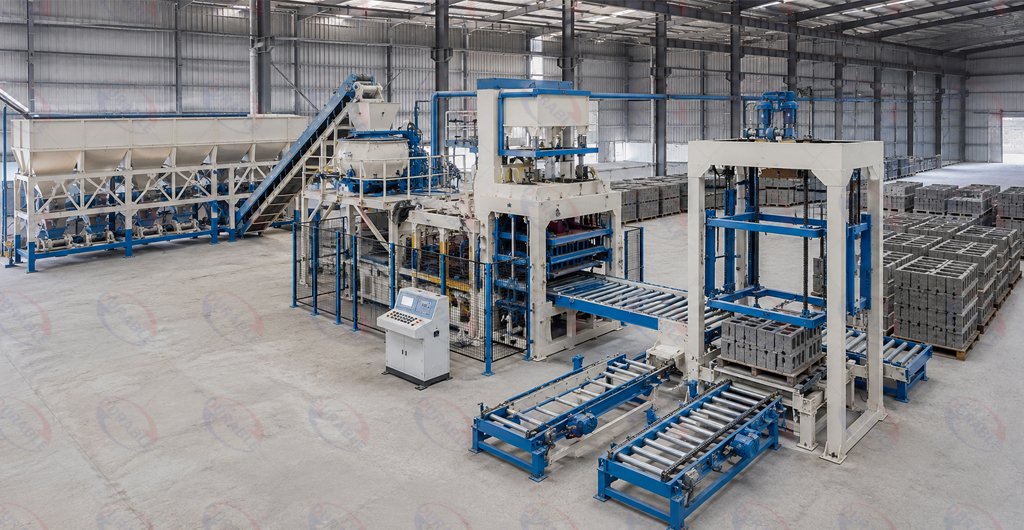
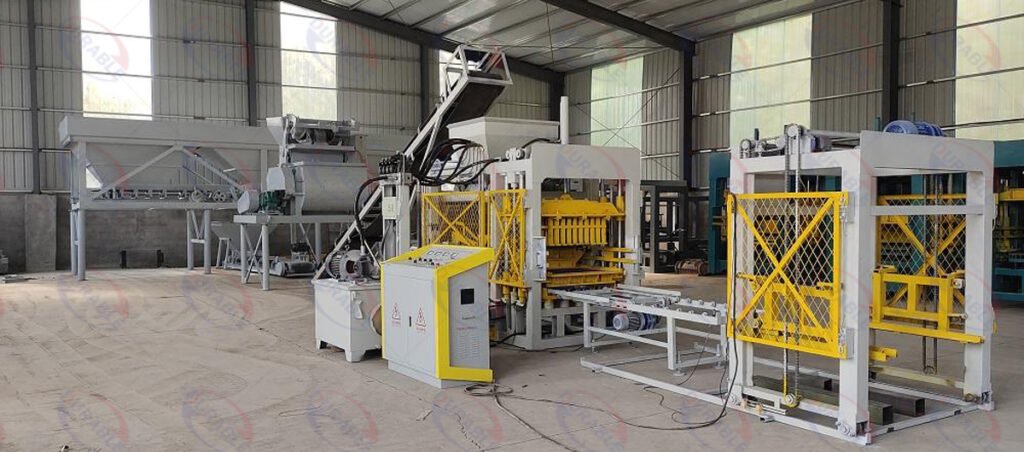
A solid block production line is a complete system used to manufacture concrete solid blocks continuously and efficiently. It includes raw material handling, batching, mixing, conveying, molding, stacking, curing, and pallet circulation systems.
Many first-time buyers think one machine can handle everything. In reality, the block machine is only one part of the factory. Poor production line design often creates bigger problems than low machine quality.
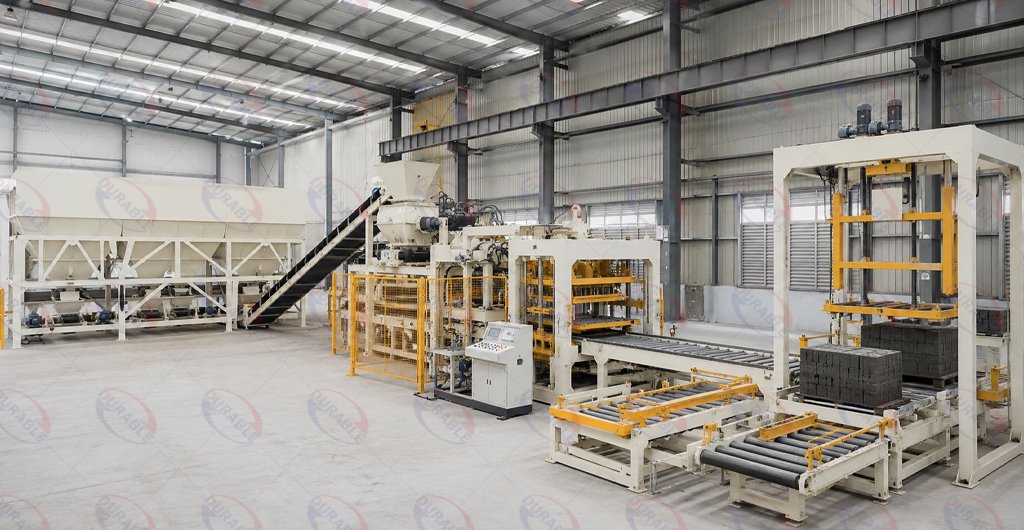
A proper automatic block production line improves:
- Product consistency
- Labor efficiency
- Material utilization
- Daily output
- Long-term operating stability
Why Production Line Design Matters More Than Machine Price
Many factories fail because they focus only on machine cost. But the real production bottlenecks usually come from:
- Unstable material feeding
- Poor mixing quality
- Conveyor downtime
- Weak curing systems
- Poor pallet quality
Experienced factory owners usually optimize the entire workflow instead of only upgrading the main machine.
| Factory Area | Common Problem | Better Solution | Real Benefit |
|---|---|---|---|
| Batching | Inconsistent ratio | Automatic weighing | Stable strength |
| Mixing | Dry pockets | Forced mixer | Better block density |
| Conveying | Frequent stoppage | Heavy-duty conveyor | Higher efficiency |
| Curing | Cracking blocks | Controlled curing | Longer lifespan |
Useful Tips Before Building a Block Factory
- For small factories: Start with scalable semi-automatic systems.
- For export markets: Focus on stable dimensions and curing quality.
- For large projects: Leave expansion space for future automation.
For large-capacity projects, many investors choose a complete solid block making machine solution with integrated automation systems.
Which Equipment Is Usually Included in a Solid Block Production Line?
A complete concrete block factory requires several connected systems working together. Missing one key section can reduce the efficiency of the entire plant.
Typical equipment includes:
- Aggregate batching machine
- Cement silo
- Screw conveyor
- Concrete mixer
- Belt conveyor
- Block making machine
- Hydraulic station
- PLC control system
- Block pallets
- Automatic stacker
- Curing system
Optional systems may include:
- Finger car system
- Steam curing chamber
- Automatic pallet feeder
- Dust collection system
- Cubing system
Why Material Handling Systems Are Critical
Many low-budget factories underestimate conveyor systems. Cheap conveyors often create:
- Belt deviation
- Feeding instability
- Roller failures
- Frequent downtime
Poor conveying systems can reduce total factory efficiency by 20% to 30%.
Important Industry Advice
- Use thicker conveyor frames: Thin structures deform quickly.
- Choose larger bearings: They survive cement dust better.
- Protect motors from dust: Dust damage creates long-term maintenance costs.
For stable material transportation, many factories install industrial conveyor belt systems with reinforced support structures.
Why Is the Batching System So Important?
The batching system controls the consistency of your blocks. Poor batching creates unstable cement ratios and uneven moisture distribution.
Many low-cost factories use manual batching to reduce investment cost. But this usually creates:
- Strength differences
- Color inconsistency
- High cement waste
- Customer complaints
- Product rejection
Why Automatic Weighing Improves Long-Term Profit
Experienced manufacturers usually invest early in automatic batching systems because material savings often recover the investment quickly.
Automatic systems improve:
- Cement accuracy
- Water consistency
- Production repeatability
- Labor efficiency
Practical Suggestions
- Install moisture monitoring: Wet sand changes cement ratios.
- Use separate aggregate bins: Mixed materials reduce block quality.
- Calibrate weighing systems regularly: Incorrect data creates hidden losses.
| Batching Type | Accuracy | Material Waste | Labor Need |
|---|---|---|---|
| Manual batching | Low | High | High |
| Semi-automatic | Medium | Moderate | Medium |
| Automatic batching | High | Low | Low |
Large factories usually connect batching systems directly to stationary concrete batching plants for centralized material control.
Why Does the Mixer Affect Block Quality So Much?
Poor mixing destroys block strength before molding even begins. Even expensive hydraulic block machines cannot fix badly mixed concrete.
This is one of the most misunderstood parts of block production.
Common problems caused by weak mixing include:
- Dry pockets
- Uneven cement distribution
- Weak block corners
- Internal cracking
- Different curing behavior
Which Mixer Works Best for Solid Blocks?
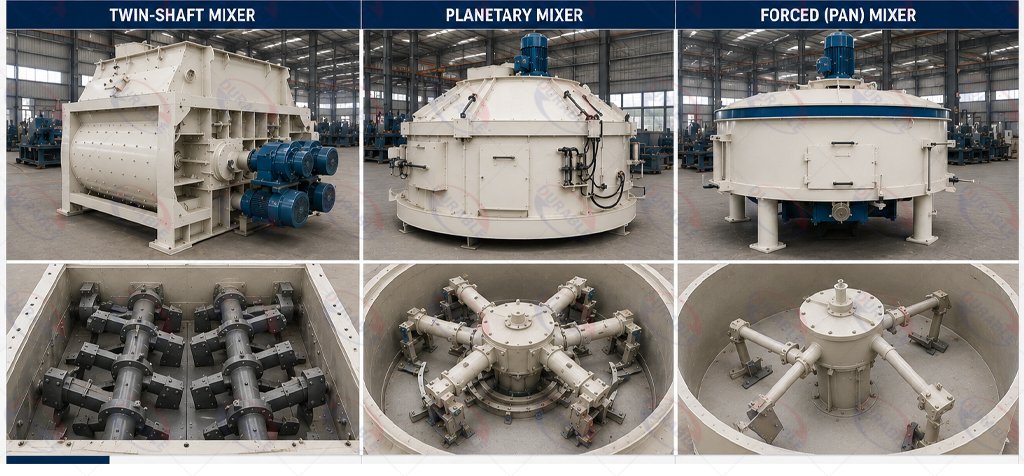
Most professional factories prefer:
- Twin-shaft mixers
- Planetary mixers
- Forced concrete mixers
Simple drum mixers usually cannot provide enough consistency for large automatic lines.
Hidden Industry Insight
Most block cracks actually begin during mixing. Poor water distribution creates weak internal structures that become visible months later on construction sites.
Useful Production Tips
- Control mixing time carefully: Short mixing creates weak blocks.
- Avoid overwatering: Excess water reduces density.
- Clean mixer blades regularly: Cement buildup changes performance.
Why Are Pallets One of the Biggest Hidden Costs?
Many investors ignore pallet quality completely. This becomes a very expensive mistake later.
Cheap pallets often create:
- Block cracking
- Vibration instability
- Dimensional errors
- Fast deformation
- High replacement frequency
In tropical regions with high humidity, low-quality bamboo pallets deform very quickly.
Why Experienced Factories Calculate Cost Per Cycle
Professional manufacturers usually calculate:
- Lifespan per pallet
- Production cycles
- Maintenance cost
- Replacement frequency
instead of only checking purchase price.
Practical Advice for Buyers
- For humid countries: Avoid low-density bamboo pallets.
- For automatic lines: Use stronger vibration-resistant pallets.
- For export blocks: Stable pallet dimensions improve product consistency.
| Pallet Type | Initial Cost | Lifespan | Long-Term Cost |
|---|---|---|---|
| Cheap bamboo | Low | Short | High |
| Composite pallet | Medium | Long | Lower |
| PVC pallet | High | Very long | Best stability |
Why Does the Curing System Decide Final Block Strength?
Many factories produce blocks correctly but cure them incorrectly. This is extremely common.
Concrete curing is not simple drying. It is a chemical hydration process that develops long-term strength.
Poor curing creates:
- Surface cracks
- Weak compressive strength
- Corner breakage
- Shorter building lifespan
Common Curing Mistakes
Many operators expose fresh blocks directly to:
- Strong sunlight
- Dry wind
- Poor humidity conditions
This causes rapid surface drying before internal hydration finishes.
Better Curing Methods
Professional factories usually use:
- Controlled moisture curing
- Covered curing areas
- Steam curing chambers
- Scheduled stacking systems
Practical Curing Suggestions
- Avoid direct sun exposure
- Maintain stable humidity
- Do not stack too early
- Allow enough curing time
Should You Choose Fully Automatic or Semi-Automatic Production?
Full automation is not always the best choice. Many factories buy highly automated systems without considering local conditions.
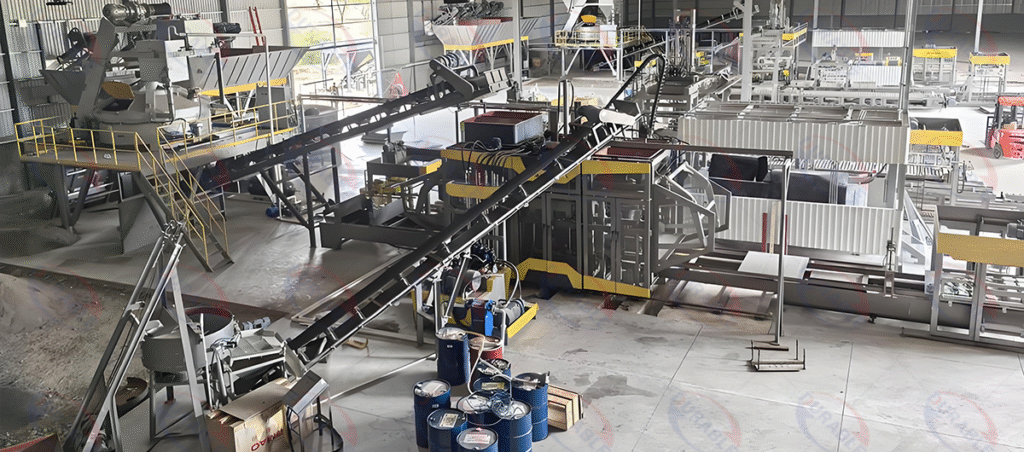
Common problems include:
- Unstable electricity
- Limited operator experience
- Spare part delays
- Maintenance difficulties
In some developing markets, semi-automatic systems actually produce better long-term ROI.
When Full Automation Works Best
Automatic systems work well when factories have:
- Stable power supply
- Skilled technicians
- Large daily production demand
- Reliable maintenance support
Why Semi-Automatic Lines Still Matter
Semi-automatic lines often offer:
- Lower downtime risk
- Easier maintenance
- Lower initial investment
- Faster operator training
Smart Investment Advice
- Start with scalable layouts
- Leave future upgrade space
- Choose systems matching local labor conditions
Many medium-size investors start with a block making machine and expand automation later.
How Much Space Does a Solid Block Factory Need?
Factory size depends on:
- Daily output
- Automation level
- Curing method
- Raw material storage
- Pallet circulation systems
A medium-size solid brick making machine factory usually requires enough space for:
- Material storage
- Mixing area
- Production line
- Finished product curing
- Vehicle movement
Common Factory Layout Mistakes
Many investors underestimate:
- Raw material storage space
- Block curing area
- Truck access roads
- Future expansion needs
Practical Factory Planning Tips
- Separate wet and dry material zones
- Keep curing away from dust areas
- Allow forklift movement space
- Design for future expansion
2026 Trends in Solid Block Production Lines
The block industry is moving toward:
- Lower labor dependence
- Better curing systems
- Smarter automation
- Dust control systems
- Energy-efficient production
Many factories also focus more on modular production layouts because market demand changes quickly.
Latest Industry Developments
- PLC automation systems
- Smart moisture monitoring
- Automated pallet circulation
- Dust collection integration
- Hydraulic synchronization improvements
Market Demand Trends
High demand markets include:
- Africa
- Southeast Asia
- Middle East
- Government housing projects
- Infrastructure construction sectors
Demand is increasing for reliable and scalable concrete brick production equipment solutions.
Frequently Asked Questions
What equipment is absolutely necessary for a solid block production line?
At minimum, you need a batching system, mixer, conveyor, block machine, pallets, and curing area for stable production.
Which mixer is best for solid block production?
Twin-shaft and planetary mixers usually provide better consistency for medium and large factories.
Is a fully automatic block line always better?
Not always. Semi-automatic systems may perform better in areas with unstable electricity or limited technical support.
How many blocks can a production line make daily?
Production depends on machine model, mold size, automation level, and curing efficiency.
Why do blocks crack after production?
Poor curing, unstable moisture, and weak mixing are the most common reasons.
Conclusion and Recommendations
A profitable solid block production line depends on much more than the block machine itself.
Long-term success usually comes from:
- Stable raw materials
- Accurate batching
- Proper mixing
- Reliable conveyors
- Strong pallets
- Good curing systems
- Balanced workflow
Factories that survive long-term are usually not the ones with the biggest machines. They are the ones with the most stable systems.
If you plan to build a block factory, focus on production balance, maintenance simplicity, and future scalability instead of only checking machine output.
About Durable Machine
At Durable Machine, we manufacture complete block production solutions for B2B clients worldwide. We provide:
- Solid block machines
- Concrete batching systems
- Twin-shaft mixers
- Conveying systems
- Pallet circulation systems
- Automatic stacking systems
- Customized factory layouts
Our team helps clients design efficient and scalable block factories based on local materials, labor conditions, and production goals.
If you are planning a new block production project, contact our engineering team for customized equipment recommendations and factory planning support.