 Durable Machinery
Get Price
How to Build a Modern Concrete Block Factory From Scratch
Building a concrete block factory involves more than buying a block machine.
A successful factory needs market demand, reliable raw materials, practical layout, suitable equipment, enough curing space, and a production flow that reduces unnecessary handling.
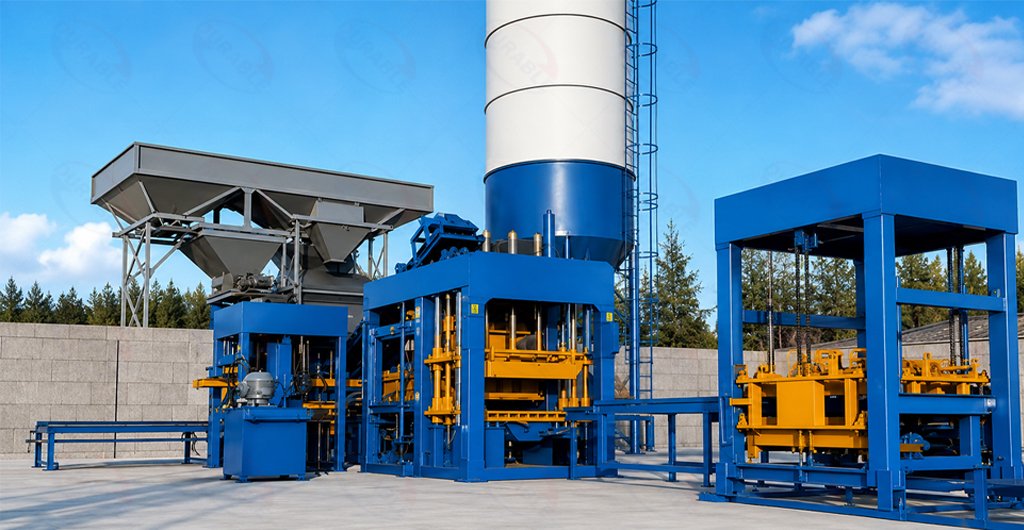
Many new investors compare machine capacity first. Later, they may discover that poor layout, unstable materials, limited pallets, weak curing, or slow loading becomes the real bottleneck.
This guide explains how to build a modern concrete block factory from scratch, step by step, using a practical factory-planning approach.
Step 1: Define Your Target Market Before Buying Equipment
The first decision is not choosing a machine.
It is choosing your market.
Every successful concrete block factory begins by identifying who will buy the products and what problems they need solved.
Typical customer groups include:
- Residential housing developers
- Commercial building contractors
- Government infrastructure projects
- Municipal engineering companies
- Landscaping contractors
- Building material distributors
- Road and parking project suppliers
- Local retail construction markets
Each market requires different products, production volume, quality standards, and delivery arrangements.
For example, a factory serving residential housing may mainly produce hollow blocks and solid blocks. Municipal projects often require pavers, curbstones, grass blocks, or interlocking products.
Before requesting equipment quotations, answer these questions:
- Which products will you manufacture?
- How large is your local construction market?
- Who are your main competitors?
- What block sizes are commonly used?
- How far are your customers from the factory?
- What daily production volume does the market realistically require?
- Do customers complain about current block quality or delivery delays?
- Are buyers asking for standard products or specialized products?
Market research should come before equipment selection.
A factory designed around real demand has a better chance of controlling investment, reducing waste, and building stable sales.
Step 2: Choose the Right Concrete Block Products
Your product mix determines almost every part of the factory.
Different products need different molds, pallet sizes, vibration settings, feeding methods, curing space, and handling systems.
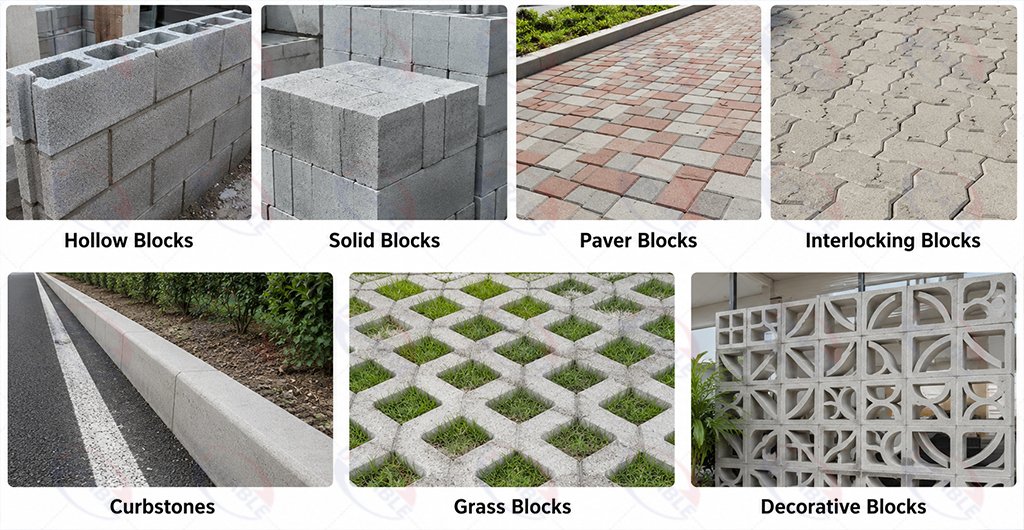
Typical concrete products include:
| Product | Typical Application |
|---|---|
| Hollow Blocks | Residential and commercial walls |
| Solid Blocks | Load-bearing structures and general construction |
| Paver Blocks | Roads, sidewalks, parking areas, and landscaping |
| Interlocking Blocks | Pavements, yards, and public spaces |
| Curbstones | Municipal roads and infrastructure |
| Grass Blocks | Green parking lots and landscaping |
| Decorative Blocks | Architectural and retail projects |
A factory producing only one standard hollow block is easier to manage, but it may face stronger price competition.
In contrast, factories that can produce several products may respond better to seasonal demand, project orders, and changing local market conditions.
Modern Concrete Block Machine configurations can support different molds, allowing one production line to produce multiple product types when the machine size, pallet system, and mold design are suitable.
However, more molds do not automatically mean more profit.
Each product still needs confirmed demand, correct material formula, suitable storage, and a clear sales channel.
Step 3: Secure Reliable Raw Material Supply
Raw materials directly affect production cost, block strength, surface quality, and rejection rate.
Typical materials include:
- Cement
- Sand
- Crushed stone
- Stone powder
- Crusher dust
- Fly ash
- Slag
- Water
- Chemical additives when required
When selecting a factory location, pay close attention to material supply.
Transporting aggregates over long distances can quickly increase production cost. For this reason, many successful block factories are located near sand, stone powder, gravel, quarry fines, or construction material markets.
Material consistency also matters.
Stable grading and moisture content help maintain block strength and reduce production variation. If raw materials change frequently, the factory may need more testing, formula adjustment, and operator control.
The factory should provide separate storage for cement, sand, aggregates, stone powder, fly ash, and other materials.
Covered storage is especially useful in rainy areas because wet or contaminated materials can affect batching accuracy, mixing quality, and final block strength.
Reliable suppliers are often more valuable than the lowest material price.
Step 4: Design an Efficient Concrete Block Factory Layout
Factory layout has a major impact on productivity.
Poor layouts create unnecessary handling, forklift congestion, safety risks, and production delays.
A practical concrete block factory should allow materials to move in one clear direction:
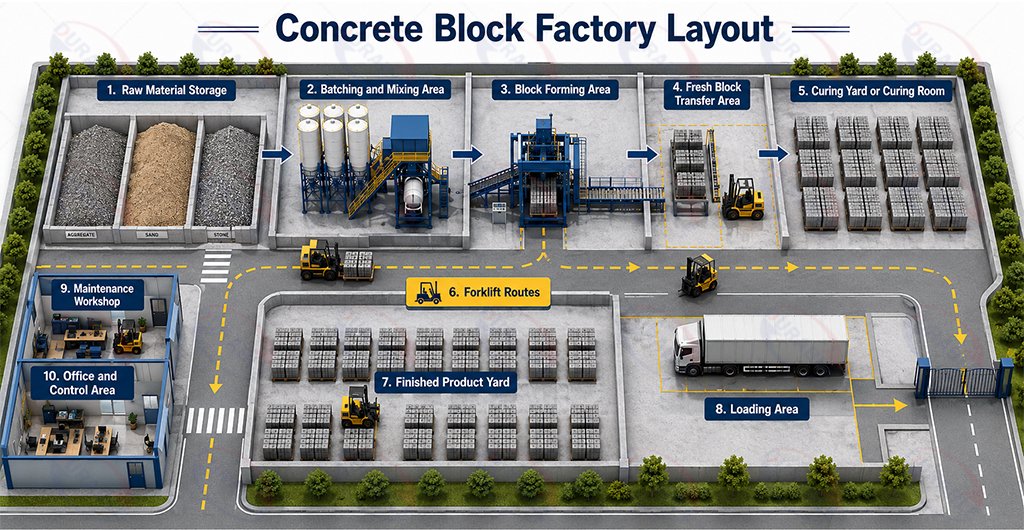
When planning the layout, separate the main factory zones:
- Raw material storage
- Batching and mixing area
- Block forming area
- Fresh block transfer area
- Curing yard or curing room
- Finished product yard
- Loading area
- Forklift routes
- Maintenance workshop
- Office and control area
Avoid crossing forklift traffic with production flow whenever possible.
The block machine should not be placed only where it looks convenient. Instead, its location should support material feeding, pallet movement, maintenance access, curing transfer, and future expansion.
A good layout reduces labor waste, shortens transfer distance, and makes the factory easier to manage.
Step 5: Select the Right Production Equipment
A modern block factory includes much more than the block machine itself.
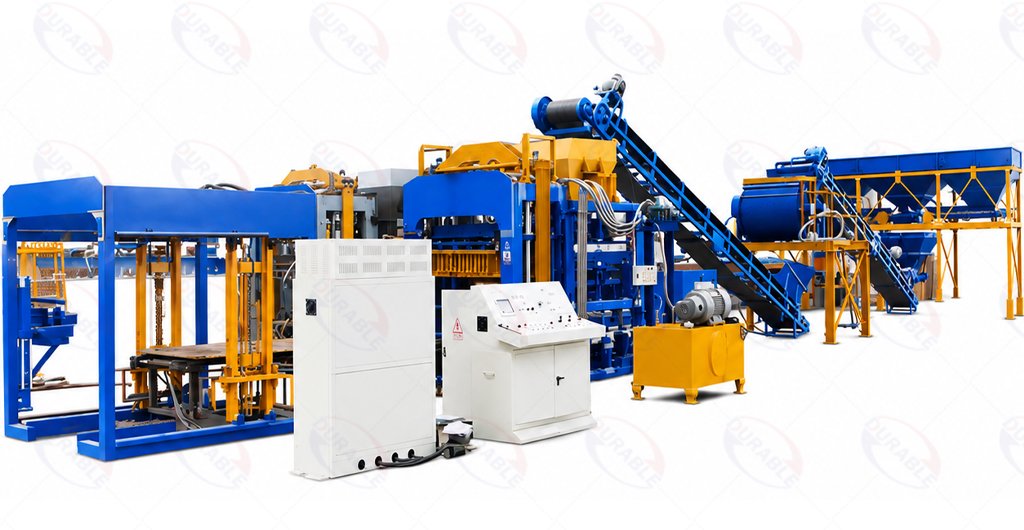
Typical equipment may include:
- Aggregate storage bins
- Batching system
- Cement silo
- Screw conveyor
- Concrete mixer
- Belt conveyor
- Hydraulic block machine
- Pallets
- Fresh block conveyor
- Block transfer system
- Stacker or pallet handling system
- Forklift
- Air compressor when required
- PLC control system
Equipment should be selected as one integrated production line rather than separate machines.
The block machine must match the mixer capacity, batching accuracy, pallet supply, conveyor speed, curing capacity, and finished product handling method.
An oversized machine with an undersized mixer cannot achieve its rated output. Similarly, a fast forming machine will not improve production if pallets, curing space, or transfer equipment cannot keep up.
A Hydraulic Brick Making Machine may be suitable when your factory needs stable compaction, accurate forming, and product flexibility.
Still, hydraulic pressure alone is not enough.
The full line must support stable feeding, mixing, vibration, pressing, demolding, transfer, curing, and storage.
Step 6: Choose the Right Level of Automation
Automation should match your budget, labor cost, order volume, and management ability.
A fully automatic line is not automatically the best choice. It creates value only when market demand, factory organization, maintenance support, and curing capacity can use the higher output.
| Factory Type | Recommended Direction |
|---|---|
| Small Startup | Manual or semi-automatic setup |
| Growing Business | Automatic hydraulic line |
| Regional Supplier | Fully automatic production line |
| Large Industrial Plant | Integrated automatic factory |
Manual systems require lower investment but more labor.
Semi-automatic lines can help new factories enter the market with controlled cost. They are often practical when orders are developing and labor is still available.
An Automatic Brick Making Machine can coordinate feeding, vibration, pressing, demolding, and conveying. This helps reduce manual variation when daily production becomes more stable.
For larger factories, automation may include batching, mixing, forming, pallet transfer, stacking, curing management, and central control.
Before choosing a higher automation level, confirm that the factory has stable power, trained operators, enough pallets, spare parts support, and sufficient curing space.
Automation should solve a real bottleneck, not simply make the project look larger.
Step 7: Plan Pallet Handling and Fresh Block Transfer
Fresh concrete blocks are weak immediately after demolding.
If workers handle them roughly, blocks may crack, lose corners, or develop hidden damage before curing.
A modern production line should reduce unnecessary manual handling between the block machine and curing area.
Depending on the project scale, fresh block transfer may use:
- Manual carts
- Pallet conveyors
- Wet block conveyors
- Hydraulic elevators
- Stackers
- Forklifts
- Transfer racks
The goal is simple: move fresh blocks smoothly while protecting their shape.
A factory with good transfer planning can reduce rejection rates and improve daily output stability. Poor handling, on the other hand, can waste materials even when the block machine itself works correctly.
Pallet quality also matters.
Bent, weak, or uneven pallets can affect block shape and create handling problems. Therefore, pallet quantity and pallet durability should be included in the factory investment plan from the beginning.
Step 8: Prepare Curing Space and Supporting Infrastructure
Curing is not a minor step.
Concrete blocks gain strength through cement hydration, so moisture control, resting time, stacking method, and handling discipline all influence final quality.
A good curing plan should consider:
- Fresh block protection
- Curing area size
- Ventilation
- Moisture control
- Rain protection
- Forklift access
- Stacking height
- Product separation
- Final storage
Fresh blocks should not be moved too early.
If the factory increases machine speed without enough curing space, workers may be forced to transfer or stack blocks before they are ready. As a result, cracking, deformation, broken corners, and strength variation may increase.
Supporting infrastructure is also important.
A complete factory should prepare:
- Stable electrical system
- Reliable water supply
- Drainage system
- Compressed air if required
- Forklift routes
- Maintenance area
- Spare parts storage
- Safe access for trucks
These facilities directly influence production efficiency, equipment uptime, and delivery reliability.
Step 9: Avoid Common Factory Planning Mistakes
Many new block factories lose money because of planning errors rather than poor equipment alone.
Common mistakes include:
Buying Equipment Before Studying the Market
Some investors purchase a machine first and search for customers later.
This approach increases risk. The factory should be designed around real demand, target products, customer locations, and local competition.
Choosing Excessive Production Capacity
Large machines increase investment, electricity use, pallet demand, curing space, and maintenance cost.
Unused capacity does not generate profit. In many cases, a balanced line is safer than the largest model available.
Ignoring Curing Requirements
Fresh blocks require enough space and time before shipment.
A fast machine without curing capacity only creates a new bottleneck.
Underestimating Pallet Quantity
Too few pallets can stop production even when the machine is ready to run.
Pallet planning should match cycle time, curing method, production hours, and daily output target.
Poor Logistics Planning
Crossing forklift traffic slows production and increases safety risk.
A clear material flow from storage to loading improves both efficiency and factory management.
Choosing Suppliers Only by Price
Low prices may exclude important items such as molds, pallets, installation guidance, spare parts, training, or layout support.
Technical support, service response, and spare parts availability are also part of the real investment.
Step 10: Build for Future Expansion
A factory should not only meet today’s demand.
It should also allow future growth without forcing major rebuilding.
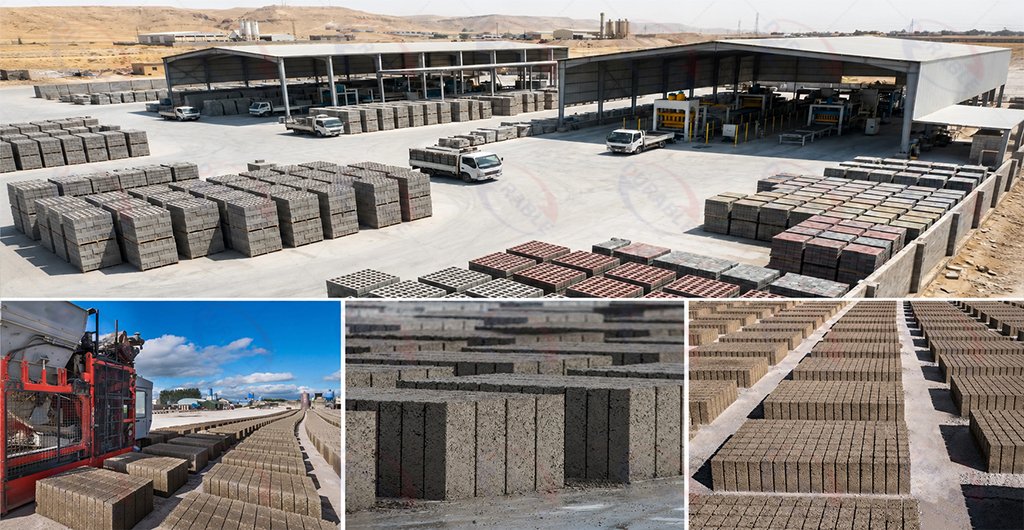
When designing the site, reserve space for:
- Additional block machines
- Larger batching systems
- More cement silos
- Extra curing areas
- Finished product warehouses
- New molds
- Automatic palletizing
- More truck loading space
- Maintenance expansion
Expansion is easier when planned from the beginning.
A flexible factory layout reduces future construction cost and avoids long production interruptions when the business grows.
However, expansion planning does not mean buying every machine at once.
A better approach is to design the site for future upgrades while purchasing equipment according to current market demand and cash flow.
Step 11: Maintenance Planning for Stable Production
A concrete block factory works with abrasive sand, cement dust, wet concrete, vibration, hydraulic pressure, and continuous material handling.
Without preventive maintenance, small problems can quickly become expensive downtime.
Important maintenance points include:
- Clean wet concrete from molds and tamper heads after production.
- Inspect guide pillars, sliding parts, and moving joints.
- Check hydraulic oil level, filtration, hoses, seals, and pressure stability.
- Inspect conveyor belts, rollers, bearings, and belt tracking.
- Review vibration motors, bolts, sensors, and electrical connections.
- Keep the control cabinet clean and dry.
- Check pallets for bending, cracking, or surface damage.
- Train operators to report abnormal noise, slow movement, oil leaks, or unstable block quality.
Maintenance should not be treated only as repair work.
It protects block consistency, reduces unexpected downtime, and helps the factory maintain delivery reliability.
A good factory plan should include maintenance access, spare parts storage, and operator training from the start.
Step 12: Choose a Supplier That Understands the Whole Factory
A concrete block factory should not be selected from one machine photo or one capacity figure.
A reliable supplier should help match market demand, raw materials, product type, automation, factory layout, curing, and investment budget.
| Supplier Factor | What You Should Check | Why It Matters |
|---|---|---|
| Factory Planning Support | Layout, production flow, and expansion planning | Reduces bottlenecks |
| Equipment Matching | Mixer, conveyor, block machine, pallets, and stacker | Keeps the line balanced |
| Machine Structure | Frame strength, welding quality, and vibration resistance | Supports long-term stability |
| Mold Capability | Mold material, accuracy, wear resistance, and product range | Affects product quality |
| Hydraulic System | Pumps, valves, seals, cylinders, and cooling | Influences pressure stability |
| Control System | PLC settings, alarms, and operator interface | Helps repeat production cycles |
| Spare Parts | Molds, seals, sensors, valves, and wear parts | Reduces downtime |
| Export Support | Packing, voltage, documents, and installation guidance | Reduces international purchase risk |
DURABLE’s Brick Making Machine range supports different forming and automation directions for hollow blocks, solid blocks, pavers, interlocking products, and related building materials.
Before ordering, request technical specifications, layout drawings, power requirements, mold details, spare parts lists, installation guidance, and training support.
A supplier that understands the whole factory can help you avoid costly mismatches between equipment, layout, curing, and market demand.
Buyer Project Self-Check List
Prepare these details before requesting a factory proposal:
- What products will you manufacture?
- What are the exact block dimensions?
- What daily output does your market need?
- Which raw materials are locally available?
- How far are your main customers?
- What land size is available?
- What voltage and power supply do you have?
- Do you need manual, semi-automatic, or automatic production?
- How much curing space can you prepare?
- Do you need molds, pallets, conveyors, mixer, or stacker?
- What is your investment range?
- Which country will the equipment be shipped to?
- Do you plan to expand the factory later?
Clear project information helps the supplier recommend a practical layout instead of guessing from one block photo.
Frequently Asked Questions
How much land is needed for a concrete block factory?
Land requirements depend on production capacity, curing method, storage area, vehicle access, and future expansion. Automatic lines usually need more space than compact or manual factories.
What equipment is required for a complete concrete block factory?
A typical factory may include aggregate storage, batching equipment, cement silo, mixer, conveyors, block machine, pallets, curing area, forklift, and finished product storage.
Should I choose a semi-automatic or fully automatic production line?
The decision depends on labor cost, order volume, investment budget, maintenance ability, and curing capacity. Higher automation is not always the most profitable choice.
What products can one concrete block machine produce?
By changing molds, many machines can produce hollow blocks, solid blocks, pavers, interlocking blocks, curbstones, grass blocks, and decorative products.
What is the biggest mistake when building a block factory?
The biggest mistake is buying equipment before studying the market. Factory planning should begin with customer demand, product selection, raw materials, layout, and curing.
Final Thoughts
Building a modern concrete block factory requires a complete production system, not just one machine.
Market demand should guide product selection. Raw materials, factory layout, curing space, equipment capacity, automation level, maintenance access, and delivery distance must also work together.
Small projects should avoid oversized equipment before sales are confirmed. A compact or semi-automatic setup may be safer for market testing.
As demand grows, automatic equipment can improve consistency and reduce labor dependence. Still, higher automation only makes sense when orders, power, pallets, curing, maintenance, and operators can support it.
Larger factories should plan the whole flow from aggregate storage to finished product loading. When every stage is balanced, the factory can produce more stable blocks with less waste and fewer bottlenecks.
The best concrete block factory is not the largest one. It is the factory that matches your market, materials, budget, layout, and long-term growth plan.
About DURABLE
DURABLE provides concrete block manufacturing solutions for new factories and production line upgrades.
Our team helps customers plan factory layouts, select suitable equipment, match molds, improve production flow, and prepare for future expansion based on local market conditions.
A successful block factory is built around the whole process. Material storage, batching, mixing, forming, pallet handling, curing, maintenance, and delivery must work as one system.
Please contact DURABLE with your target products, raw materials, land size, required output, voltage, project country, and investment range to receive a tailored concrete block factory proposal.