 Durable Machinery
Get Price
How to Choose the Right Concrete Mixer for Different Projects
Choosing a concrete mixer should begin with the concrete you need to produce, not with the largest capacity or lowest quotation.
A small contractor, a remote road crew, a commercial batching plant, and a precast factory may all use concrete, but they do not need the same mixing equipment.
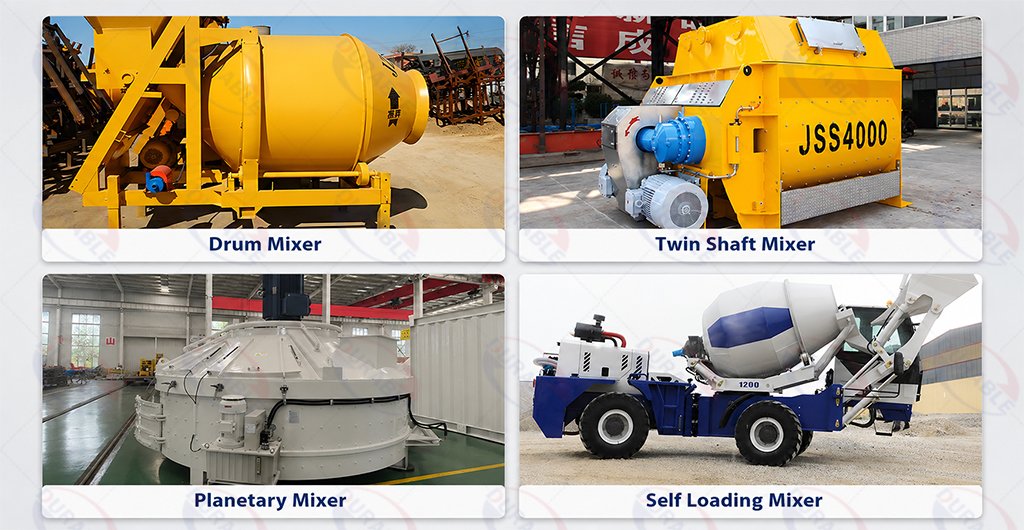
Their required output, concrete consistency, aggregate size, mobility, automation level, power supply, and quality standards are different.
For this reason, the right mixer should match the project type, material behavior, production rhythm, and downstream equipment.
This guide explains how to choose a concrete mixer for construction sites, remote projects, batching plants, block factories, paver lines, and precast production.
Start with the Concrete You Need to Produce
The first question should not be, “How many liters is the mixer?”
Start by defining the material that must come out of it.
Different concrete types require different levels of tumbling, shearing, circulation, moisture distribution, and discharge control.
| Concrete Type | Main Mixing Requirement | Suitable Direction |
|---|---|---|
| Plastic concrete | Complete but relatively gentle mixing | Drum or forced mixer |
| Semi-plastic concrete | Stable mixing and discharge | Drum or twin-shaft mixer |
| Dry-cast concrete | Strong forced mixing and even moisture | Twin-shaft or planetary mixer |
| High-strength concrete | Accurate, intensive, repeatable mixing | Forced mixer |
| Colored concrete | Uniform pigment distribution | Planetary mixer |
| Fiber-reinforced concrete | Good fiber dispersion without clumping | Forced mixer |
| Lightweight concrete | Controlled action to limit aggregate damage | Project-specific forced mixer |
| Precast concrete | High repeatability between batches | Planetary or twin-shaft mixer |
A drum mixer mainly lifts and tumbles material inside a rotating drum. It is a practical option for ordinary plastic and semi-plastic concrete, mortar, and small construction work.
Forced mixers use powered mixing arms or blades to move concrete through the mixing chamber. They are usually better suited to dry mixes, high-strength concrete, precast products, pavers, and commercial batching.
The mixer should also match:
- Maximum aggregate size
- Cement and fine-material content
- Required water-cement ratio
- Admixtures
- Fibers
- Pigments
- Required discharge consistency
- Acceptable batch variation
A mixer that performs well with ordinary foundation concrete may not produce the same results with a low-moisture paver mix.
Which Mixer Is Best for Small Construction Projects?
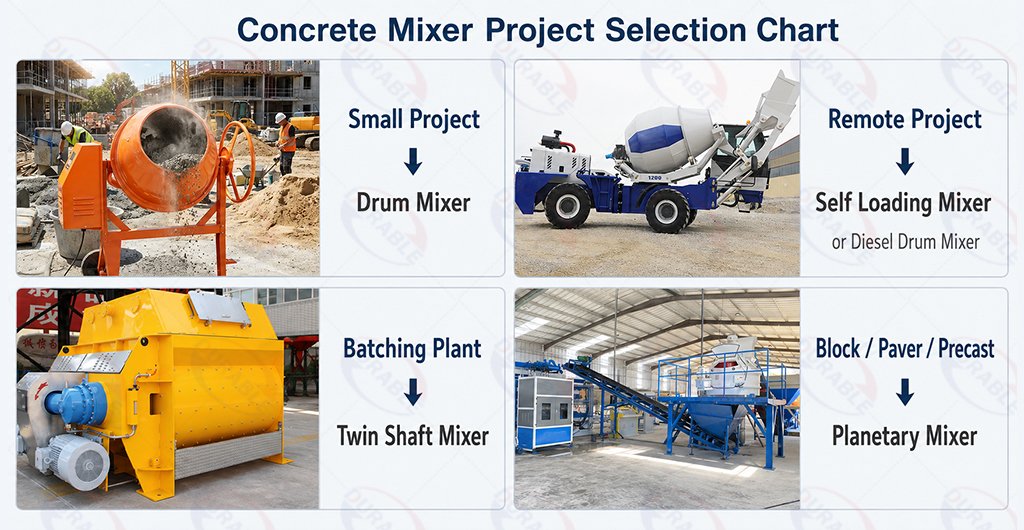
Small residential, repair, rural, and light commercial projects usually do not need a large industrial mixing system.
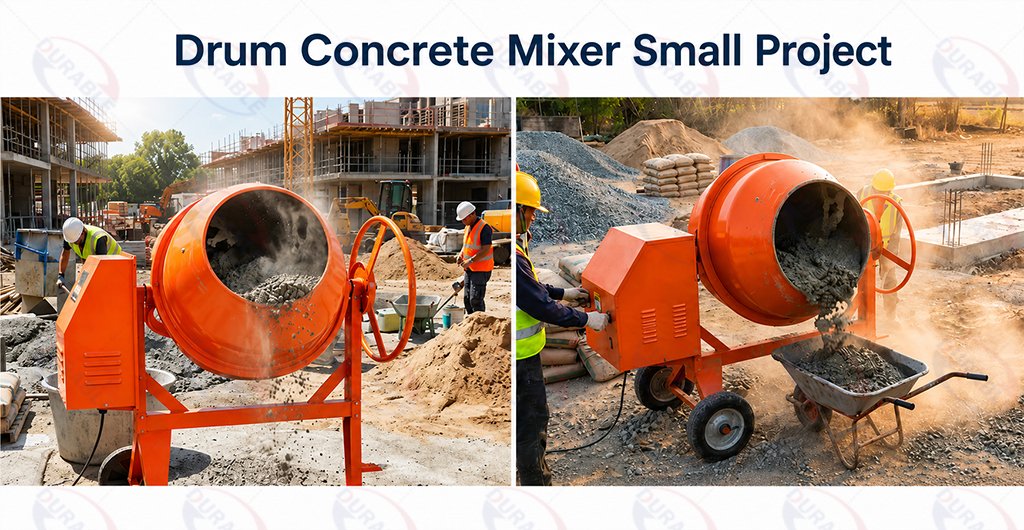
Typical applications include:
- House foundations
- Small floor slabs
- Columns and beams
- Farm construction
- Wall plastering
- Mortar preparation
- Repair work
- Small drainage projects
Suitable equipment may include:
- Portable drum mixer
- Electric drum mixer
- Diesel drum mixer
- Small tilting mixer
- Mixer with lifting hopper
The main advantages of a drum mixer are:
- Lower initial investment
- Simple operation
- Easy relocation
- Compact footprint
- Straightforward maintenance
- Suitability for intermittent production
A Diesel Drum Mixer is useful when the project is located away from a reliable power supply. It can operate independently of the electrical grid and may be moved between smaller sites.
An electric mixer is usually more suitable when:
- Power is stable
- The mixer stays in one place
- Noise and exhaust must be limited
- Daily operation is frequent
- Lower routine maintenance is preferred
Before choosing a small mixer, confirm the difference between drum volume, charging capacity, mixing capacity, discharge capacity, and practical hourly output.
A mixer advertised with a large drum does not necessarily discharge that full volume as finished concrete.
Practical output also depends on loading time, mixing time, unloading, repositioning, and cleaning.
Which Mixer Is Best for Remote or Mobile Projects?
Remote projects have different priorities from permanent concrete factories.
The mixer must operate under conditions that may include:
- No grid electricity
- Unstable power
- Long distance from a ready-mix supplier
- Frequent site relocation
- Poor road access
- Limited maintenance support
- Changing daily concrete demand
For small remote projects, a diesel drum mixer is often the simplest choice.
It may suit:
- Rural housing
- Agricultural buildings
- Remote road repairs
- Small bridges
- Mining camp construction
- Water projects
- Temporary work sites
For scattered road, bridge, or rural infrastructure projects, a self loading concrete mixer may also be considered. It can combine loading, weighing, mixing, and transport in one mobile unit.
However, a mobile mixer is not the same as a full batching plant.
A single drum mixer or self loading mixer may be practical for flexible site work, but it may not provide enough batching accuracy or continuous output for larger projects.
A Mobile Concrete Batching Plant is a better direction when the project requires:
- Aggregate batching
- Cement weighing
- Water measurement
- Admixture dosing
- Higher hourly output
- Repeatable concrete quality
- Fast installation
- Movement between project sections
Mobile batching plants are commonly considered for roads, bridges, railways, airports, mining infrastructure, and projects where concrete must be produced close to the pouring location.
The key decision is not simply whether the mixer can be moved.
You should also evaluate:
- Setup and dismantling time
- Foundation requirements
- Trailer or modular structure
- Aggregate-bin capacity
- Cement storage
- Generator requirements
- Water availability
- Transport dimensions
- Local road restrictions
- Cleaning and wastewater control
A compact diesel mixer is suitable for intermittent production. A mobile batching plant is more appropriate when the project needs an organized concrete supply system.
Which Mixer Is Best for Concrete Batching Plants?
Commercial ready-mix plants and large construction projects usually prioritize stable output, repeatable quality, and coordinated batching.
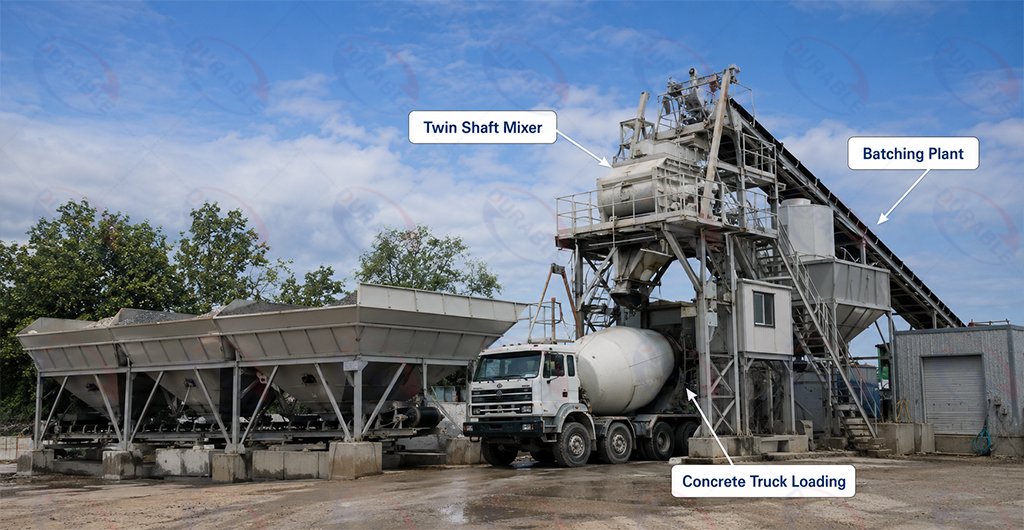
Common requirements include:
- Fast production cycles
- Reliable hourly output
- Batch repeatability
- Large aggregate compatibility
- Automated weighing
- Continuous operation
- Low downtime
A Twin Shaft Concrete Mixer is commonly selected for this type of work.
It uses two horizontal shafts with mixing arms and blades. The shafts rotate in opposite directions, creating overlapping material movement, lifting, shearing, and circulation inside the mixing chamber.
This design is suitable for:
- Ready-mix concrete
- Infrastructure projects
- High-output batching plants
- Commercial concrete supply
- Dam and bridge construction
- General precast production
- Medium and large aggregate mixes
Twin-shaft mixers are valued for their strong forced-mixing action and stable performance in continuous production.
However, they require more supporting infrastructure than a small drum mixer:
- Accurate batching system
- Stable electrical power
- Cement silo
- Aggregate bins
- Conveyors
- Water and admixture measurement
- Control system
- Wear-part maintenance
- Cleaning access
For long-term fixed production, a Stationary Concrete Batching Plant can integrate these systems into one coordinated plant.
A twin-shaft mixer is not automatically economical for every buyer. A small contractor producing only a few batches each day may never use enough capacity to justify the investment.
The equipment becomes more valuable when the project needs frequent batches, high output, stable concrete quality, and automatic production records.
Which Mixer Is Best for Blocks, Pavers, and Precast Products?
Block, paver, and precast factories often use dry or semi-dry concrete that behaves differently from ordinary ready-mix concrete.
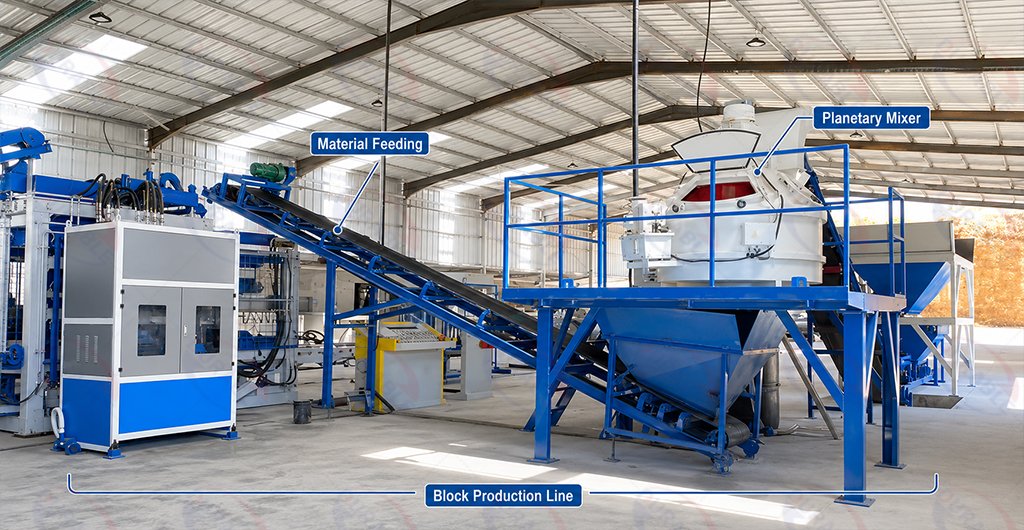
The mix may contain:
- Cement
- Sand
- Stone powder
- Fine aggregates
- Crusher dust
- Pigments
- Small coarse aggregate
- Fibers
- Low water content
This material must be mixed evenly before it enters a block machine, paver press, or precast mold.
Two common choices are twin-shaft and planetary mixers.
Twin-shaft mixer
A twin-shaft mixer is often suitable when the factory prioritizes:
- High throughput
- Short production cycles
- Regular concrete blocks
- Large-volume paver production
- Continuous automatic operation
- Integration with batching and conveyors
It is widely used in block factories where the mixer must continuously supply a high-output forming machine.
Planetary mixer
A Planetary Concrete Mixer is often selected when the factory prioritizes:
- High batch uniformity
- Accurate pigment distribution
- Premium pavers
- Decorative concrete
- Precast components
- Complex material formulas
- Consistent surface layers
- Smaller but quality-sensitive batches
Its mixing arms move around the chamber while also rotating through their own paths. This creates overlapping motion and helps cover a large proportion of the mixing floor.
A useful selection principle is simple:
Choose a twin-shaft mixer when throughput is the main priority. Choose a planetary mixer when batch uniformity, pigment distribution, and product finish are more important.
This is a general direction rather than an absolute rule.
A large precast factory may use a twin-shaft mixer, while a premium block factory may use one planetary mixer for the base mix and another smaller mixer for the colored surface layer.
How Much Mixer Capacity Does Your Project Need?
Mixer capacity should be calculated from the required concrete output and the actual production cycle.
Do not select equipment only from daily demand.
Use this basic direction:
Required Hourly Output = Daily Concrete Demand ÷ Effective Operating Hours ÷ Expected Utilization
For example, assume a factory needs 120 m³ of concrete per day.
The production shift is eight hours, but cleaning, breaks, changeovers, and small interruptions reduce effective utilization to 80%.
120 ÷ 8 ÷ 0.8 = 18.75 m³/h
The mixing system should therefore reliably deliver more than 18.75 m³/h under the actual material and operating conditions.
Mixer output depends on:
- Discharge volume per batch
- Charging time
- Mixing time
- Discharge time
- Cleaning time
- Weighing-system speed
- Conveyor speed
- Product changes
- Operator organization
- Downstream demand
For a batching plant, another useful direction is:
Hourly Output = Discharge Volume per Batch × Practical Batches per Hour
If the mixer discharges 1 m³ per batch and completes a practical cycle every 90 seconds:
3,600 ÷ 90 = 40 batches per hour
The theoretical mixer output is approximately:
1 × 40 = 40 m³/h
Actual plant output may be lower because batching, loading, discharge, truck movement, and interruptions also consume time.
For a block factory, the mixer should match the forming machine’s material demand.
An undersized mixer causes the block machine to wait.
An oversized mixer may create:
- Material waiting in the hopper
- Moisture variation
- Mix stiffening
- Unnecessary electricity use
- Higher investment
- Poor equipment utilization
A practical production line should keep the mixer, batching system, conveyors, forming machine, and handling equipment balanced.
What Other Factors Matter Besides Mixer Type?
Mixer type and capacity are only part of the decision.
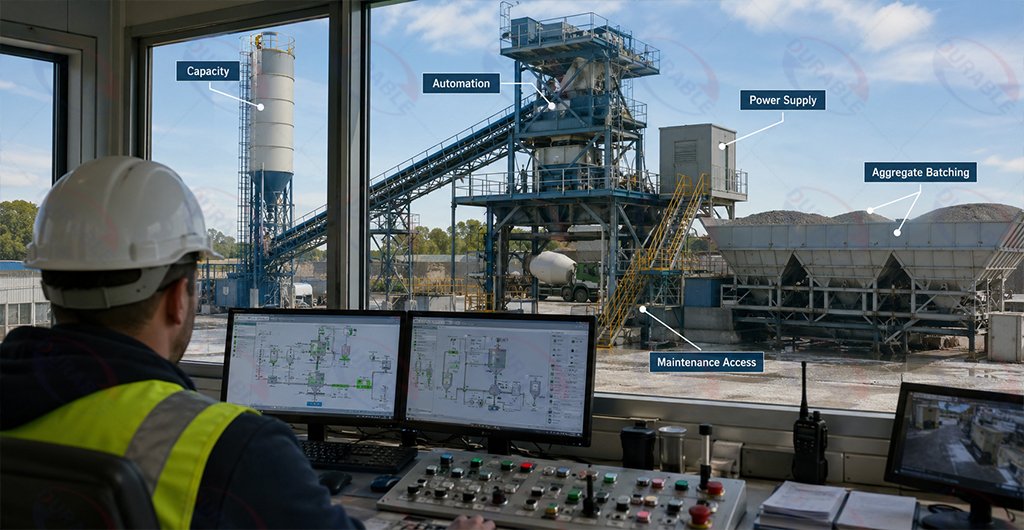
Aggregate size
The mixer must accept the project’s maximum aggregate size without trapping material between blades, liners, or discharge components.
Large and abrasive aggregates require stronger mixing arms, liners, and wear-resistant parts.
Mix moisture
Dry block and paver mixes require strong forced mixing and accurate water distribution.
Plastic concrete is usually easier to circulate, but it still requires consistent water and admixture dosing.
Power supply
Confirm the local voltage, frequency, phase, transformer capacity, generator requirements, and motor-starting method.
A remote project may benefit from diesel equipment, while a permanent industrial plant usually operates more economically with electric motors.
Discharge height and direction
The mixer must connect correctly to its downstream equipment.
The discharge point may feed:
- Block machine hopper
- Belt conveyor
- Concrete pump
- Transit mixer
- Transfer bucket
- Precast distribution system
A mismatch in height or direction can require unnecessary conveyors, platforms, or structural changes.
Cleaning requirements
Factories producing different colors or concrete formulas need efficient cleaning.
Poor cleaning may cause:
- Color contamination
- Hardened buildup
- Reduced mixer volume
- Uneven discharge
- Additional wear
Planetary mixers may be attractive for product changes because of their chamber geometry and batch control, but actual cleaning design must still be reviewed.
Wear resistance
Common wear parts include:
- Mixing blades
- Arms
- Liners
- Scrapers
- Shaft seals
- Discharge-door components
Purchase price should be compared with expected wear-part life and replacement cost.
Automation
Industrial systems may include automatic aggregate weighing, cement weighing, water measurement, admixture dosing, moisture compensation, PLC recipe storage, batch records, automatic alarms, and cleaning systems.
Automation improves repeatability when sensors, calibration, maintenance, and operator training are properly managed.
Maintenance access
Technicians should be able to reach motors, gearboxes, bearings, shaft seals, blades, liners, discharge doors, and hydraulic or pneumatic systems safely.
A compact layout that prevents safe maintenance may cause longer downtime later.
Common Concrete Mixer Buying Mistakes
Many mixer problems start before production begins.
The buyer selects a machine by price, drum size, or sales recommendation, but does not confirm whether it matches the material and production line.
Choosing only by drum or tank volume
Nominal chamber volume, charging volume, and discharge volume are different.
Always compare the amount of usable concrete discharged per batch.
Buying the largest mixer available
A large mixer does not create demand.
If the project cannot use its output, the buyer pays for unused capacity, larger motors, more cleaning, and more expensive wear parts.
Ignoring concrete consistency
A gravity drum mixer may perform well with plastic concrete but struggle with very dry paver or block mixes.
Mixer selection should be based on the actual material.
Comparing purchase price alone
Long-term cost includes:
- Electricity or diesel
- Labor
- Blades
- Liners
- Seals
- Bearings
- Cleaning
- Maintenance
- Downtime
- Poor-quality batches
A lower-priced mixer may cost more per cubic meter if it requires longer cycles or produces more inconsistent concrete.
Ignoring the production line
The mixer must coordinate with:
- Aggregate batching
- Cement supply
- Conveyors
- Pumps
- Block machines
- Trucks
- Curing and handling
Selecting it as an isolated machine often creates capacity mismatch.
Forgetting discharge requirements
Confirm discharge height, opening size, direction, speed, and connection to downstream equipment before manufacturing begins.
Over-automating a small project
Complex controls are valuable when production volume and quality requirements justify them.
They can become a burden where power, technical staff, calibration, and spare-parts support are limited.
Failing to test local materials
Local sand, crusher dust, stone powder, aggregates, pigments, and admixtures can change mixing time and wear.
Where possible, provide representative material information before finalizing the mixer configuration.
How Do Maintenance and Supplier Support Affect Long-Term Value?
A concrete mixer works under continuous exposure to abrasive sand, sharp gravel, wet cement paste, and mechanical vibration.
For this reason, long-term performance depends on both equipment design and daily maintenance.
Factory operators should regularly:
- Wash out the mixing drum or tub after every shift
- Lubricate bearings, rollers, and pivot points
- Check blade-to-liner clearance
- Inspect shaft seals and discharge doors
- Monitor hydraulic oil and filter condition
- Check drive belts, motors, and control connections
- Replace worn blades and liners before they damage other parts
Supplier support also matters.
A reliable supplier should help the buyer review aggregate size, concrete consistency, output demand, site layout, discharge height, power supply, and downstream equipment.
| Supplier Factor | What You Should Check | Why It Matters |
|---|---|---|
| Factory ability | Workshop scale, cutting equipment, welding, and assembly | Shows real manufacturing capability |
| Technical plan | Layout design, mixer sizing, discharge height, and site adaptability | Prevents equipment mismatch |
| Wear parts | Blades, liners, seals, bearings, and stock support | Reduces downtime during operation |
| After-sales service | Installation guidance, operator training, and troubleshooting | Helps the plant start and run smoothly |
| Export experience | Shipping records, documents, and case references | Lowers international purchasing risk |
A mixer is not only a standalone machine.
It must work with batching, conveying, pumping, block forming, truck loading, curing, or precast distribution systems.
How to Make the Final Mixer Selection
Use the following table as a practical starting point.
| Project Priority | Recommended Direction |
|---|---|
| Low initial investment | Drum mixer |
| Small building projects | Portable or drum mixer |
| No reliable electricity | Diesel drum mixer |
| Frequent site relocation | Mobile mixer, self loading mixer, or mobile batching plant |
| Commercial ready-mix production | Twin-shaft mixer |
| High continuous output | Twin-shaft mixer |
| Dry concrete blocks | Twin-shaft or planetary mixer |
| Premium pavers | Planetary mixer |
| Colored surface concrete | Planetary mixer |
| Precast production | Planetary or twin-shaft mixer |
| High-strength concrete | Forced mixer |
| Mixing and pumping together | Concrete Mixer Pump |
| Permanent industrial production | Stationary batching system |
Before requesting a quotation, prepare:
- Project type
- Concrete application
- Required output per hour
- Required output per batch
- Maximum aggregate size
- Concrete consistency or slump
- Target concrete strength
- Cement and aggregate type
- Working hours per day
- Local voltage
- Diesel availability
- Mobility requirements
- Downstream equipment
- Automation preference
- Factory or site space
- Future expansion plan
- Investment budget
The best recommendation may not be the largest or most advanced machine.
It should be the mixer that produces the required concrete quality at the correct rate, integrates with the rest of the process, and remains economical over its working life.
Frequently Asked Questions
Which concrete mixer is best for a small construction project?
A portable electric or diesel drum mixer is usually sufficient for houses, repairs, small foundations, and intermittent concrete production.
Which mixer is best for a batching plant?
A twin-shaft mixer is commonly selected for commercial batching plants because it supports forced mixing, automation, frequent batching, and high continuous output.
Which mixer is best for concrete blocks and pavers?
Twin-shaft mixers are suitable for high-output block production. Planetary mixers are often preferred for premium pavers, colored mixes, decorative products, and quality-sensitive batches.
Should I choose a diesel or electric mixer?
Choose diesel where grid electricity is unavailable or unreliable. Choose electric equipment for fixed projects with stable power, frequent operation, and easier long-term maintenance.
How do I calculate mixer capacity?
Calculate the required hourly concrete output first. Then account for practical batch volume, full cycle time, production interruptions, downstream demand, and expected utilization.
About DURABLE
DURABLE supplies concrete mixing equipment for small construction sites, remote projects, concrete batching plants, block factories, paver lines, precast factories, and concrete pumping applications.
Our product range includes:
- Diesel drum mixers
- Twin-shaft concrete mixers
- Planetary concrete mixers
- Mobile concrete batching plants
- Stationary concrete batching plants
- Concrete mixer pumps
- Supporting batching and conveying equipment
Before recommending a mixer, our team evaluates the concrete type, aggregate size, required output, project location, power conditions, downstream equipment, automation level, and investment plan.
Contact DURABLE with your project type, concrete requirements, hourly output, aggregate size, voltage, and mobility needs to receive a suitable concrete mixer recommendation.