 Durable Machinery
Get Price
How to Choose the Right Shisha Hookah Press Machine for Your Production Capacity
Selecting a shisha hookah press machine is one of the most important decisions when starting or expanding a hookah charcoal business. While many buyers compare machines by price, experienced manufacturers know that production capacity has a much greater impact on profitability.
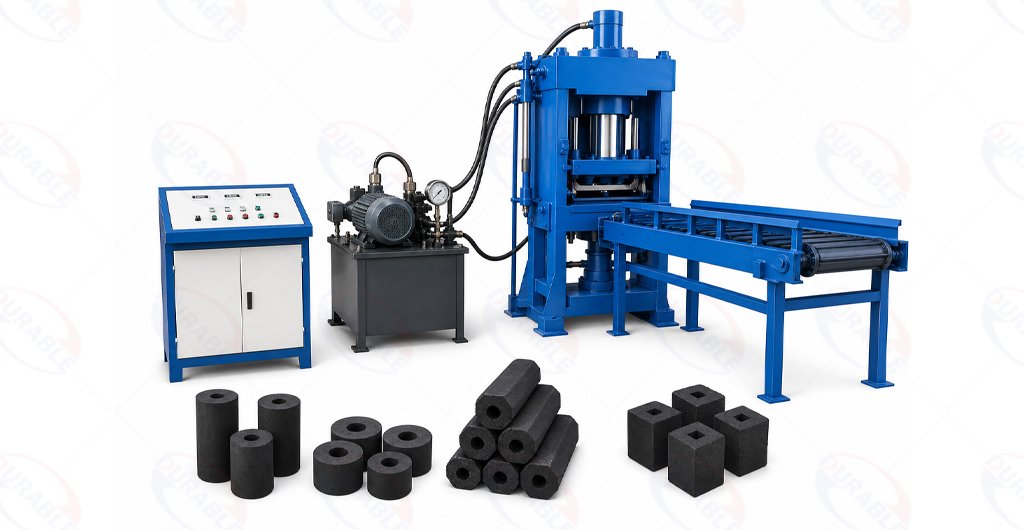
Buying a machine that is too small may limit future growth and delay customer deliveries. On the other hand, purchasing equipment with far more capacity than your current demand can increase investment costs and reduce your return on investment.
The right machine should match your expected daily output, labor availability, factory space, and business goals—not simply offer the highest production capacity.
Whether you are producing premium cube shisha charcoal for local distributors or exporting large volumes to international markets, choosing equipment that fits your production plan will help improve efficiency and reduce operating costs.
Why Production Capacity Matters More Than Machine Size
Many first-time buyers believe a larger machine automatically means a better investment.
In reality, production capacity should be selected according to your daily orders, workforce, and available operating time.
For example, a startup factory producing a few hundred kilograms of hookah charcoal each day does not need the same equipment as a large exporter shipping containers every month.
Oversized equipment often leads to:
- Higher initial investment
- Increased electricity consumption
- Higher maintenance costs
- Lower equipment utilization
At the same time, choosing equipment with insufficient capacity may cause:
- Missed delivery schedules
- Increased overtime
- Higher labor costs
- Lost business opportunities
Finding the right balance is the key to maximizing profitability.
For buyers planning to expand into more biomass fuel products later, a Biomass Briquette Machine may also support additional product lines beyond shisha charcoal.
Typical Production Capacity of Different Machines
Not every shisha hookah press machine is designed for the same production scale.
Understanding typical output ranges makes equipment selection much easier.
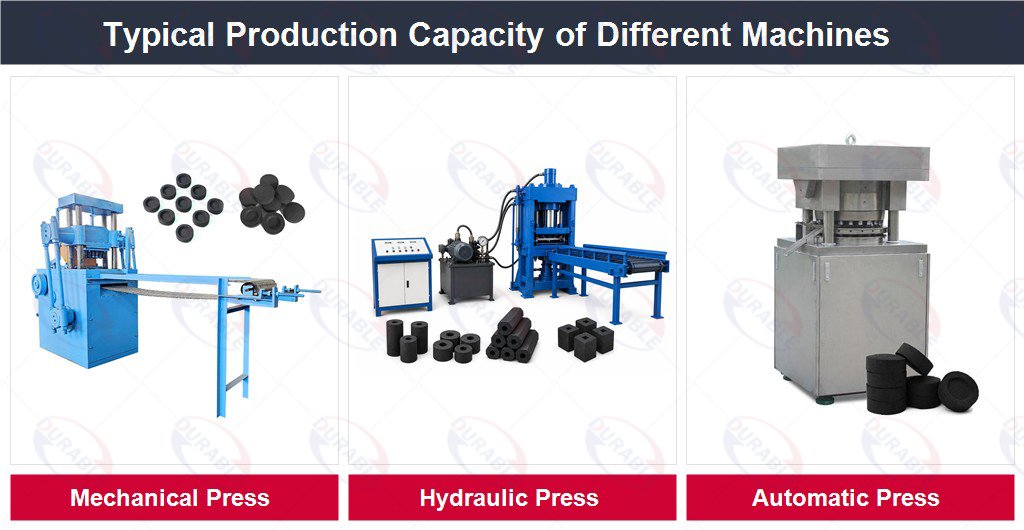
| Machine Type | Daily Output | Suitable Business |
|---|---|---|
| Small Hydraulic Press | Up to 300 kg | Startup workshops |
| Standard Automatic Press | 300–800 kg | Growing factories |
| High-Speed Automatic Press | 800–2,000 kg | Export businesses |
| Fully Automated Line | Over 2,000 kg | Large manufacturers |
When comparing equipment, always ask suppliers how production capacity is measured.
Some manufacturers calculate output under ideal laboratory conditions, while others provide actual production figures based on continuous operation.
For a more accurate comparison, request information about:
- Hourly production capacity
- Daily output
- Number of molds
- Cycle time
- Labor requirements
These figures provide a much clearer picture than simply comparing machine specifications.
How to Choose Based on Your Business Stage
Choosing equipment becomes much easier when you consider your current stage of business rather than focusing only on production capacity.
Startup Businesses
If you are entering the hookah charcoal market for the first time, controlling investment risk should be your priority.
A compact hydraulic or semi-automatic machine usually provides enough capacity while keeping equipment costs manageable.
These machines are suitable for:
- Local distributors
- Small factories
- Market testing
- New brands
Growing Manufacturers
As customer demand increases, production efficiency becomes more important.
An automatic press machine can help improve:
- Daily output
- Product consistency
- Labor efficiency
- Production stability
Many businesses upgrade to this stage after securing stable domestic or regional customers.
Export-Oriented Factories
Export customers usually require:
- Stable product dimensions
- Consistent density
- High production efficiency
- Reliable delivery schedules
For these manufacturers, high-output automatic machines provide better long-term value because they support larger production volumes while maintaining consistent product quality.
If your export business also processes larger biomass feedstock before carbonization or powder preparation, a Disc Wood Chipper may help improve raw material preparation efficiency.
Other Factors to Consider Besides Production Capacity
Production capacity is the starting point when choosing a shisha hookah press machine, but it should never be the only consideration. To achieve stable production and consistent charcoal quality, you should also evaluate mold design, hydraulic performance, automation, maintenance requirements, and future production plans.
A machine that perfectly matches your production capacity but lacks reliable components or flexibility may increase operating costs over time.
Mold Design and Briquette Specifications
The mold determines the final size, shape, and appearance of your shisha charcoal.
Before placing an order, confirm the following:
- Cube size (25×25 mm, 26×26 mm, etc.)
- Mold quantity
- Mold material
- Mold replacement time
- Availability of custom molds
If you supply multiple markets, choosing equipment with interchangeable molds allows you to produce different charcoal specifications without purchasing another machine.
Hydraulic Pressure and Pressing Stability
Hydraulic pressure has a direct influence on charcoal density.
A high-quality hydraulic system provides:
- Uniform pressure distribution
- Better briquette density
- Smooth edges
- Lower breakage rates
- Longer mold life
For export markets, stable pressure is particularly important because buyers expect every charcoal cube to have the same size, weight, and burning performance.
Automation Level
Choosing the right automation level depends on your production scale.
| Automation Level | Recommended For |
|---|---|
| Manual | Product testing and very small workshops |
| Semi-Automatic | Startup factories |
| Automatic | Commercial production |
| Fully Automatic | Large export manufacturers |
Automatic machines generally require a higher initial investment, but they also reduce labor costs and improve production consistency.
Maintenance and Spare Parts
Reliable equipment should be easy to maintain.
Before purchasing, ask your supplier:
- Are hydraulic components internationally available?
- How long does mold replacement take?
- Are spare molds included?
- Is remote technical support available?
- Does the supplier provide installation and operator training?
These questions often have a greater impact on long-term operating costs than the machine’s purchase price.
Common Buying Mistakes
Many buyers compare quotations without evaluating the complete production process.
The following mistakes are among the most common.
Buying More Capacity Than Necessary
Many factories purchase the largest available machine because they expect future growth.
However, oversized equipment often operates below its designed capacity, resulting in:
- Higher electricity consumption
- Higher maintenance costs
- Lower equipment utilization
- Slower investment recovery
Instead, select equipment that supports your expected production over the next two or three years.
Focusing Only on Machine Price
A lower quotation does not always represent better value.
Before making a decision, compare:
- Hydraulic system quality
- Mold precision
- Electrical components
- Frame construction
- After-sales support
- Warranty period
Evaluating the total cost of ownership provides a more accurate comparison than purchase price alone.
Ignoring Mold Quality
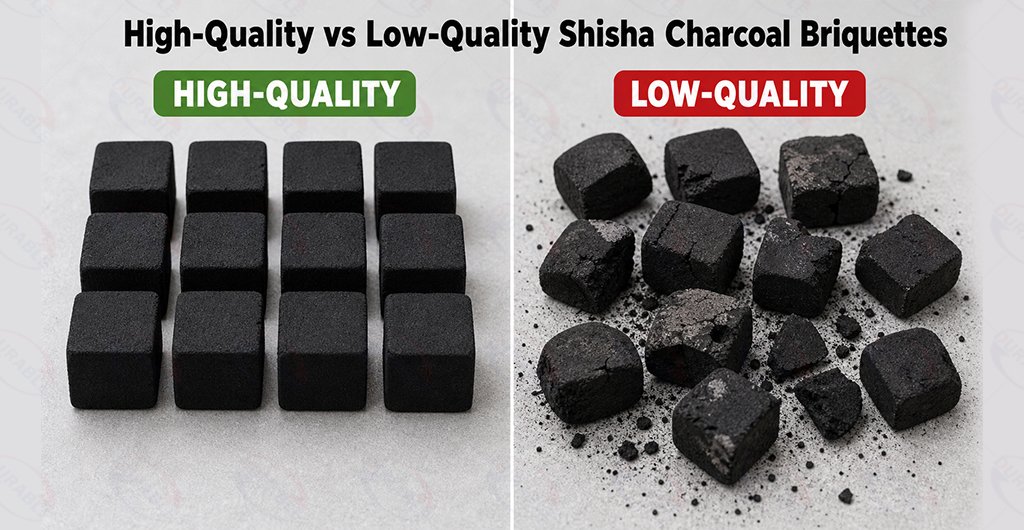
Many production problems are caused by poor molds rather than poor machines.
High-quality molds help improve:
- Briquette consistency
- Product appearance
- Production efficiency
- Customer satisfaction
Replacing worn molds at the right time also helps maintain stable product quality.
Overlooking Raw Material Preparation
Even the best press machine cannot produce premium shisha charcoal if the charcoal powder is inconsistent.
Many manufacturers improve briquette quality by using a Charcoal Crusher to achieve a more uniform powder size before mixing and pressing.
Expert Recommendations for Different Production Capacities
Every business has different production goals.
The recommendations below are based on common customer projects.
| Business Type | Recommended Daily Output | Recommendation |
|---|---|---|
| Startup Workshop | Up to 300 kg | Compact hydraulic press |
| Growing Factory | 300–800 kg | Automatic press machine |
| Export Manufacturer | 800–2,000 kg | High-speed automatic press |
| Industrial Producer | Over 2,000 kg | Fully automated production system |
Customer Example
A customer in Egypt started with a hydraulic press producing approximately 250 kg/day of cube shisha charcoal.
After securing long-term export orders, the factory upgraded to a larger automatic press machine capable of producing more than 1,000 kg/day.
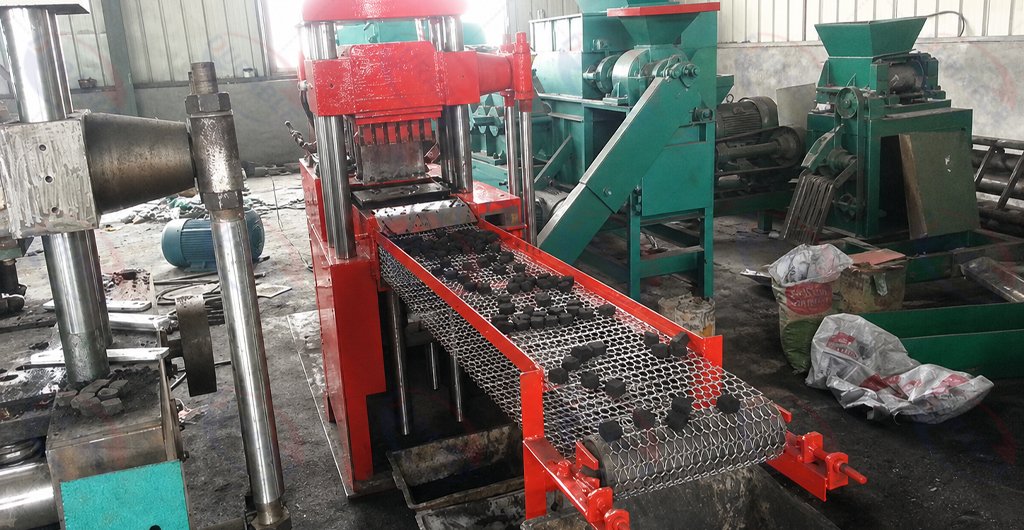
The upgrade helped the business:
- Increase production efficiency
- Reduce labor costs
- Improve charcoal consistency
- Expand into Middle East and European markets
Instead of replacing the entire production process, the customer upgraded only the pressing section while keeping other equipment unchanged. This approach reduced investment costs and shortened the payback period.
Final Thoughts
Choosing the right Shisha Hookah Press Machine is not about buying the biggest or most expensive model.
Instead, the best investment is the machine that matches:
- Daily production capacity
- Factory development stage
- Product specifications
- Labor availability
- Investment budget
- Future expansion plans
For most manufacturers, selecting equipment with approximately 20–30% spare production capacity provides the best balance between investment cost and future growth.
Rather than asking “Which machine has the highest capacity?”, ask “Which machine best supports my business over the next three years?”
That approach usually leads to a much smarter investment.
Frequently Asked Questions
What production capacity is suitable for a startup shisha charcoal factory?
For most startups, a machine producing up to 300 kg/day provides enough capacity while keeping investment costs under control.
Can I increase production capacity later?
Yes. Many manufacturers begin with a smaller machine and upgrade as demand grows. Choosing equipment with upgrade potential helps reduce future investment.
Does a larger machine produce better charcoal?
Not necessarily. Charcoal quality depends more on hydraulic pressure, mold precision, charcoal powder quality, and production control than on machine size alone.
Can one machine produce different charcoal sizes?
Yes. Many machines support interchangeable molds, allowing manufacturers to produce different cube sizes for different markets.
How can I improve briquette consistency?
Besides choosing a high-quality press machine, maintaining consistent charcoal powder size is equally important. Many factories combine the press with a Charcoal Crusher to improve powder uniformity before pressing.
About DURABLE
DURABLE manufactures professional Shisha Hookah Press Machines for customers worldwide.
Our engineers help manufacturers select the right machine based on production capacity, charcoal specifications, factory layout, and future expansion plans. Whether you are starting a new hookah charcoal business or upgrading an existing factory, we can recommend equipment that delivers reliable performance and long-term value.
Contact DURABLE today to receive a customized equipment recommendation and quotation.