 Durable Machinery
Get Price
How to Start a Hydraulic Brick Making Business?
A hydraulic brick making business is becoming one of the fastest-growing small manufacturing industries in many developing countries. Housing demand continues rising. At the same time, governments are investing more in roads, schools, and affordable housing projects. Because of this, concrete block demand remains strong in many local markets.
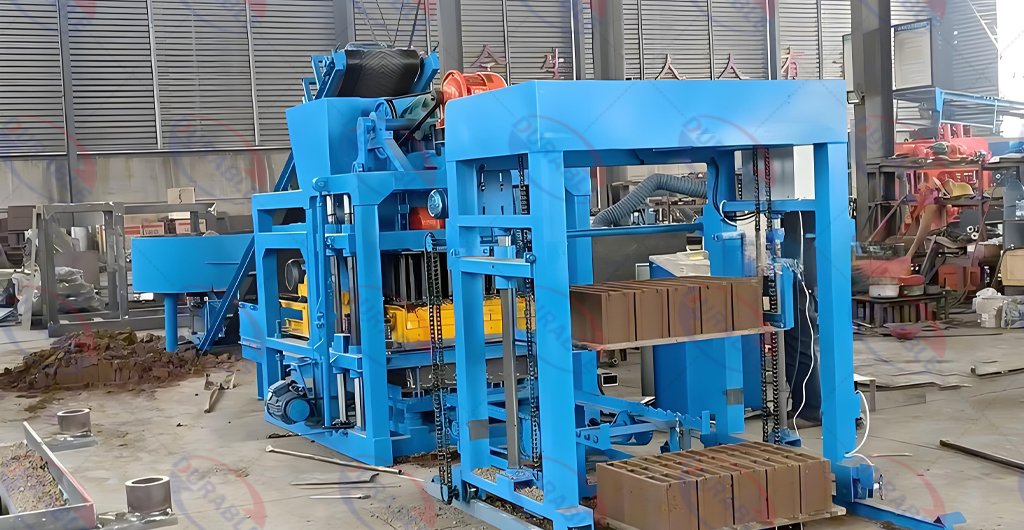
Compared with traditional brick production, hydraulic brick machines provide more stable pressure, better block quality, and higher production efficiency. However, many beginners still lose money because they focus too much on equipment and not enough on market demand and factory planning.
Why Is Hydraulic Brick Manufacturing Growing So Fast?
Hydraulic brick production is growing because construction demand continues increasing worldwide. More cities are expanding every year. In addition, many governments are investing heavily in infrastructure and affordable housing.
Concrete blocks are now widely used for:
- Residential housing
- Boundary walls
- Municipal projects
- Schools
- Commercial buildings
- Rural housing
Because of this, many investors now enter the hydraulic brick making machine business as a long-term construction supply opportunity.
Why Hydraulic Machines Became More Popular
Traditional mechanical brick machines often produce unstable block quality. Hydraulic systems perform better because pressure remains more consistent during production.
This improves:
- Block strength
- Corner sharpness
- Density consistency
- Production stability
Meanwhile, hydraulic systems also reduce rejection rates in medium and large factories.
Practical Market Suggestions
- Growing cities usually create stable block demand
- Road projects increase concrete block usage
- Affordable housing creates long-term opportunities
- Local contractors often prefer nearby suppliers
Why Understanding the Local Market Matters More Than Buying the Machine
Many beginners buy equipment before studying the market carefully. This is one of the most common reasons brick factories fail.
A factory producing 20,000 blocks daily becomes dangerous if local demand only supports 5,000 blocks.
Experienced investors usually study:
- Local construction trends
- Common block sizes
- Cement prices
- Competitor pricing
- Transportation distance
- Contractor buying habits
before selecting factory capacity.
Why Oversized Factories Create Financial Pressure
Larger factories often create hidden costs such as:
- Unsold inventory
- Excess pallets
- Higher electricity bills
- Idle workers
- Unnecessary maintenance
As a result, many successful investors begin with a scalable
block making machine
instead of immediately building a large fully automatic line.
Useful Planning Suggestions
- Start with realistic production targets
- Focus on local contractor demand first
- Leave room for future expansion
- Avoid copying oversized factories blindly
Why Hydraulic Brick Machines Perform Better Than Traditional Machines
Hydraulic systems provide more stable pressure during continuous production. Because of this, block quality becomes more consistent.
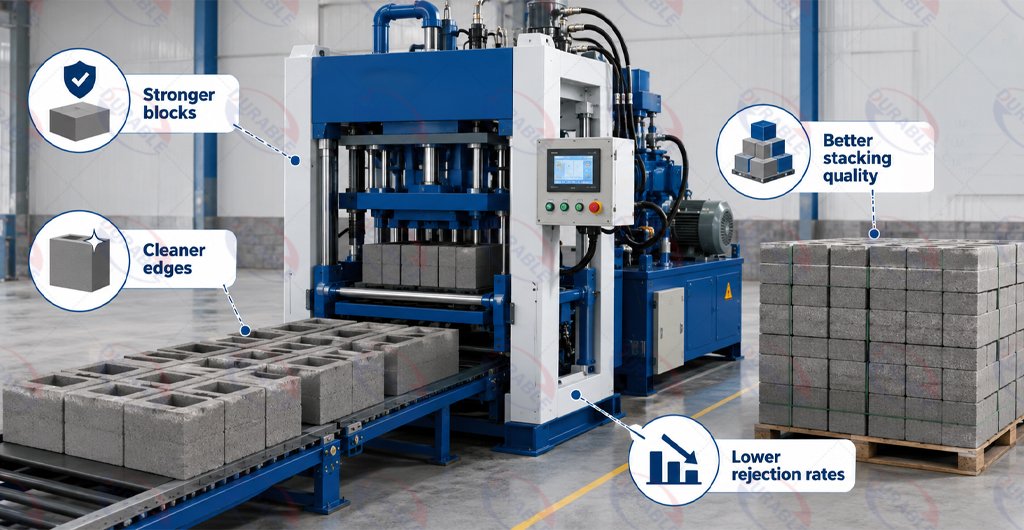
Compared with older mechanical systems, hydraulic machines usually produce:
- Stronger blocks
- Cleaner edges
- Better stacking quality
- Lower rejection rates
Many modern factories now prefer a hydraulic brick making machine because stable vibration and pressure improve long-term production reliability.
Why Cheap Hydraulic Systems Create Problems Later
Some low-cost machines reduce production cost by using:
- Weak hydraulic valves
- Thin steel frames
- Low-quality motors
- Poor vibration systems
At first, the machine may look acceptable. However, pressure instability often appears after several months.
This creates:
- Weak blocks
- Dimension inconsistency
- Production downtime
- Customer complaints
Practical Equipment Advice
- Check hydraulic valve quality carefully
- Inspect vibration synchronization
- Review steel frame thickness
- Ask about spare parts availability
Why Choosing the Right Production Capacity Is So Important
Many new investors believe bigger capacity means bigger profit. In reality, oversized factories often struggle financially.
Large underutilized factories usually face:
- Inventory pressure
- Higher labor cost
- Electricity waste
- Pallet storage problems
- Maintenance expenses
Because of this, many successful factories begin with medium output and expand gradually.
Why Semi-Automatic Machines Often Perform Better
In many developing markets, semi-automatic systems provide:
- Lower downtime risk
- Easier maintenance
- Simpler operator training
- Lower startup investment
This is why many investors choose a fully automatic brick making machine only after local demand becomes stable.
Smart Investment Suggestions
- Focus on stable daily production
- Avoid unnecessary automation early
- Upgrade gradually over time
- Control operating costs carefully
Why Raw Material Quality Matters More Than Machine Brand
Even premium hydraulic machines cannot compensate for poor raw materials. This is one of the most misunderstood parts of brick production.
Common material problems include:
- Dirty sand
- Oversized aggregates
- Excessive clay
- Unstable moisture
- Poor cement consistency
Why Material Consistency Controls Block Quality
Poor raw materials often create:
- Weak block strength
- Cracked corners
- Poor compaction
- Uneven dimensions
- Higher rejection rates
Professional factories usually test materials carefully before mass production begins.
Some factories also combine their production with a concrete block maker machine that supports different aggregate conditions more effectively.
Practical Raw Material Suggestions
- Check sand cleanliness regularly
- Control aggregate moisture daily
- Remove oversized stone
- Store materials separately
Why Mold Quality Quietly Controls Long-Term Profitability
Many beginners focus on machine appearance instead of mold precision. Experienced manufacturers usually inspect the mold first.
Poor molds often create:
- Broken corners
- Uneven dimensions
- Fast wear
- Weak stacking quality
Why Mold Precision Matters So Much
Good molds improve:
- Block dimensions
- Wall alignment
- Edge sharpness
- Product consistency
Meanwhile, poor dimensions quickly damage contractor trust at construction sites.
Many factories producing decorative blocks now use a paver block machine with CNC-machined molds for better precision.
Useful Mold Maintenance Suggestions
- Inspect molds regularly
- Replace worn parts early
- Keep vibration synchronized
- Monitor dimension consistency daily
Why Electricity Stability Is More Important Than Machine Speed
Many hydraulic systems are sensitive to voltage fluctuation. However, many suppliers rarely explain this problem clearly.
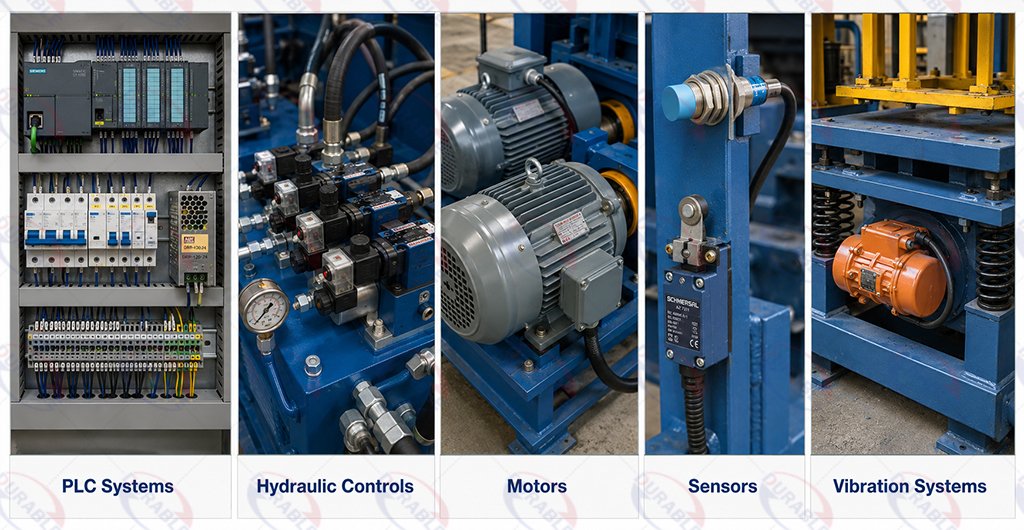
Unstable electricity may damage:
- PLC systems
- Hydraulic controls
- Motors
- Sensors
- Vibration systems
Why Power Stability Protects Production
Factories operating in regions with unstable electricity often install:
- Voltage stabilizers
- Backup generators
- Surge protection systems
This is especially important in Africa and Southeast Asia.
Practical Electrical Suggestions
- Check local power stability carefully
- Protect PLC systems from voltage spikes
- Install backup systems if necessary
- Monitor motor temperature regularly
Why Water Control Is One of the Most Overlooked Production Factors
Moisture consistency directly affects block quality. Yet many operators only focus on cement ratio.
Too much water usually creates:
- Weak blocks
- Slow curing
- Edge collapse
- Poor stacking strength
Meanwhile, too little water often causes:
- Internal cracks
- Low density
- Incomplete compaction
Why Experienced Operators Adjust Water Frequently
Weather conditions affect moisture continuously throughout the day.
Because of this, experienced operators adjust water levels based on:
- Temperature
- Humidity
- Aggregate moisture
- Production speed
Practical Moisture Suggestions
- Check moisture several times daily
- Avoid excessive water
- Monitor curing carefully
- Train operators consistently
Why Curing Management Determines Whether Customers Return
Many factories produce blocks correctly but cure them badly. This problem is extremely common.
Poor curing often includes:
- Direct sunlight exposure
- Early transportation
- Weak ventilation
- Insufficient moisture retention
Why Proper Curing Builds Customer Trust
Blocks that appear strong after 24 hours may still crack months later if curing is rushed.
Professional factories carefully manage:
- Curing time
- Humidity
- Airflow
- Stacking height
Useful Curing Suggestions
- Avoid direct sun exposure
- Maintain stable airflow
- Allow enough curing time
- Control stacking carefully
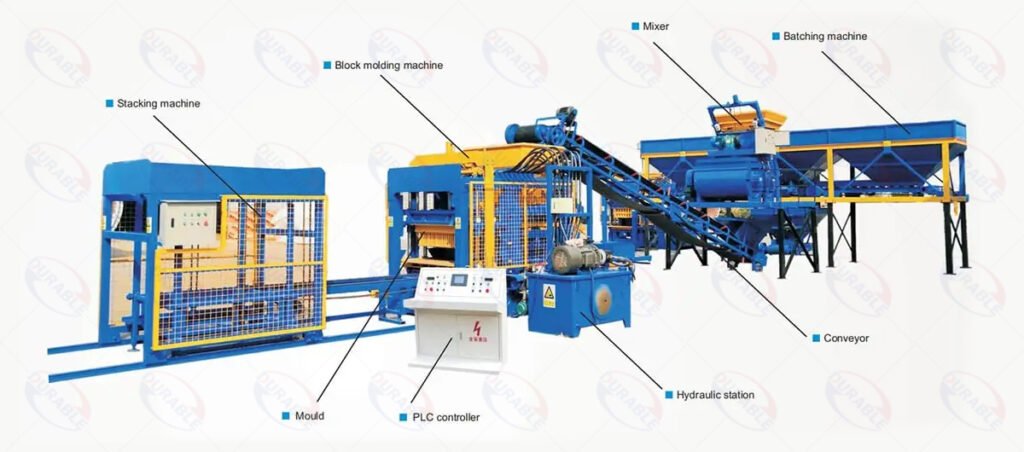
What Equipment Is Usually Needed to Start?
A basic hydraulic brick factory usually includes:
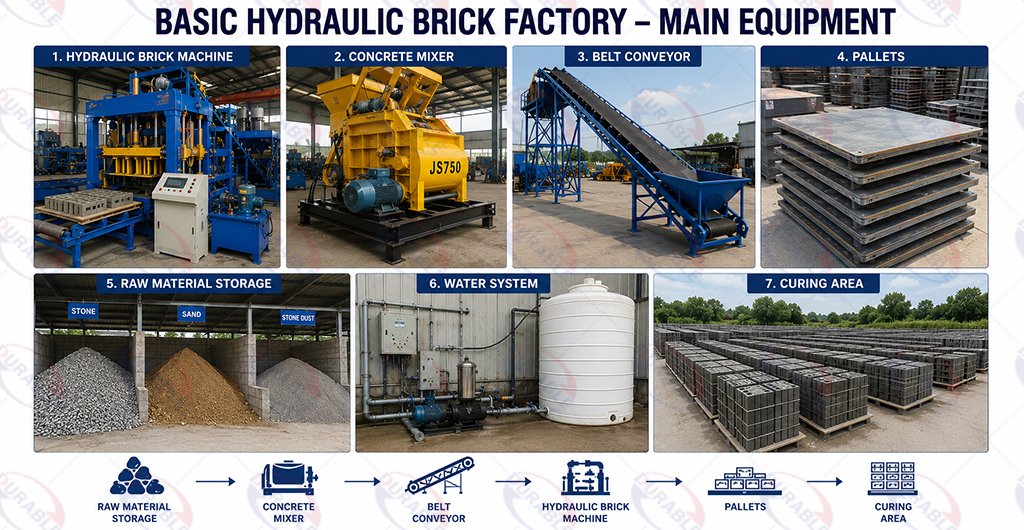
- Hydraulic brick machine
- Concrete mixer
- Belt conveyor
- Pallets
- Raw material storage
- Water system
- Curing area
Optional upgrades may include:
- Automatic stacker
- Cement silo
- Pallet feeder
- Automatic batching system
- Pallet return system
Many medium-size factories now combine production with a twin shaft concrete mixer because stable mixing improves production consistency.
How Long Does ROI Usually Take?
Most profitable hydraulic brick factories recover investment within 1.5 to 4 years. Actual ROI depends on:
- Local demand
- Competition
- Labor cost
- Production efficiency
- Transportation distance
Why Stable Customers Matter Most
Factories with reliable contractor relationships usually achieve:
- Better cash flow
- More stable production
- Lower inventory pressure
- Faster long-term growth
Practical ROI Suggestions
- Build local contractor relationships early
- Control downtime carefully
- Focus on stable quality
- Avoid expanding too quickly
Frequently Asked Questions
Is a hydraulic brick making business profitable?
Yes. In many growing construction markets, local block demand remains very stable.
Which machine is best for beginners?
Many beginners start with semi-automatic hydraulic systems because maintenance is simpler and investment risk is lower.
How much land is needed for a brick factory?
Factory size depends on production capacity, curing area, and raw material storage.
Can hydraulic machines produce different brick types?
Yes. Most hydraulic systems can produce hollow blocks, solid blocks, pavers, and interlocking bricks.
Why are interlocking bricks becoming more popular?
Interlocking systems reduce mortar usage, labor dependency, and construction time.
Conclusion and Recommendations
A hydraulic brick making business is not simply a machine investment. It is a long-term local construction supply business.
Successful factories usually focus on:
- Stable product quality
- Reliable delivery
- Good molds
- Consistent raw materials
- Contractor relationships
- Realistic production planning
The factories achieving the best long-term results usually grow slowly and steadily instead of expanding too aggressively in the beginning.
About Durable
At Durable, we provide complete hydraulic brick production solutions for B2B customers worldwide. Our product range includes:
Hydraulic brick machines
Hollow block machines
Interlocking brick machines
Automatic block production lines
Concrete mixers
Batching systems
Pallet handling systems
We help investors design stable and scalable brick factories based on local raw materials, labor conditions, production goals, and market demand.
If you are planning to start a hydraulic brick making business, our engineering team can help you choose the right solution for long-term profitability.
Contact Durable today for customized hydraulic brick production recommendations.