 Durable Machinery
Get Price
When Should You Use a Mobile Concrete Batching Plant?
A mobile concrete batching plant makes sense when concrete production needs to follow the project.
This is common on roads, bridges, mining sites, remote infrastructure projects, and construction work that moves from one section to another.
However, mobility alone does not make a plant the better choice.
If concrete production will stay in one location for years, or the project needs large permanent storage and continuous high output, a stationary system may be more practical.
The real question is:
Does mobility solve a real production, logistics, or project-lifecycle problem?
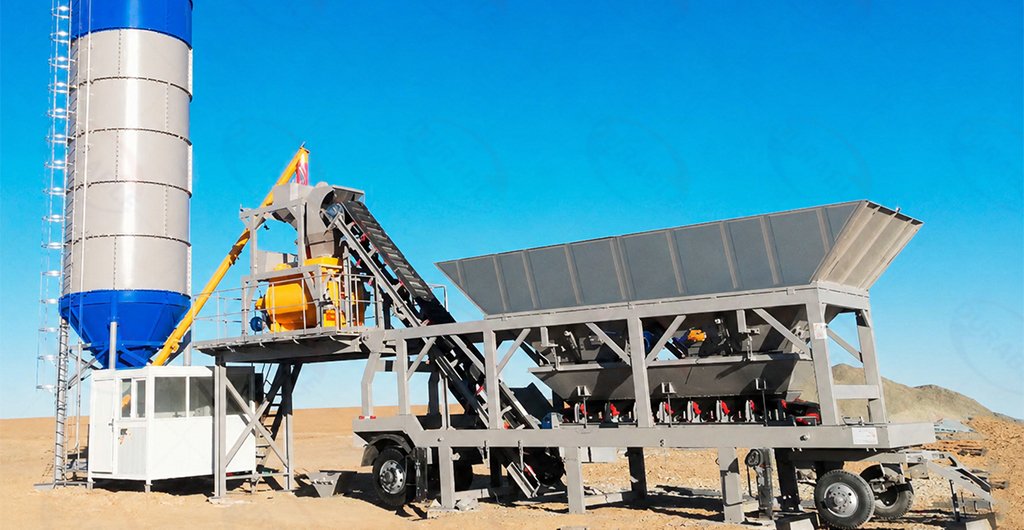
If the answer is yes, a mobile plant can help contractors produce concrete closer to the work area and reduce dependence on distant supply.
If the answer is no, the project may be paying for mobility without gaining much real value.
A Mobile Batching Plant Fits Moving or Remote Projects
The strongest reason to choose a mobile plant is that concrete demand does not remain in one place.
Typical applications include:
- Highway construction
- Railway projects
- Bridge construction
- Mining infrastructure
- Temporary industrial sites
- Remote civil projects
- Multi-section construction zones
As construction progresses, the active work area may move farther from the original concrete supply point.
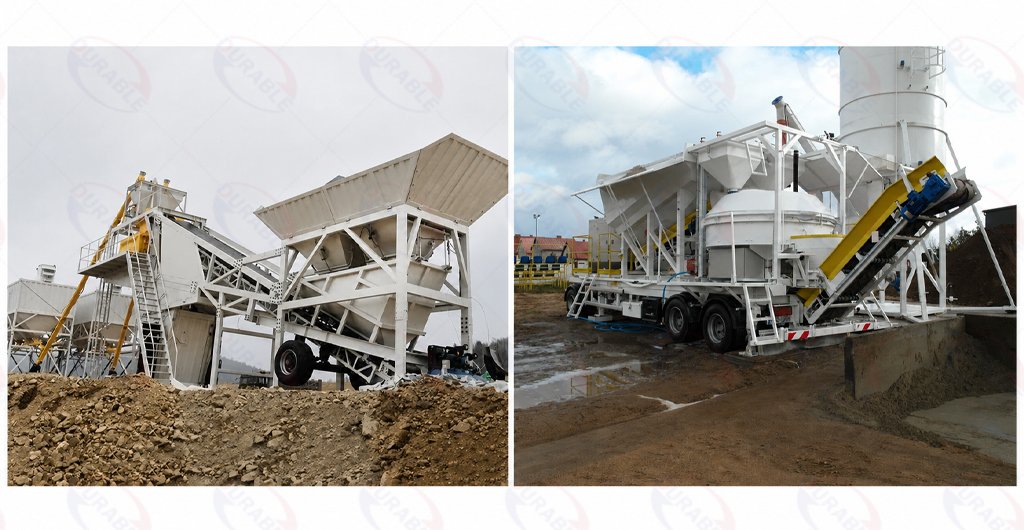
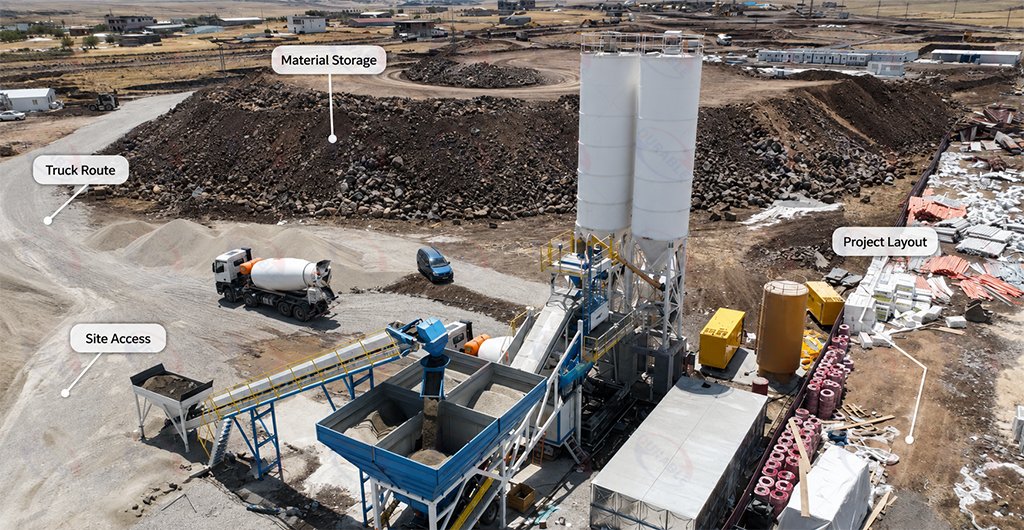
A Mobile Concrete Batching Plant allows contractors to bring batching and mixing closer to the work area instead of depending completely on a distant fixed plant.
This is useful when concrete supply must move with the project section.
Still, a project does not need mobile equipment simply because the plant can be transported.
Mobility becomes valuable when relocation helps reduce:
- Long concrete delivery routes
- Dependence on distant suppliers
- Repeated temporary-site setup
- Concrete supply delays between work sections
- Equipment becoming stranded after one project
Another useful question is:
What happens when this contract ends?
For contractors moving from one infrastructure project to another, a relocatable plant can continue serving future work.
In that situation, mobility becomes part of the business model, not just a machine feature.
Use On-Site Batching When External Concrete Supply Is Difficult
Some construction sites have poor access to reliable ready-mix concrete.
Common problems include:
- Long delivery routes
- Difficult roads
- Traffic delays
- Remote terrain
- Limited truck availability
- Changing site access
- Uncertain delivery schedules
- Local suppliers with limited capacity
Producing concrete closer to the project can give the contractor more control over timing and supply.
However, there is no universal distance at which a mobile plant becomes necessary.
A short route with heavy congestion may be worse than a longer route with reliable access.
Concrete supply depends on the concrete specification, transport time, temperature, truck availability, site access, and pour schedule.
That is why buyers should evaluate delivery risk, not just distance.
On-site batching can coordinate concrete production with excavation, reinforcement, formwork, paving, and structural pours.
That does not automatically make on-site production cheaper.
The project still needs cement, aggregates, water, power, storage, maintenance, operators, and site management.
The main benefit is control over where and when concrete is produced.
Mobile Does Not Mean No Site Preparation
Mobile plants are often selected for temporary or fast-start projects.
They can reduce part of the permanent installation burden, especially when the project does not justify a large fixed batching facility.
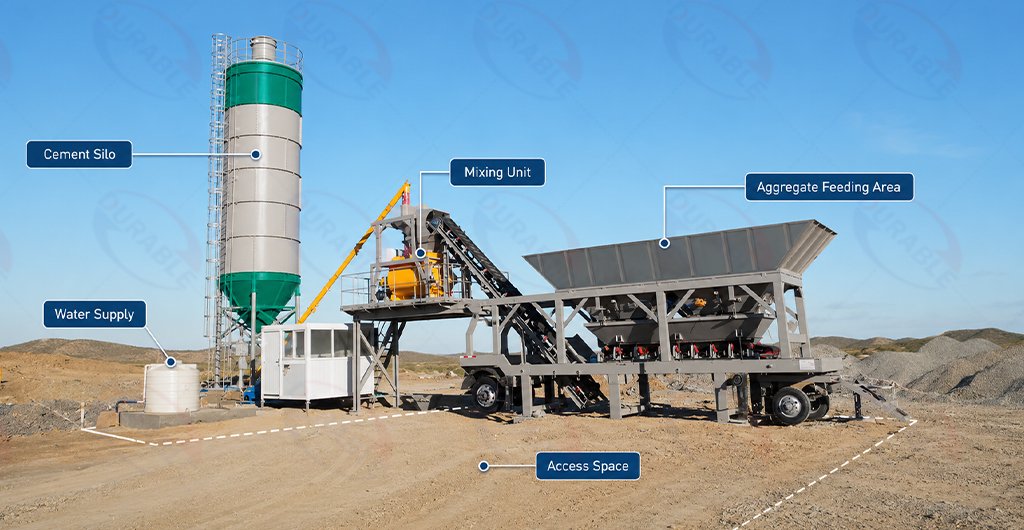
This is useful for:
- Temporary project sites
- Road works
- Bridge construction
- Remote civil projects
- Contractors moving between jobs
- Projects with changing work zones
Still, one misconception should be avoided:
Mobile does not mean “no site preparation.”
Before installation, the project should confirm:
- Stable ground
- Drainage
- Power supply
- Water supply
- Aggregate storage
- Cement storage
- Delivery access
- Concrete truck access
- Operating space
- Maintenance access
A mobile chassis may simplify relocation of the main batching and mixing section.
But the surrounding production system still needs proper planning.
Instead of asking only how fast a mobile plant can be installed, ask:
What must be ready before the plant arrives?
That question is more useful for project scheduling.
When a Stationary Plant May Be the Better Choice
Mobile batching plants have clear advantages, but they are not always the best solution.
If the plant will operate at the same site for many years, mobility may provide limited value.
A permanent system can instead be designed around:
- Larger aggregate storage
- Permanent cement storage
- Higher automation
- More complex material handling
- Future expansion
- Continuous production
For fixed, long-duration production, a Stationary Concrete Batching Plant may be a better fit.
Long-term high-volume production may also favor a stationary configuration, especially when the project needs larger bins, larger silos, more conveying systems, and future expansion capacity.
Permanent precast or concrete product factories also need careful comparison.
If the batching system will be integrated with a fixed production line, a stationary plant may be easier to organize around the factory layout.
Mixer selection also matters.
DURABLE’s concrete mixer selection guide explains how drum, twin-shaft, planetary, and other mixers suit different production requirements.
The simplest test is this:
If mobility will rarely be used, you may be paying for a feature that does not improve production.
Mobile vs Stationary: Compare the Project, Not Just the Plant
Mobile and stationary plants solve different operating problems.
The comparison should begin with the project, not only the plant price.
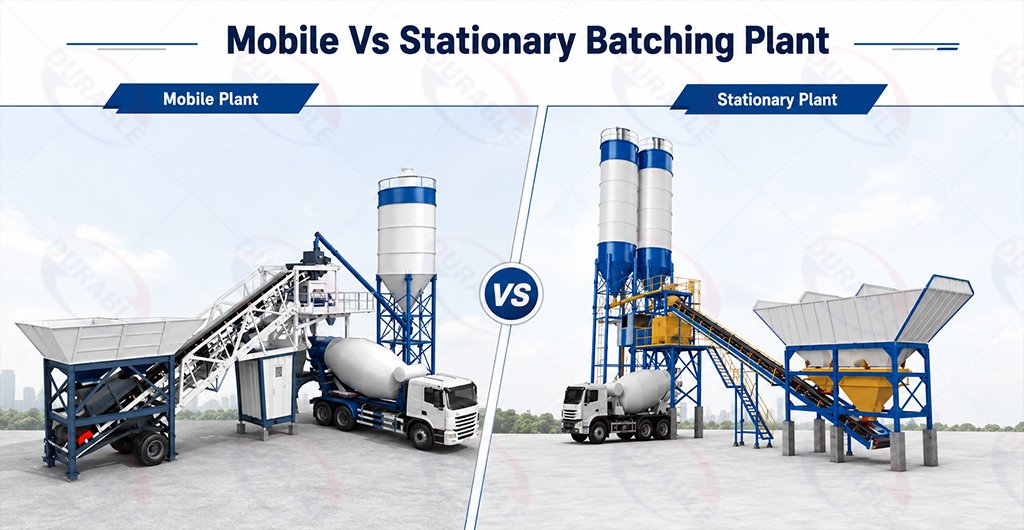
| Project Condition | Mobile Plant | Stationary Plant |
|---|---|---|
| Temporary construction | Strong fit | Depends on scale |
| Frequent relocation | Strong fit | Weak fit |
| Remote construction | Strong candidate | Possible for long-term use |
| Long-term fixed production | Possible | Strong fit |
| High continuous demand | Configuration dependent | Strong fit |
| Limited deployment time | Advantage | Requires more permanent preparation |
| Large permanent storage | More constrained | Strong fit |
| Future relocation | Major advantage | Difficult |
The main variables are:
- Project duration
- Required output
- Location
- Relocation frequency
- Material supply
- Storage requirements
- Future projects
For a more detailed comparison, see DURABLE’s Mobile vs Stationary Concrete Batching Plant guide.
A lower machine price does not automatically mean a lower project cost.
Buyers should also consider site preparation, transport, aggregate handling, cement storage, installation, dismantling, relocation, labor, and maintenance.
For a contractor moving between projects, relocation capability may create repeated value.
For a permanent producer, the same feature may provide little benefit.
What to Check Before Choosing a Mobile Batching Plant
Once mobile production appears suitable, the next step is matching the plant to the actual project.
Before requesting a quotation, check these factors.
1. Required concrete output
Estimate normal hourly demand, peak demand, daily production, and pour schedule.
An undersized plant can delay construction. An oversized plant increases investment and may operate below useful utilization.
2. Relocation frequency
There is a major difference between one move after project completion, several moves during one project, and frequent relocation between contracts.
The more often the plant moves, the more important transport design and setup requirements become.
3. Concrete type
The required concrete influences mixer selection.
General construction concrete, structural concrete, road concrete, and specialty mixes may need different mixing systems.
For higher-output batching systems, a Twin Shaft Concrete Mixer is often considered because of its forced mixing action.
For some precast or specialized products, a Planetary Concrete Mixer may be more suitable.
4. Aggregate and cement storage
Check the number of aggregate types, bin requirements, loader access, silo requirements, cement delivery access, and storage capacity.
A batching plant cannot maintain output if raw materials cannot reach it efficiently.
5. Power, water, and site readiness
Remote sites should confirm electrical supply, generator requirements, water availability, drainage, truck access, safe operating space, and maintenance space before finalizing the system.
6. Transport conditions
Before purchasing, review equipment dimensions, weight, road restrictions, trailer requirements, local transport rules, and route limitations.
These factors become especially important when frequent relocation is part of the project plan.
7. Future use
Finally, ask:
What happens after this project?
If the plant can move directly to another contract, mobility has value beyond the current site.
If no future relocation is expected, compare whether a stationary system would support long-term production more effectively.
A Simple Decision Framework: Should Your Project Go Mobile?
A mobile batching plant becomes a strong candidate when several conditions appear together.
Choose mobile when:
- The project is temporary or moving
- Concrete demand changes location
- External ready-mix supply is difficult or unpredictable
- The required output fits a mobile configuration
- Site preparation can support the plant
- Future relocation or reuse is likely
A stationary plant deserves stronger consideration when the project has:
- One permanent location
- Long production horizon
- High continuous demand
- Large permanent storage requirements
- Significant expansion plans
- Little expectation of relocation
The final decision should not be based on one feature.
Choose the batching plant around the project lifecycle, not around the word “mobile.”
Frequently Asked Questions
When should I use a mobile concrete batching plant?
A mobile plant is especially useful for temporary, remote, multi-site, or moving construction projects. It can also help when external ready-mix supply is difficult or unreliable.
Is a mobile batching plant suitable for long-term projects?
Yes, especially when future relocation is expected. However, for permanent high-volume production at one location, a stationary plant may offer more flexibility for storage, automation, and expansion.
Does a mobile concrete batching plant need a foundation?
Requirements depend on the plant design. Mobile systems can reduce some permanent foundation work, but they still require stable ground, leveling, drainage, utilities, material storage, and safe operating access.
How often can a mobile concrete batching plant be relocated?
There is no universal answer. Relocation depends on plant configuration, auxiliary equipment, silos, transport dimensions, local regulations, lifting resources, and site preparation.
Should I choose a mobile or stationary concrete batching plant?
Choose according to project duration, output, relocation frequency, storage requirements, site conditions, and future business plans. Mobile plants favor flexibility, while stationary plants generally favor permanent production.
About DURABLE
DURABLE provides concrete production equipment and project solutions for contractors, infrastructure projects, concrete producers, precast operations, and construction companies.
Our equipment range includes mobile concrete batching plants, stationary concrete batching plants, twin-shaft concrete mixers, planetary concrete mixers, drum mixers, cement storage systems, material batching equipment, and conveying equipment.
Selecting a batching plant should begin with the project rather than one equipment specification.
DURABLE helps buyers evaluate required output, concrete type, project duration, site conditions, material supply, mobility requirements, and future production plans before configuring a suitable concrete production system.